What If My Baby Swallows Pool Water? Signs to Watch and When to Get Help
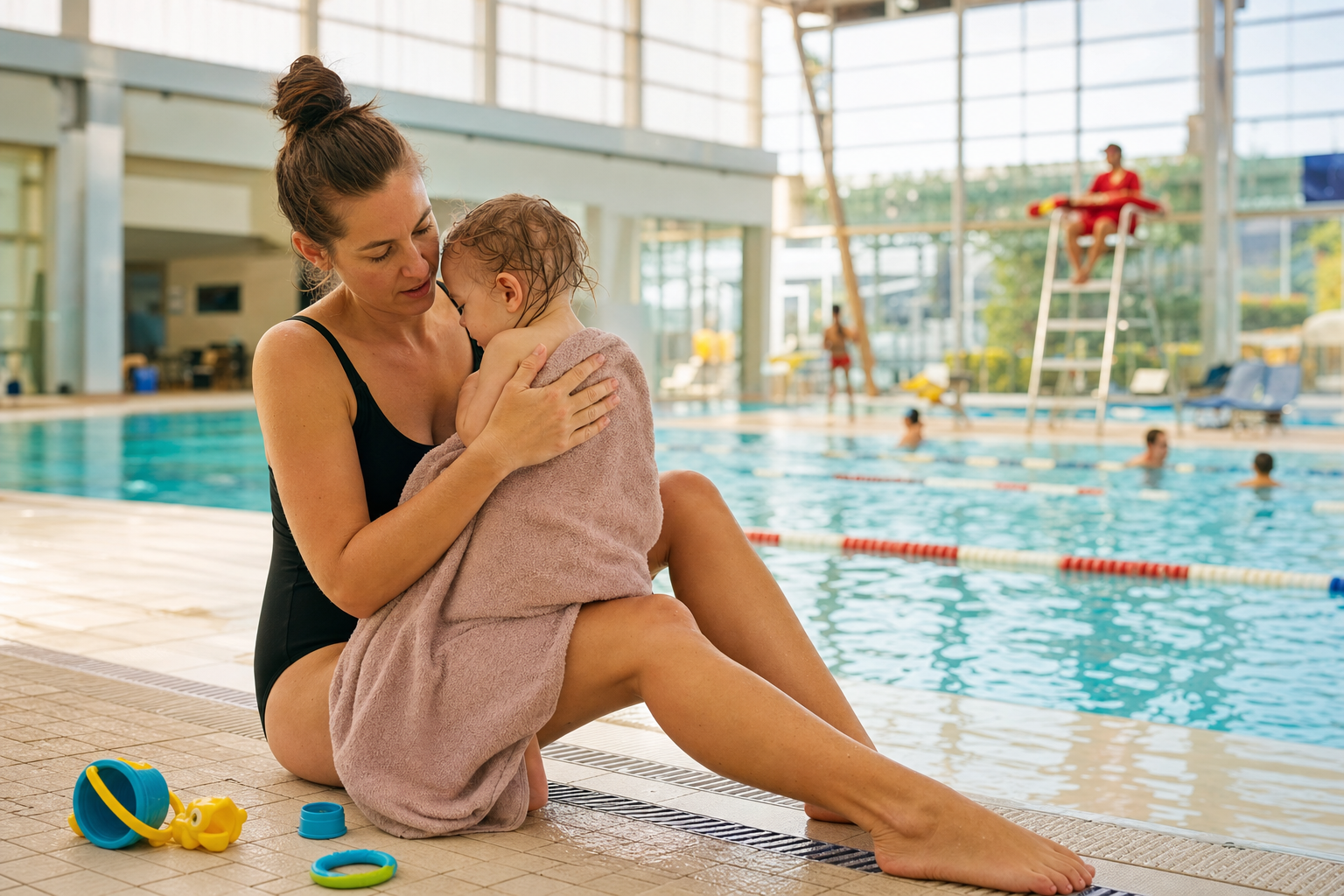
If your baby (age 0-36 months) takes one or two little sips of pool water—no need to panic. That’s usually normal. Mouthfuls often lead to coughing or gagging, but most kids bounce back quickly and act completely fine after a few minutes. The body’s reflexes clear the throat and protect the lungs. But when more water is swallowed or the baby is submerged, that’s when it’s important for parents to stay calm, observe closely, and know which symptoms require medical help.
What’s Normal After Small Sips
After a small gulp or splash of “baby swallowed pool water,” you might see:
- A sudden cough or gag—baby’s body trying to clear the throat.
- Burping, watery eyes, or sputtering.
- A bit of spit-up or mild vomiting—if they swallowed water and air.
These usually settle fast. Baby returns to eating, playing, breathing normally within minutes. No fever, no breathing issues, no unusual behavior. That’s how you know things are probably okay.
When to Worry: Symptoms That Need Medical Advice
Sometimes those small sips turn into something more serious—especially when water gets into the lungs. “Dry drowning,” also called “secondary drowning,” are old terms. Medical experts now say they’re misleading and not proper diagnoses. What matters is symptoms developing after a real submersion or inhaling water. (health.clevelandclinic.org)
If your baby does any of these, you should seek urgent medical help:
- Persistent coughing that gets worse.
- Trouble breathing, wheezing, or rapid/shallow breathing. Even if it starts hours after swimming. (my.clevelandclinic.org)
- Lips turning blue (“blue lips”) or face looking pale or purple. This means oxygen levels are low. (medicalnewstoday.com)
- Unusual sleepiness or confusion—baby not acting like themselves. (my.clevelandclinic.org)
- Vomiting more than just water, or chest pain.
- A submersion event where baby was under water more than a split second—especially if they held breath, panicked, inhaled water deeply.
In these cases, it’s best to call your pediatrician or head to the emergency department. It’s better to be safe than sorry.
Scary Myths: “Dry Drowning” and Media Hype
You’ll hear scary headlines about “dry drowning” or “delayed drowning.” Medical groups like CDC, Cleveland Clinic, and Red Cross say those terms are outdated and misleading. Doctors prefer talking about drowning as a process, with possible outcomes: fatal or nonfatal, with or without lung damage. (redcross.org)
Also consider swim lessons designed for toddlers – like the 10-Week Plan swimy.org program – which builds confidence and teaches babies how to be more water-aware. 10-Week Plan shows parents how to teach basic water comfort and safety in a structured way.
These myths often lead parents to panic after any cough post-swim. It’s natural to worry, but most kids who have swallowed water and seem fine after a few hours really are fine. If symptoms show up, they usually appear within the first 4-8 hours. (my.clevelandclinic.org)
[[ctababy]]
What Parents Can Do: Actions Right After and Recovery Tips
After your baby coughs or swallows pool water, staying calm helps them stay calm. Carry on with gentle soothing. Offer breast milk, formula, or water (age-appropriate) to settle their stomach. Watch how they look, listen to their breathing, and check behaviors.
Make sure pools are well cleaned, properly chlorinated, and that children always wear swim diapers or appropriate gear. Never leave babies unsupervised near water—even a wading pool or full bucket.
Real Experiences: Supporting Calmer Recovery
Imagine this: Your 2-year-old grabs a deep breath underwater while splashing, sputters, coughs, spits water, then resumes playing happily. You stay by their side, cuddle them, give them fluids, watch for a cough that lingers or starts again later. Sleep comes easily. No change in color, mood, or breathing. Almost always, that child wakes up fine, no ER needed.
On the other hand, if the same toddler begins breathing fast, seems lethargic, vomits, or their lips look blue—especially after a scary moment—those are red flags. You trust your instincts and seek help.
Red Flags Checklist: Seek Medical Help If…
If any of the following happen after a “toddler swallowed pool water” or “baby swallowed pool water” incident, don’t wait:
- Breathing trouble: wheezing, gasping, fast or shallow breaths.
- Persistent cough that worsens.
- Vomiting repeatedly.
- Blue lips or face; unusual skin color.
- Unusual sleepiness, confusion, or mood changes.
- Any sign of choking or submersion more than briefly.
Prevention Habits to Keep Babies Safe
Good prevention reduces both risk and fear. Keep babies in shallow water with you within arm’s reach. Teach them to blow bubbles, close the mouth underwater, work on comfortable face-wetting. Supervise constantly—adults should not be distracted by phones or other tasks when children are in or near water. Build swim-skills early, consider classes or parent-and-child aquatic programs. Fence pools, cover drains, clean water.
By staying calm, knowing what’s normal, and watching for these red flags, parents can help their little ones recover safely after accidentally swallowing pool water. A few moments of worry are scary—and completely normal. But most little mishaps are just that: mishaps. Learning how to respond makes all the difference for recovery, and for building confidence around water for both baby and parent.
120+ swimming exercises sorted by age — with video and instructions. Developed by swim instructors, completely free.

120+ swimming exercises sorted by age — with video and instructions. Developed by swim instructors, completely free.