Urban Water Features: Fountains, Canals & Ponds — Family Safety Rules
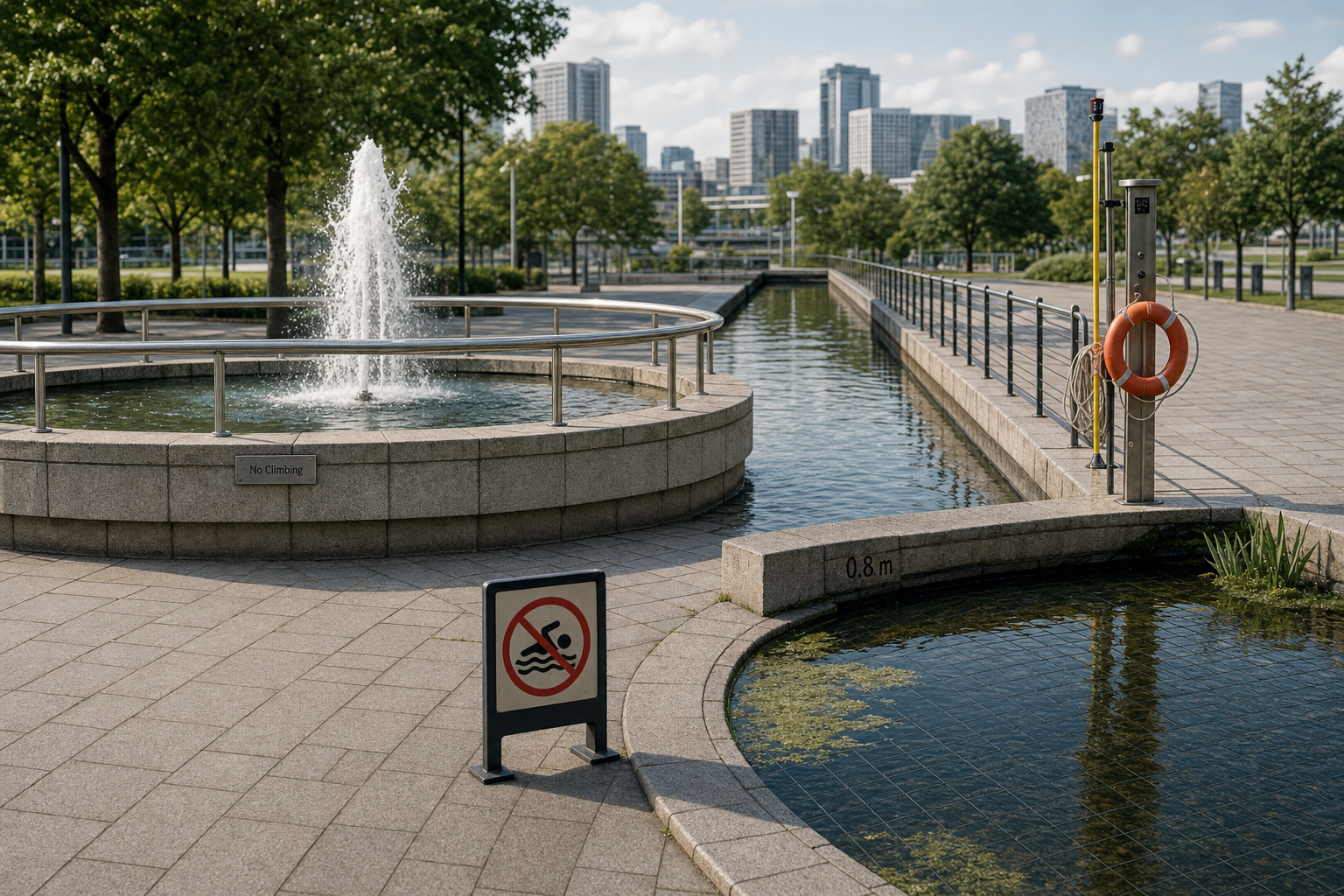
When your child aged between 3 and 12 sees a fountain bubbling, a canal flowing, or a pond shimmering in the city, safety must come first. So, can kids play near fountains safely? What do parents need to know about canal safety for children and urban pond drowning risks? Here are clear rules, smart checks, and must-know reminders to keep city-days fun and safe.
Key Safety Rules to Teach Kids Right Away
First, children should learn simple “look, don’t climb” rules. Near any water feature with edges, teach kids to stay on safe paths, never scale ledges, fences, or rails. If something—like a toy—goes into a fountain, canal, or pond, the rule is “reach or throw, don’t go.” You or another adult should use a pole, rope, or something that floats to pull the item out; going in yourself is dangerous.
Always remind children that non-swim spots—fountains not meant for patrons to swim in, canals, decorative ponds—are rescue-only scenarios from land. No splashing in unless clearly permitted by signage or staff.
Parents’ Pre-Visit Checks: What to Look For
Before letting your child near fountains, canals or ponds, always do a quick safety survey. Check depth signage where available. A fountain basin that looks shallow may have sudden drop-offs.
Flow matters: even slow currents in canals can sweep a child away. Slippery ledges around water features are a top risk in urban settings; damp stones or algae make edges dangerous. Check for visible algae or murky water—green scum or blanketing growth often signals health risks like bacteria or toxins. In ponds, blue-green algae (cyanobacteria) may look harmless but can irritate skin or worse. The UK’s government warns people especially children to avoid contact with water affected by algal blooms.(gov.uk)
Also look for sharp edges, loose grates, hidden drop-offs near the bank. Rescue tools—a buoy, rope, a long pole—should be nearby. Know the local emergency number: in the US 911, UK 999, Australia 000, or whatever applies where you are.
Canals, Fountains, and Ponds: Specific Rules
Canals
Canal safety for children means treating canals like danger zones. Don’t swim in canals—never. Canal sides tend to be slimy and slick; once a child slips in, it can be hard to climb back out. Always walk or play at least a meter from the edge and avoid areas with automatic gates or strong currents.(preventdrownings.org)
If someone falls in, the rule is clear: reach, throw, don’t jump. Call emergency services right away—your local number (911, 999, 000).(kid.org)
Decorative Fountains and Interactive Fountains
Many city fountains are designed for people to play—splash pads, interactive fountains. But that doesn’t mean automatic safety. Rules should be posted: “No climbing,” “No running,” and clearly marked depth. Many interactive fountains limit ponding depth to 8 inches (about 20 cm). Slopes should be gentle, surfaces slip-resistant, grates safe and flush. Portland’s design guidelines require signs and handrails if fountains have basins.(readkong.com)
Swimy.org offers a “10-Week Plan” for developing swim skills and water safety awareness. That plan helps children not only learn how to swim, but also build judgement around water play in non-swim spots. Always do that under safe conditions and with proper supervision. (Link: https://www.swimy.org/10-week-plan)
[[ctakid]]
Teach children not to swallow fountain water and to avoid sitting on jets or surfaces that spray upward. Sprays and mists still carry germs, and shallow water can hide grit and debris. Splash pads may not be regulated or disinfected as strictly as public pools. The CDC reports illnesses, even fatal ones, linked to decorative fountains or splash pad water not properly managed.(cdc.gov)
Urban Ponds
Ponds in public gardens, parks, or school grounds look peaceful—but may conceal danger. Drop-offs, weeds, murky water, algae, even wildlife (frogs, turtles) can all pose hazard. Garden pond incidents are often sudden; children can drown in inches of water. School garden safety guidelines advise sloping pond sides, covering ponds with grids, or installing barriers so children can’t fall in.(rhs.org.uk)
Make sure pond water is clean, or at least warning signs are visible if water turns green or scummy. Animals or pets drinking from it? Be extra cautious. Keep kids away from edges that lack railings or paths that aren’t stable.
Building Water Skills and Prevention
Swimming lessons are powerful. They lower drowning risk, improve confidence, and increase awareness of water behavior. But no amount of lessons replaces supervision or solid rules. The American Academy of Pediatrics emphasizes that even skilled young swimmers need constant, attentive adult supervision whenever near water.(publications.aap.org)
If your child is school-age and does learn to swim, pair that with risk awareness: recognizing dangerous currents, knowing when water quality is poor, understanding they must never chase toys into ponds or canals.
What to Do in an Emergency
At the heart of all safety rules is readiness. Memorize and teach children your local emergency number. Parents, caregivers, grandparents—all should learn CPR and basic rescue skills. Rule of thumb: if a child falls into water they shouldn’t be in, don’t jump in—throw something that floats or reach from land. Then call emergency services.
Keep rescue devices available near ponds and canals: life ring, buoy, long pole, rope. Know where the nearest phone is. If in a park, note emergency call-boxes or station locations ahead of time.
Everyday Rules to Reinforce
Edge rule: always stay on paths, keep feet dry and flat near edges. Slips happen fast.
“Reach or throw, don’t go”: never enter water areas uninvited or unsupervised, especially canals or ponds.
Watch for signs about no wading, swimming banned, or water quality warning. Respect them.
No chasing toys: children tempted to dive into unsafe water to retrieve something may end up in high risk situations.
Always adult present: for ages 3-12, whether playing in fountains, walking by canals or exploring pond edges.
Urban water features like fountains, canals and ponds can be magical play zones—but with hidden dangers. By teaching children simple, firm rules (“look, don’t climb”; “reach or throw, don’t go”), doing quick safety checks for depth, flow, drop-offs, algae, and knowing how to respond safely in emergencies using rescue from land, you keep the good memories safe.
120+ swimming exercises sorted by age — with video and instructions. Developed by swim instructors, completely free.

120+ swimming exercises sorted by age — with video and instructions. Developed by swim instructors, completely free.