Pool Wristbands and Swim Tests: What Parents Should Expect
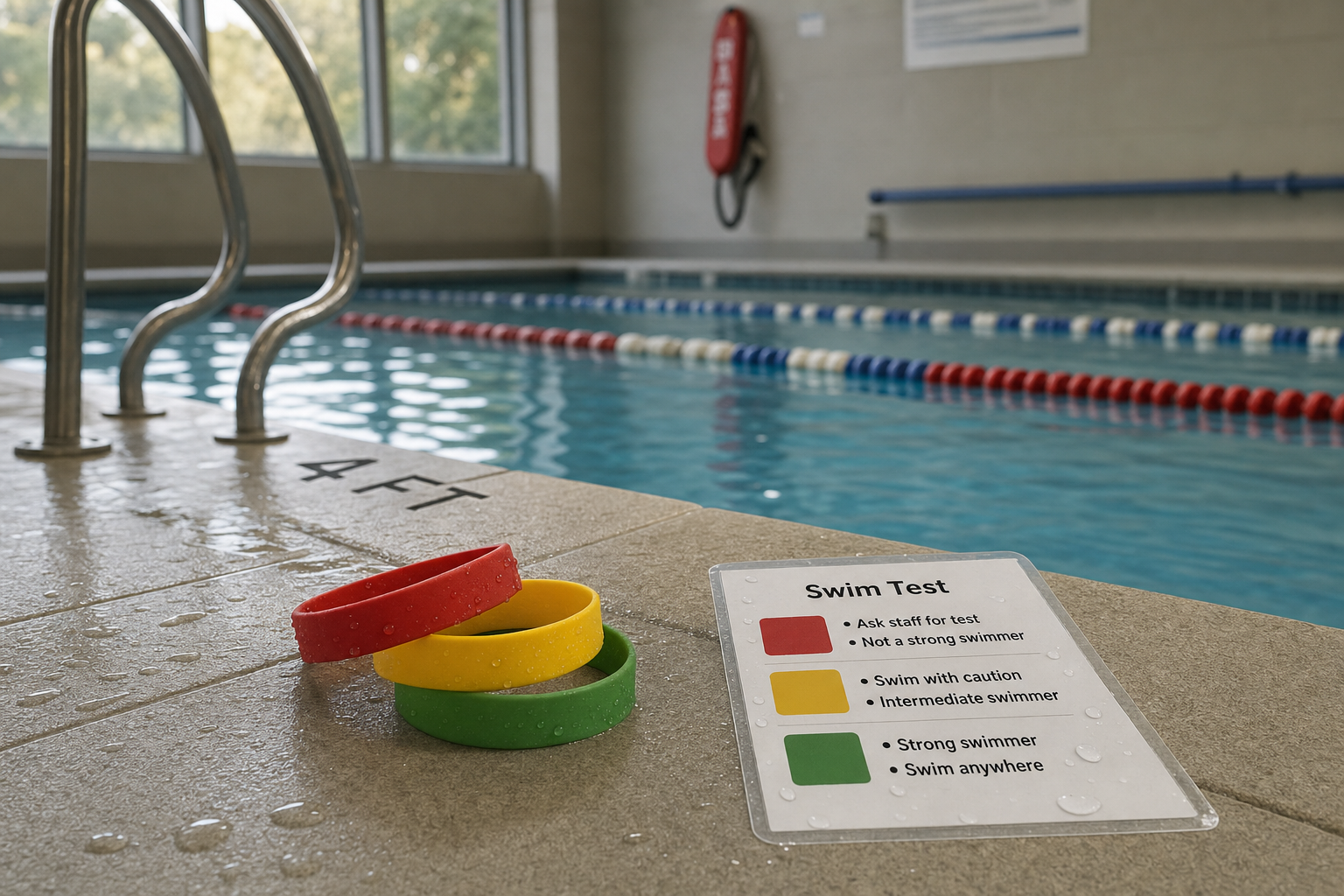
Every pool season from May through August, parents hear about swim tests, wristbands, green bands, red zones—confusion is common. Here’s a clear guide so you know exactly what to expect and what your 6–12-year-old should be able to do. First up: what is a pool swim test and what do the colors mean?
What is a pool swim test — and why it matters
A swim test is a short safety check to see if a child can handle deeper water without constant supervision. Municipal pools and YMCAs often use swim test colors or bands: green bands typically signal full pool access, yellow or orange bands limit children to shallow water or certain features, and red bands (or no band) require close supervision. For example, the YMCA of Silicon Valley assigns orange wristbands to all children under 12 who haven’t passed; children who pass are awarded a green wristband, which lets them swim in lap lanes and deeper areas without a parent in the water.(ysolutions.ymcasv.org)
Another YMCA has a yellow level for those who swim a short distance without floatation and a green level for children who swim 12.5 yards confidently and tread water for 20 seconds.(ymcalouisville.org) In Winston-Salem, a green wristband goes to kids who swim 25 yards without touching the bottom, tread water for one minute, and then can use all swimming areas.(cityofws.org)
These color systems give children goals—and give parents clarity and confidence about what their child can safely do in the pool.
Decoding common municipal & YMCA systems
While systems differ by region, these patterns come up often: under 6 or 7 years old usually require an adult in the water regardless, red means serious limits, yellow/orange means partial access, and green means more freedom. For instance, the MiddleSEX YMCA uses blue, yellow, and red bands. Kids 6+ can take a shallow water test and earn yellow; 8+ can take a deep water test for blue; red means they need active adult supervision while in the water.(midymca.org) The Darien YMCA gives red, yellow, or green wristbands. A child with a red band must have an adult in the water within arm’s reach; yellow means beginner swimmers who stay in shallow areas; green typically means the benchmark swim test has been passed—ability to jump into deep water, tread, float, swim 25 yards.(darien-ymca.org)
These rules exist so kids learn what to aim for: practising distance (e.g. 25 yards), practising tread time (30 seconds to a minute), and survival skills like floating or recovering to the wall. It isn’t enough to only swim a long distance; floating and being calm if tired are critical.
If you want a structured way to help your child progress at home, the 10-Week Plan guides you step by step.
Mid-season practice goals for ages 6-12
Dividing the swim test into pieces helps children and parents make steady progress between swim lessons. One example is the 10-Week Plan from swimy.org which sets out weekly goals so kids build stamina, learn to float, practice deep‐water entries and treading, not just swimming laps. Use this kind of staged practice so your child works steadily toward the green band—not rushing but covering all skills.
Here are what many swim tests expect: being able to swim a length of the pool (usually 25 yards/meters) non-stop, tread water 30 seconds to a minute, float on the back for some seconds, and often jump in from deep water and resurface. Knowing which color band a pool uses helps set clear practice targets.
[[ctakid]]
Remember this caveat: even green-banded swimmers may still need strict supervision under municipal arm’s-reach rules for younger or less confident kids. Passing a swim test does not mean full freedom without parental care.
Safety rules even after swim test passes
Just because your child earns a green wristband or passes the test does not mean supervision stops. Many pools require children under certain ages—often under 10 or 12—to still have a parent or guardian nearby. For example, some policies specify that under-10 green banded children still need an adult in the pool area.(ymcasuncoast.org) Always check your local pool’s rules, since lifeguards also have discretion. Even a great swimmer might panic, especially in wave pools, currents, or pool features. Make floating, recovery, and breath control non-negotiables—even during practice sessions.
Tips for practicing between lessons without skipping key skills
Many parents focus only on distance or speed and forget survival skills. Make sure your child practices floating on their back until calm, breath‐control under water, treading water patiently, recovering from a retreat to the side, and jumping into deep water feet first. These aren’t glamorous, but they often decide whether a child gets green band privileges.
Also, simulate swim test conditions: no stopping; no touching bottom or wall except at start or end; no floatation devices. Practicing like the test helps reduce anxiety and ensures success when taking the real thing. Be consistent: swim weekly, review failures gently, praise progress.
Pool rules parents often misunderstand
Watch out for thinking a green wristband means total freedom. It does not replace supervision. A child with a green band may still be required to have a caregiver within sight or in the facility. Mistaking a band for a waiver of responsibility is a common mistake.
Also, don’t assume one pool’s colors or requirements are the same as another's. A “green wristband pool rule” in California may let the child swim in the lap lanes unattended, while in another state a green band still requires deck supervision for kids under a certain age. Always check the local policy before letting your child roam.
Finally, don’t skip survival skills—the float, the tread, the calm breath under water. Distance matters, yes, but being able to be safe if unexpectedly in deep water, tired or frightened is what prevents accidents.
What parents should check for before swim test day
Ask the pool or YMCA branch:
- What swim test colors or wristband system they use: what green, yellow/orange, red mean.
- What the test consists of: yardage, tread time, floating, deep-water entry.
- How often kids must retest (many Ys require yearly retests or if skills seem weaker than expected).(ysolutions.ymcasv.org)
- What supervision rules still apply, even with a green band.
- Whether swim lessons or programs (like lifeguard-approved or senior instructors) are available to practice all skills.
If you prep them for these expectations, practice in calm water first, and build up to test standards, your child will feel confident and earn that green wristband—and you’ll have more peace of mind by the pool.
By knowing exactly what a pool swim test is, what "YMCA swim test colors" mean from pool to pool, and what goals to aim for, parents can help their children prepare smartly—and swim safely all summer long.
120+ swimming exercises sorted by age — with video and instructions. Developed by swim instructors, completely free.

120+ swimming exercises sorted by age — with video and instructions. Developed by swim instructors, completely free.