Baby Swim Changing-Room Bottlenecks: What Parents Need to Know Now
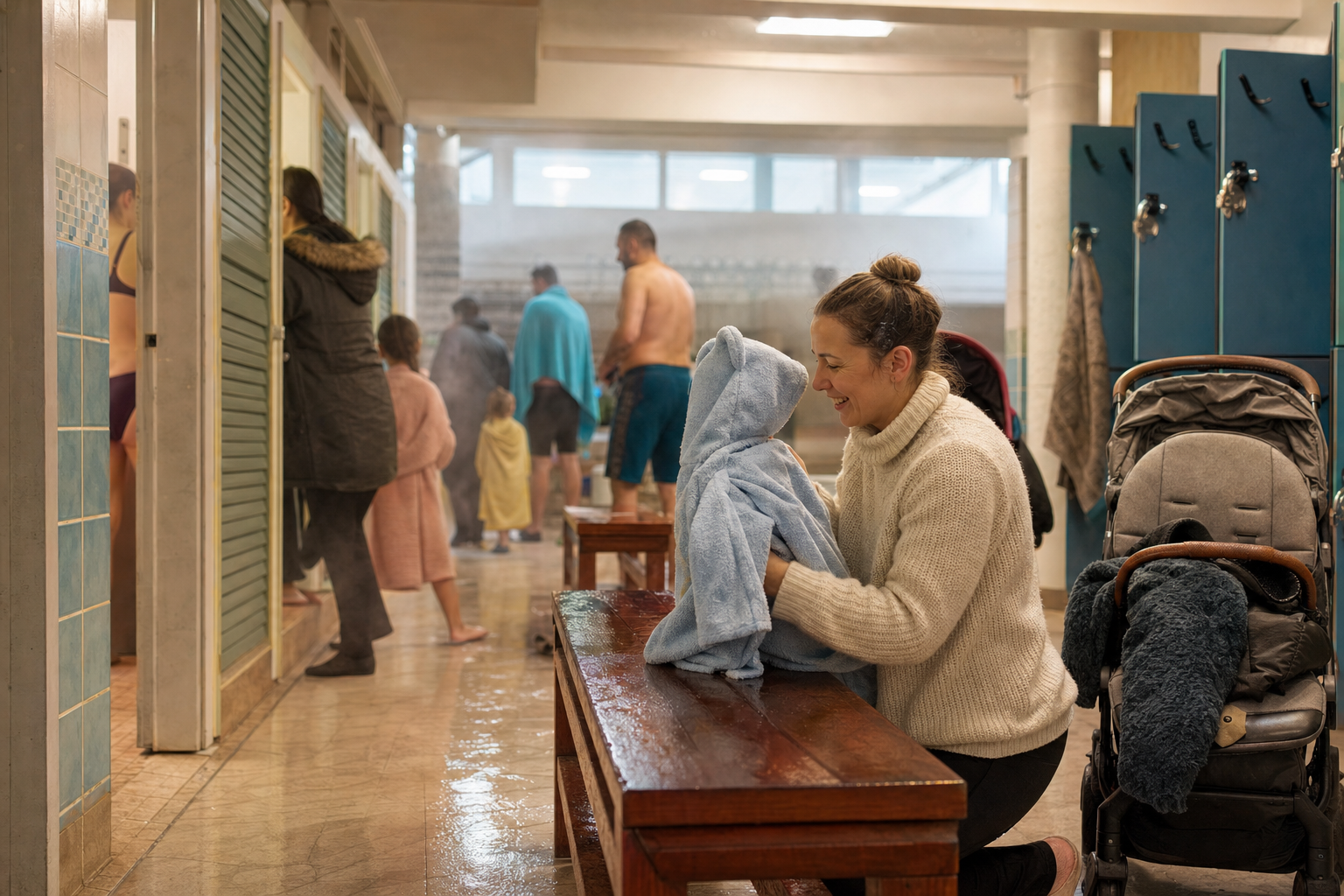
When your 0–36-month-old finishes swim class on a cold, busy weekend in winter, the seconds after stepping out of the pool feel like mission control at rush hour. Wet towels, chilly air, desperate hunger—every delay in the changing room matters. Knowing what to ask your swim school before enrolling can make exits warmer, calmer, and far less stressful. Here’s what to press for, what to pack, and how to evaluate fit so you and your little one leave happy—not you dripping everywhere.
What Features Make a Good Baby Swim Changing Room
To escape post-lesson chaos, swim schools need well-designed facilities. First: family cubicles or private change units. These allow one parent to change both baby and self in peace, without worrying about people watching, baby crawling off, or lines forming. Reddit threads often mention how helpful family cubicles are when “you can use that even if you're just one adult with one baby” and how open cubicle shortages are a major hassle. (reddit.com)
Next, pram space matters. If you bring your buggy or car seat into the changing area, you need somewhere to park it without blocking walkways or toes. Some facilities ban buggies on the pool deck but still allow pram parking or storage off to the side. Check policies ahead of time. (thestandenswimacademy.com)
Showers are another biggie. An on‐deck shower or rinse station saves you burning cold skin walking across wet floors. The Sutton Swim School facility shows how helpful it is when the changing and shower facilities are close together, temperature controlled, and furnished with infant changing tables and proper restrooms. (suttonswim.com)
Also assess locker capacity, well-placed baby change stations, and dry surfaces to put baby down—even just a bench or travel cot helps enormously. According to Swimy’s “Stroller Parking at Baby Swim Lessons” guide, knowing where to safely set down your child—bench, playpen, stroller spot—can make or break your solo parent survival plan. (swimy.org)
Peak Times, Winter Lessons & Why Bottlenecks Get Worse
Weekend early-morning or late-afternoon swim classes in winter are when everything gets crowded. Prams lining walls, family cubicles all in use, showers backed up, and temperatures dropping the moment you leave the pool. Wet towels cling, babies shiver, and parents juggle locking lockers with one hand.
If you want a structured way to build water confidence at home, the 10-Week Plan guides you step by step.
In winter, the cold amplifies urgency. You need more towels, hats, possibly extra layers to warm a baby fast. And bonus: supplies dry slower, surfaces stay damp, everything takes longer. Tight changing rooms with shared benches and only a few change units become huge bottlenecks. Push class timings too close together, and you’ve got three families all trying to change in the same space. Swim England’s reopening guidance once warned that “lessons may need to be staggered” to avoid crowding in changing rooms. (sta.co.uk)
[[ctababy]]
What to Ask Before Enrolling
Here are the key questions to ask your swim school so you don’t get surprised on day one:
What is the layout of changing rooms? Are there private family cubicles, children’s areas, or just open benches? Is there enough room for prams?
How many infant change stations or baby change tables exist per restroom? Is there a changing seat?
What are the policies on pram and stroller storage and pool deck access?
Where are the showers or rinse stations in relation to the changeroom and pool? Are they temperature controlled?
How many lockers are available? Do you need change or coins?
How large are the changing groups during peak times? Can lessons be staggered to reduce congestion?
Packing & Routine Tips for Post-Swim Success
Even if the changing room is great, what you bring and how you use your time makes a huge difference. Many parents swear by packing your swimsuit under your clothes so you get changed quickly. One Redditor wrote, “You get dressed first,” to avoid being dripping wet while dressing baby. (reddit.com)
Use two towels for baby—one to wrap immediately out of the pool, one to dry off fully before dressing. A robe or towel poncho helps for both baby and parent to stay warm in the air. Having waterproof zip bags or a spare big bag for wet swimwear prevents soggy mess. (reddit.com)
Never leave a baby unattended on benches, change tables, or floors near water. Older babies move fast, and wet floors are slippery. Swimy’s “Safe Changing Rooms with Mobile Babies (6-36 Months)” guide puts warning signs on leaving toddlers unsupervised during these transitions. (swimy.org)
How Swim Schools Can Be Better Prepared
If you’re evaluating options or even offering feedback to your swim school, point out what makes a difference. Schools that invest in well-spaced family cubicles, generous pram storage, easy-access showers, sufficient lockers, and strong flow design see calmer post-lesson scenes.
Offering a “10-Week Plan” of how your classes are scheduled, including peak vs non-peak lesson slots, can help you choose slots with fewer people and less chaos. Mentioning session timing and staggering—especially during weekend mornings—can prevent everyone congregating in the changing room at once. Incorporating this 10-Week Plan insight into your planning gives power to choose wisely. (swimy.org)
Pools that control entrance and exit flow, keep floor drainage effective, maintain good heat and ventilation to reduce moisture drift, and employ staff to monitor cubicle cleanliness or free up lockers make exits far smoother.
If you dial in on changing-room features, pack smart, and choose timings well, the moments after swim class don’t have to be drenched in stress. Quicker exits = warmer baby + calmer parent. And every swim can end like a small win—not a soak wet scramble.
120+ swimming exercises sorted by age — with video and instructions. Developed by swim instructors, completely free.

120+ swimming exercises sorted by age — with video and instructions. Developed by swim instructors, completely free.