Backyard Lessons at Your Pool: Safety, Insurance, and Setup Guide
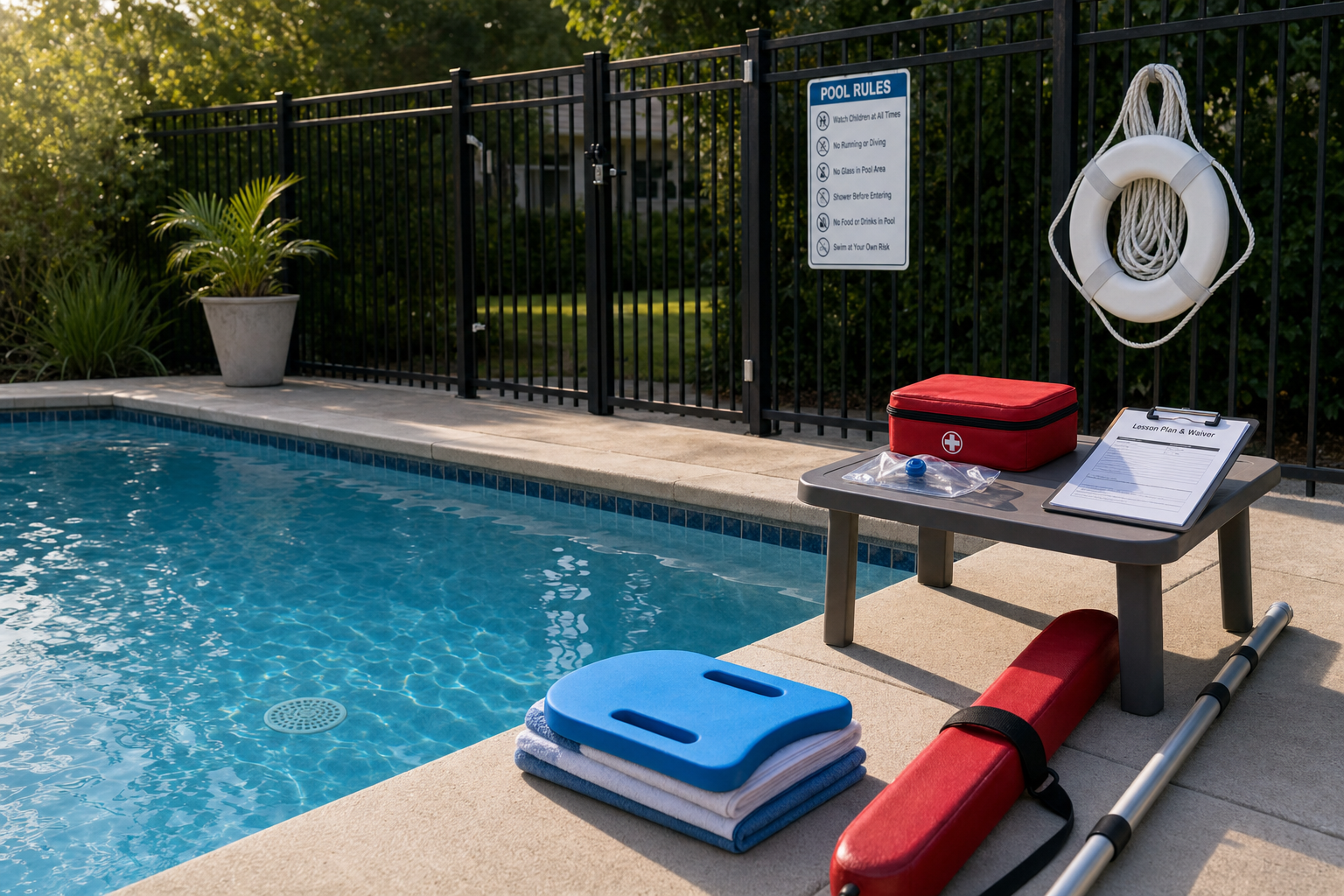
Thinking of hiring an instructor to teach your 3-to-12-year-olds swim in your own pool? Great idea for comfort and focus—just make sure you cover the essentials so those backyard pool swim lessons are safe and stress-free. Here’s what every parent should check first—qualifications, safety gear, rules, insurance, and emergency planning—to protect your child and yourself.
Does Your Instructor Have the Right Training & Certifications?
First off, ask if the instructor is certified. For example, in the U.S., states like Florida require swim instructors to be certified in swimming instruction, first aid, and CPR, usually via nationally recognized aquatic training programs like the American Red Cross or YMCA. (flsenate.gov) If they can show up-to-date certifications and some teaching history, you’ll know they’re not just swimmers, but trained to teach kids safely. In places like Australia, instructors often hold licenced status under frameworks like Swimming Australia’s National Coaching Framework. (swimming.org.au)
Ask for references or video recordings of lessons, and if they follow a structured curriculum. Some programs offer something similar to the 10-Week Plan from swimy.org (https://www.swimy.org/10-week-plan), which breaks down skills into weekly goals like breath control, floating, kicking, and stroke basics—great for school-age kids to build confidence steadily.
What About Insurance and Waivers?
Even at home, swim instructor insurance matters. According to Swim School Insurance, every instructor (full-time, part-time, or hobbyist) ought to carry liability insurance. Facility policies, homeowner insurance—they often do not cover independent lessons. Without your own policy, you’re exposed if a child slips, gets injured, or claims something went wrong. (swimschoolinsurance.com)
Common coverages include general liability (bodily injury, property damage), professional liability (errors/omissions), and medical payments. Premiums vary—$300 to $800/year for a $1 million policy are typical. (swimschoolinsurance.com)
Also set up a waiver: when private lesson programs like AquaMobile teach in clients’ home pools, they include liability waivers that parents sign before the first lesson. The waiver states that participants understand risks, agree to indemnify the instructor (or program), and authorize medical care if needed. (aquamobileswim.com)
Safety Rules & Supervision: What Parents Must Require
You’ll want clear deck rules before vaccines and goggles. Safety around water isn’t just staying close; it’s about supervision without distractions. Put away phones, keep toys off the deck, prohibit running, and enforce rules like “feet first” entry unless certain depth allows diving. (healthychildren.org) Every pool should have anti-entrapment drain covers, lockable fences or barriers that fully enclose water, and alarms or self-latching gates. (cdc.gov)
[[ctakid]]
Remember: a lesson does not equal lifeguarding. Even if an instructor is excellent, they are there to teach, not cover every safety angle alone. Parent or guardian supervision remains essential. Always have someone watching the pool area, understanding basic rescue skills, and knowing where safety gear is.
Emergency Plan and Equipment You Should Agree On
Before lessons begin, agree in writing on an emergency plan. It should include:
― Location and use of phone, first-aid kit, life ring or reaching pole.
― Nearest hospital or urgent care.
― CPR protocol: is the instructor certified? Will a parent also learn CPR?
― Cancellation protocol for bad weather or unsafe pool conditions (e.g., algae, water temperature).
Check that there’s rescue equipment onsite—life jackets, reach poles—or that the instructor brings them. Agreements from Swim School Insurance and standard programs often expect that kind of planning. (swimschoolinsurance.com)
What to Put in Your Setup Checklist
Here’s what you should see or get written:
Qualities: instructor certified + CPR/First Aid, background checked, insured.
Documents: signed liability waiver, list of pool rules agreed in writing.
Supervision rules: who watches, how distractions are minimised.
Safety gear: rescue gear, life jacket options, safe drains, non-slip deck surfaces.
Emergency planning: phone access, first aid, CPR, incident protocols.
Also confirm student to teacher ratio is appropriate: one on one for private swim lessons at home is best for ages 3-12. If it’s a family lesson or semi-private, make sure everyone’s safety and learning needs are accounted for.
Program Options and Hidden Traps
Today there are “beta” or newer at-home lesson services (like Backyard Swim Co. or Swimingo) entering the market. Services like Backyard Swim Co. bring certified, insured instructors to your backyard or neighborhood pool, allow flexible scheduling, usually no upfront minimums, and transparent pricing. (backyardswimming.com) Swimingo likewise connects families in Canada with certified instructors who travel to your pool so you avoid crowded public swim schools. (swimingo.com)
Watch out for these pitfalls: instructors who don’t show proof of liability insurance, unclear cancellation or refund policies, lack of written safety rules, no plan for emergency response, or instructors unfamiliar with local regulations that might require pool fence height, instructor certification, or whatever your state or region mandates. Also be cautious if rescue gear is missing or supervision is ambiguous.
Final Tips Before You Get Started
Meet the instructor at your pool beforehand. Walk through the rules. Ask them to show you their insurance certificate, certifications, background check. Make sure both of you agree on safety standards and emergency protocol. After the first week, check in: is your child progressing? Does it feel safe and enjoyable? If something feels off, address it early rather than hoping it gets better.
Private swim lessons at home safety isn’t complicated—just being sure up front on insurance, instructor qualifications, pool rules, supervision, and emergency planning makes all the difference. When those pieces are in place, your 3- to-12-year-old can learn with confidence, and you can relax, knowing the lesson is teaching, not babysitting or lifeguarding.
120+ swimming exercises sorted by age — with video and instructions. Developed by swim instructors, completely free.

120+ swimming exercises sorted by age — with video and instructions. Developed by swim instructors, completely free.