Baby Swim During Daycare Germ Season: Guide for Parents (4–36 Months)
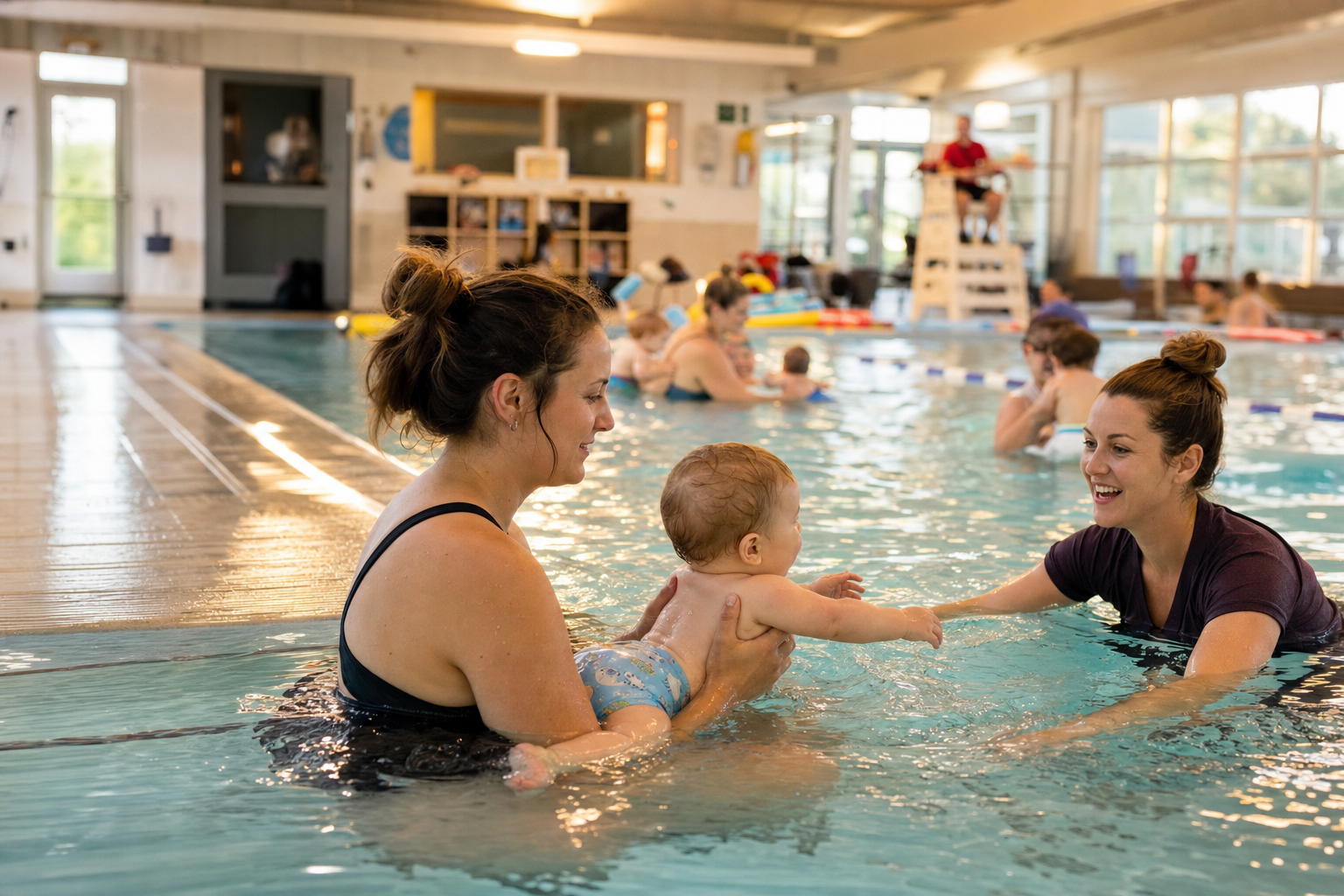
If your baby is new to daycare or nursery and seems constantly mildly unwell—stuffy nose, tired, recently exposed to someone with a cold—you’re probably wondering: Should baby swim after nursery? Or when is it safe for swim class during cold season? Let’s jump into what matters most, right now.
When to Say “No Pool Today”
If your baby has fever, diarrhea, vomiting, or trouble breathing—skip swim class. These symptoms mean they shouldn’t be in daycare, pool, or any group setting. After illness, wait until symptoms are fully gone (usually at least 24 hours fever-free without medication) before returning to activities like swimming. HealthyChildren clearly advises staying out of child care until fever, diarrhea, or vomiting have resolved. (healthychildren.org) Mayo Clinic agrees: children with fever, vomiting, diarrhea, or diagnosed with contagious disease should not swim until recovery. (newsnetwork.mayoclinic.org)
If your baby has mild symptoms only—a bit of runny nose, slight tiredness, but still playful, eating, alert—swimming may be okay if you feel up to it. Always check with your pediatrician when you’re unsure.
Pool Hygiene & Swim Nappies: Keeping Germs Out
Even when baby feels well, daycare germs are everywhere. Pool hygiene becomes really important to reduce risks of illnesses like cryptosporidiosis, skin infections, ear problems, or respiratory irritation.
Swim nappies (or swim diapers) are made to help contain solids, but they are not waterproof. They can’t keep diarrhea-causing germs out of water if baby has diarrhea. The CDC says anyone with diarrhea—swim nappy or not—should stay out of the water. (cdc.gov) When using swim nappies, change them every 60 minutes, and always use designated changing areas away from pool edges. Wash hands thoroughly after each change. (cdc.gov)
Pool operators have rules too: maintenance of chlorine/bromine levels, water pH, clear cleaning schedules, disinfection after any fecal incident. Public health rules require that restrooms, showers and diaper-changing areas stay clean and well-managed. (cdc.gov)
If you want a structured way to build water confidence at home, the 10-Week Plan guides you step by step.
Handwashing and Exposure: Daycare + Pool Combo
Daycare means exposure to many germs—colds, viruses, stomach bugs. Teach everyone (staff, baby, siblings) good hand hygiene. Washing hands with soap for at least 20 seconds after diaper changes, before snacks, after nose wiping, and always before swimming is essential. (cdc.gov)
Expose your baby gradually to swimming classes to build resilience—don’t try to attend every class if they are already run down. Some swim programs offer a gradual swim course like the 10-Week Plan by swimy.org to help babies adjust physically and resist illnesses without overwhelming them. Refer to the seaworthy “10-Week Plan” of swimy.org to pace swim class attendance. (Use it while baby is healthy to establish routine). This helps manage immune load and recovery time.
[[ctababy]]
Pool Class Cancellation Rules: When They Should Apply
Here’s a practical checklist: if any of the following apply, call and cancel—or stay home from—the swim class:
- Baby had contagious illness (fever, vomiting, diarrhea) in past 24 hours.
- Baby received antibiotics for contagious infection and hasn’t had at least one full dose period.
- Baby seems very tired, unusually lethargic, breathing fast, or has chest congestion.
- Baby is under 4 months and you’re not comfortable, especially in public pool settings; pediatric guidelines often urge caution with infants due to underdeveloped immune systems. (boystownhospital.org)
Make sure your swim class provider has cancellation policies for sudden illness—ask ahead. If their rooms smell of chlorine overload, have dirty change zones, or visibly low maintenance in pool water or pH levels you suspect, call to postpone or switch classes. Dirty water or weak chlorination increases risk. (cdc.gov)
Practical Decision Guide for Parents
Imagine today’s schedule: daycare drop-off, nap, swim class later. Baby has mild cold, no fever, breathing mostly fine but a bit wheezy. What to do:
Ask yourself: is baby active, eating, peeing well, able to nap as usual? If yes, swim might be okay. Bring extra towel, bag of clean clothes, waterproof bandages, and plan to shorten class or opt for shallow, warmer water rather than deep or large public pools.
If baby seems "off"—not wanting to eat, sleeping poorly, resting more than usual—cede this class. Rest helps immune system more than chlorine or cold water. Best to reschedule.
Also, choose swim facilities wisely: small classes, newer clean pools, good staff supervision, ideally heated water, and visible policies about illness and swim nappies.
Safety Caveat: Always Consult Your Pediatrician
Every baby is unique. Premature babies, those with asthma, eczema, or immune-sensitive conditions may need extra caution. If baby has any breathing trouble, wheezing, chest-retractions, new rash, or symptoms worsening—call your pediatrician instead of swimming. These are red flags. HealthyChildren advises contacting a medical provider with serious or persistent symptoms. (healthychildren.org)
Balancing swim class with daycare season’s germ load isn’t simple, but with these practical rules—fever-free, no diarrhea, good handwashing, clean swim nappies, clean pool, and paying attention to baby’s energy—you can make smart decisions. When in doubt, rest wins. Swimming can resume safely once baby is bouncing back, hydrated, happy, and symptom-free.
120+ swimming exercises sorted by age — with video and instructions. Developed by swim instructors, completely free.

120+ swimming exercises sorted by age — with video and instructions. Developed by swim instructors, completely free.