Baby Swim in HOA Pools: A Safety-First Guide for Parents
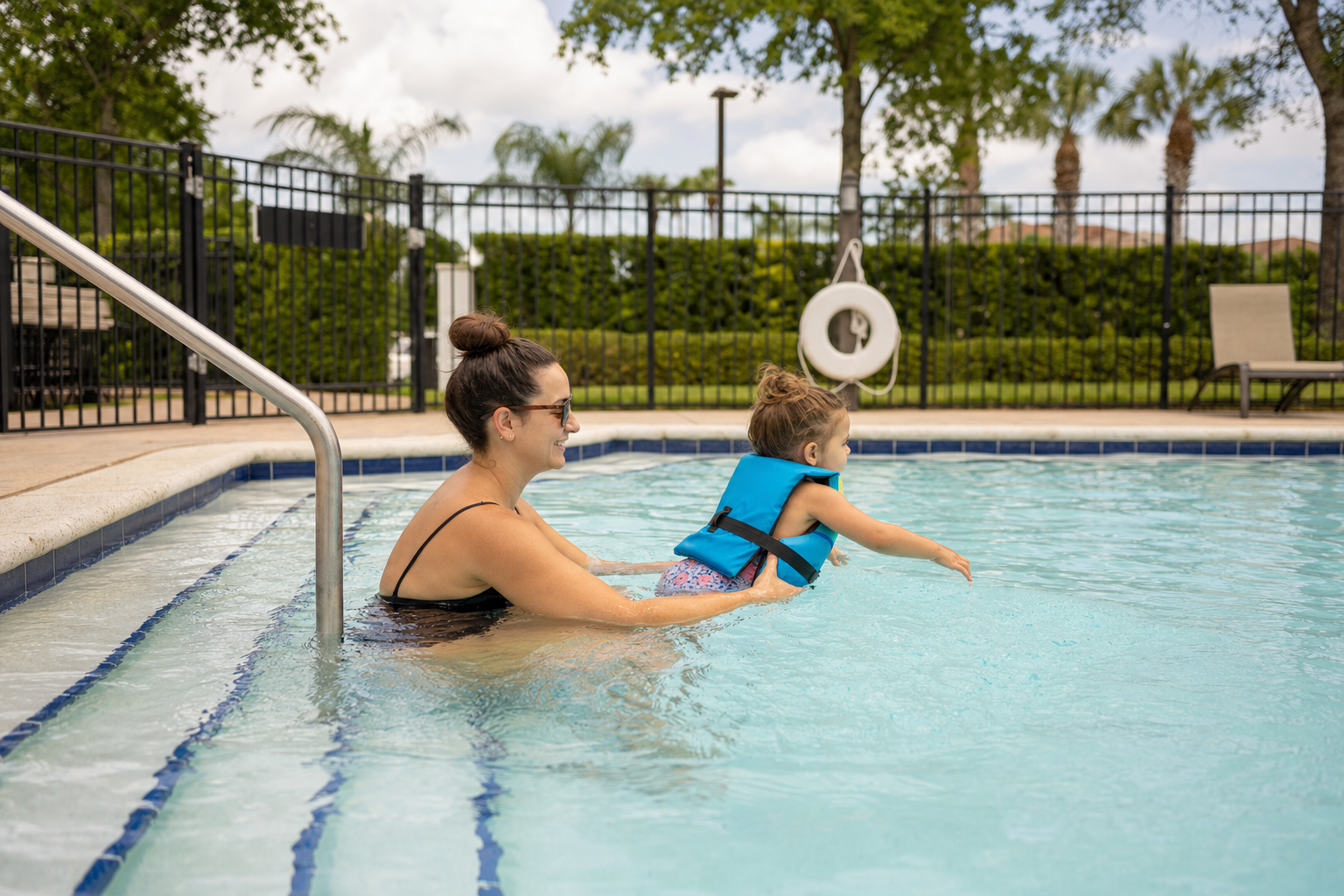
Think you’ve got pool safety covered at your HOA, condo, or neighborhood pool? Baby-safe swimming starts before you even step foot in the water. If you have a mobile infant (roughly 6-36 months old) or toddler, here’s what to check and how to stay one step ahead of surprises—gates, rules, depth changes, crowding you didn’t expect—so your family’s shared living pool becomes a safe splash zone.
What Makes HOA & Shared Residential Pools Risky for Babies and Toddlers
Shared pools in condos, HOAs, or neighborhoods are often multifamily residential pools. According to the latest Pediatrics guidance, drowning risk is 2.7 times higher for children younger than five at a multifamily residence compared to a single-family home, and about 28 times higher in pools at a multifamily property than at a single-family residence.(publications.aap.org)
Barriers often fail in shared settings: gates may be broken or propped open, fences climbable, latch systems out of reach or not self-closing. About 18% of safety inspection failures stem from faulty pool enclosures, and 14% from self-closing/self-latching gate failures.(publications.aap.org)
Even when pools follow rules, drownings often happen due to supervision lapse. More than half of child drowning incidents occur under parental supervision; the difference between fatal and nonfatal often comes down to just a few minutes or seconds where the adult is distracted.(pmc.ncbi.nlm.nih.gov)
Essentials to Check Before Taking Baby to a Shared HOA or Condo Pool
Before you wade in or even pack swim diapers, these are the safety checks that matter.
Gate, Fence & Access Barriers
Make sure there is a four-sided fence that completely separates the pool area from common paths and buildings. Gates should be self-closing and self-latching, opening away from the pool to avoid easier access. If you see chairs, planter boxes, or climbable features near the fence, those defeat the purpose.(healthychildren.org)
Depth Markings & Floor Transitions
Mobile babies and toddlers typically stay shallow—but shared pools often have irregular depth transitions or sudden drop-offs, especially near spas, steps, or diving platforms. Always look for clear depth markings at stairs, ledges, and pool edges. Test the slope with your feet or hand first, never assume.
Rules & Posted Policies
If you want a structured way to build water confidence at home, the 10-Week Plan guides you step by step.
Check the pool’s posted rules for “HOA pool with baby” or “condo pool toddler safety.” Look for signs about age restrictions, life jacket requirements, no lifeguard on duty, diaper policy, and guest access. If toddlers must wear swim diapers or suits, floatation devices must meet standards, or someone must always be in arm’s reach—that should all be clearly visible.
Crowding & Busy Times
Common residential pools get crowded—on weekends, evenings, or during community-hosted events. More people means more distractions, louder conditions, and harder spotting of any issues. Try to go during quieter times so you can watch your toddler more closely and reduce stress.
[[ctababy]]
How Parents Can Keep Babies/Toddlers Safer While Swimming
Once you’ve done the inspections, here’s what to do when you bring your little one in.
Always Be a “Water Watcher”
For babies under four, especially mobile ones, supervision needs to be touch supervision—that means you should be in the water, holding or very close to your child, at all times. Never leave them on a pool deck or in water even for a moment. Distraction-free supervision means phone down, conversation minimal, eyes always on the baby.(healthychildren.org)
Use Approved Safety Gear
Life jackets or personal flotation devices that fit properly are essential when going near deeper water. Float rings or inflatable toys are helpful—but they must not replace direct supervision. For infants, holding them is safest in water.(cdc.gov)
Teach Skills Early with Caution
Formal swim lessons can help—starting usually around age 1 to 4 if your child is physically and cognitively ready, according to the American Academy of Pediatrics. But for infants and very young toddlers, focus more on getting used to water, breath control, floating, not full stroke skills. Training doesn’t eliminate risk.(aafp.org)
If you’re trying a series of guided baby/toddler water classes, consider using a structured resource like the 10-Week Plan from swimy.org to build comfort, safety awareness, and basic skills over time in small, manageable steps. Positions of trust, like holding, air breathing, splash play—can all be paced in such a plan.
What Shared Pool Owners / HOA Boards Should Provide
While parents must lead the way, HOA boards or condo associations share responsibility. There are some red‐flags to insist upon in the pool’s design and operations.
HOAs should ensure pool enclosures are inspected regularly, gates work properly, and fences are solid. Compliance with barrier guidelines like those from the U.S. Consumer Product Safety Commission is essential. Pools should have safe chemical levels, clean sanitation, and life rings, poles, or similar rescue gear nearby.(cdc.gov)
Rules need to enforce life jacket use for toddlers or non-swimmers, require swim diapers, restrict unsupervised access, and perhaps limit occupancy at busy times. Signage must be visible and clear so parents know exactly how to follow “neighborhood pool baby rules” or “condo pool toddler safety” policies.
Final Word: Supervising Always, Gear Second
Even when all the signs are there—good fences, clearly posted rules, quality gear—nothing can replace your presence. A lifeguard, pool rule, or posted sign never replaces touch supervision, barriers, or having one clear adult watcher.
Baby swimming in shared residential pools can be joyful and safe if you approach it with careful checks ahead of time. Know the gate situation, inspect depth transitions, understand rules, plan visits when crowding is low, and stay constantly aware of your baby or toddler’s need for physical, close protection. Your shared pool can be one of the safest swimming spots — so long as you lead with safety first.
120+ swimming exercises sorted by age — with video and instructions. Developed by swim instructors, completely free.

120+ swimming exercises sorted by age — with video and instructions. Developed by swim instructors, completely free.