Breathing Ladder Sets for Kids: Calm, Steady Endurance
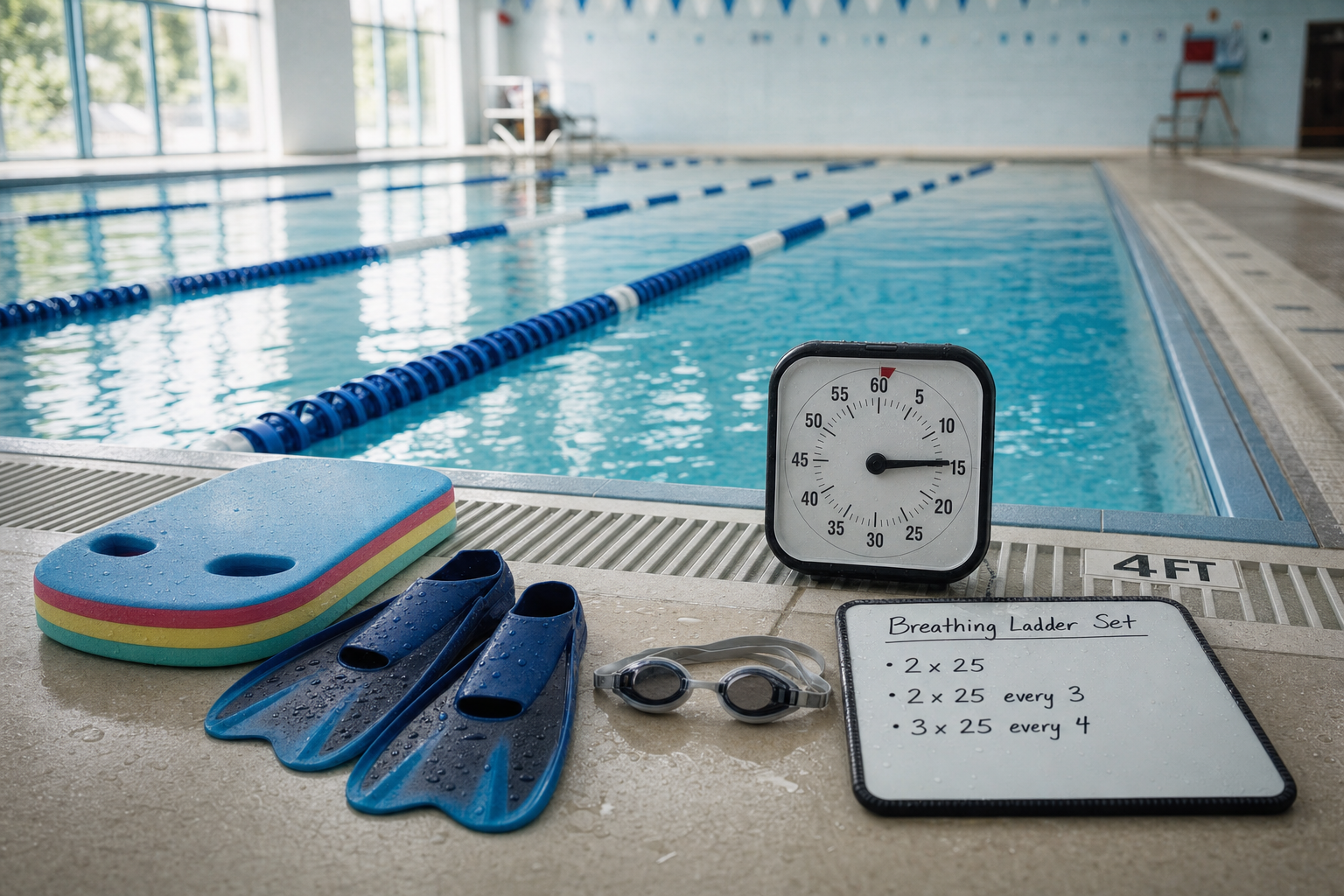
If your child already swims repeat 25s and you're looking to build swim endurance in the 8-12 age bracket, breathing ladder sets are a magic trick. They teach a steady exhale, relaxed timing, and prevent the sprint-panic that burns out young swimmers before they’ve truly built stamina. Let’s dive into what a breathing ladder set is, how to run one safely, recipe ideas scaled for ages 7-12, plus how to steer clear of risks like breath-holding and hyperventilation.
What Exactly Are Breathing Ladder Sets?
A breathing ladder set is a swim workout in which distances increase up then down over a series of repeats—such as 25-25-50-50-75-75-50-50-25-25 metres (or yards depending on your pool). Unlike classic ladders that push speed, a breathing ladder focuses on keeping strokes steady, timing relaxed, and exhales consistent underwater. For a kid doing repeat 25s, you might do a simple ladder like 2×25 (easy breathing) – 2×25 (every 3 strokes) – 3×25 – 3×25 – 4×25 – 4×25 – then back down. Every exhale underwater, inhale at the side turn, no holding breath.
That method builds aerobic confidence well before in-season meets or school swim tests. You build a base that supports maintaining pace over distance, not just sprint bursts. Early in pre-season, use long rest, generous breaks, and focus on technique with each ladder.
How to Run a Safe, Effective Ladder for Ages 7-12
Before you try a breathing ladder set with your child, here are guardrails to follow. First, make sure “swimmers who can do repeat 25s” are your base—this means your child can swim continuously 25 metres several times without stopping for rest.
Warming up with drills is non-negotiable. Start with simple freestyle breathing practice, side-glides, blowing bubbles, bobbing so exhale underwater becomes automatic. Credible sources (like America’s Red Cross) emphasize that good breathing technique must come before endurance work so energy isn’t wasted fighting the water. Avoid holding breath after every other stroke; that leads to gasping. Also, no competitive games under water, no breath-holding contests—these are flagged as risky in swim-safety instructor manuals. (studylib.net)
Once warm, choose a ladder distance appropriate to their level. For example: 2 lengths easy (breathe every stroke) → 2 lengths with breathing every 3 strokes → 3 lengths with every 4 strokes → then reverse. For school-age kids, distances of 25 or 50 metres (or yards) work well. Rest intervals should be generous at first—about 15-30 seconds between repeats—long enough that breathing stays calm and parents/coach can help with feedback. That way you build endurance without risking exhaustion. (sportssteps.com)
If you want a structured way to help your child progress at home, the 10-Week Plan guides you step by step.
Also, during season or when prepping for swim tests, you might blend ladder sets into broader plans like the 10-Week Plan frameworks many swim instructors use. That kind of structured plan helps build endurance up gradually from warm ups, to breathing drills, to sustained aerobic swim sessions so your child is prepared for test day. (Explore one example in the 10-Week Plan.)
Recipe Ideas: Ladder Sets for Specific Age Groups
Here are three sample ladder recipes that match typical abilities in ages 7-12, modifying for younger or older in that range.
Ages 7–9: Starting out with confidence
100% distance unit: 25 metres or yards. Ladder pattern: 2×25 (breathe every stroke), 2×25 (every 3 strokes), 3×25 (every 3), 3×25 (every 4), back down with same breathing patterns. Rest 20-30 seconds between each rep. Focus on smooth strokes, drooping head avoided, shoulders rolling with each breath.
Ages 10–12: Intermediate endurance
Switch to 50s. Ladder like 2×50 (easy breathing), 2×50 (every 3 strokes), 3×50 (every 4), 3×50 (every 5), then 2×50 (every 4), 2×50 (every 3) back to easy. Rest about 15-20 seconds, maybe a set of 4-6 ladders depending on fitness. Use bilateral breathing or alternate sides when breathing every other stroke so the child builds balance. (weteachsports.com)
In-season maintenance / test prep
Alternate with steady distance freestyle. For example, after a couple of breathing ladders, add 4×50 steady pace, always breathing every 3 strokes; or include longer lengths with drop-off breathing (start every 2, move to every 4). Keep intensity moderate: endurance, not speed. Rest longer if fatigue sets in—it’s better to finish strong than collapse mid-set.
[[ctakid]]
What to Avoid: Safety, Technical, and Pacing Pitfalls
Several common mistakes can derail progress or risk safety. First, breath-holding too long or competitive underwater contests are major no-nos. The American Red Cross explicitly warns against breath-holding games to hold the breath as long as possible, or hyperventilating before submerging, because this can lead to shallow-water or hypoxic blackout. (studylib.net)
Second, skipping easy rest intervals kills progress. If rest is too short, breathing becomes erratic; if too long, momentum is lost. Let rest be part of training: long enough to catch breath, receive feedback, then swim again. Parents should monitor fatigue—if arms or legs are dragging, the breathing pattern will suffer and technique degrades.
Third, rushing to complex breathing patterns (every 5th, every 7th stroke) before mastering basic control (every stroke or every 3 strokes) causes frustration and sloppy form. Prioritize relaxed exhale underwater and turning the head in line with body rotation—not lifting or twisting the neck.
Why Breathing Ladder Sets Make a Big Difference
When done right, these drills build several layers of swim endurance: physical stamina, technique efficiency, and mental comfort in the water. Kids learn to control their breathing so they don’t tense up when gasping for air, they practise rhythmic breathing so every stroke becomes tied to roll and exhale, not to desperation. Over weeks practicing breathing ladders in pre-season, they’re better prepared for swim tests at school, longer fun laps in holidays, or team swims in in season.
Parents report that children who do breathing ladder routines lose less energy mid-race during school swim meets, feel more confident, and enjoy swimming more instead of dreading long freestyle sets. It’s rewarding to watch that smooth pull-breathe-kick cycle grow stronger each week.
Breathing ladder sets for children aren’t about sprinting farther or pushing speed. It’s about teaching calm, steady exhale, relaxed rhythms, safe practices, and building swim endurance ages 8-12 in a way that lasts. With warm-ups, age-scaled ladders, rest built in, and safety rules in place—no breath-holding, no hyperventilation—your child can glide into test season with confidence and strength.
120+ swimming exercises sorted by age — with video and instructions. Developed by swim instructors, completely free.

120+ swimming exercises sorted by age — with video and instructions. Developed by swim instructors, completely free.