Baby Swim Videos: What Not to Copy (and What to Do Instead)
When you see a viral clip of an infant floating underwater or being tossed into a pool as a “survival skill,” it may look impressive—but these dramatic scenes don’t always show what’s safe or developmentally appropriate for babies aged 0–36 months, especially under 12 months. The most important thing for new parents to know: copying forced submersions, solo underwater floating clips, or throw-in recoveries can be risky and misleading.
Why Some “Infant Survival Swim” Videos Are Problematic
Under a year old, babies are still developing their motor skills. They aren’t able to hold themselves properly or breathe up consistently. The American Academy of Pediatrics (AAP) clearly states that there is no evidence infant swim programs under 12 months lower drowning risk. Even though some infants can be trained to reflexively float on their backs, that ability has not been shown to reduce drowning rates and these forced activities often involve repeated dunking that may be physically or emotionally distressing. (healthychildren.org)
Solo floating underwater videos or throwing a baby into the water to surface themselves don’t account for real-life variables—water temperature, adult supervision, respiratory health, or cognitive readiness. Such clips often omit things that actually matter for safety: close supervision, gradual introduction, comforting settings, and a clear signal from the baby that they’re okay.
The AAP updated its 2026 policy to emphasize beginning swimming lessons after a child turns one year old. Before then, classes should focus on gentle water play rather than survival skills. Supporting lessons for toddlers (ages 1–4) may reduce drowning risk, but only as part of a layered safety plan that includes barriers, attentive supervision, life jackets, and caregiver education. (publications.aap.org)
What Parents Should Look For Instead
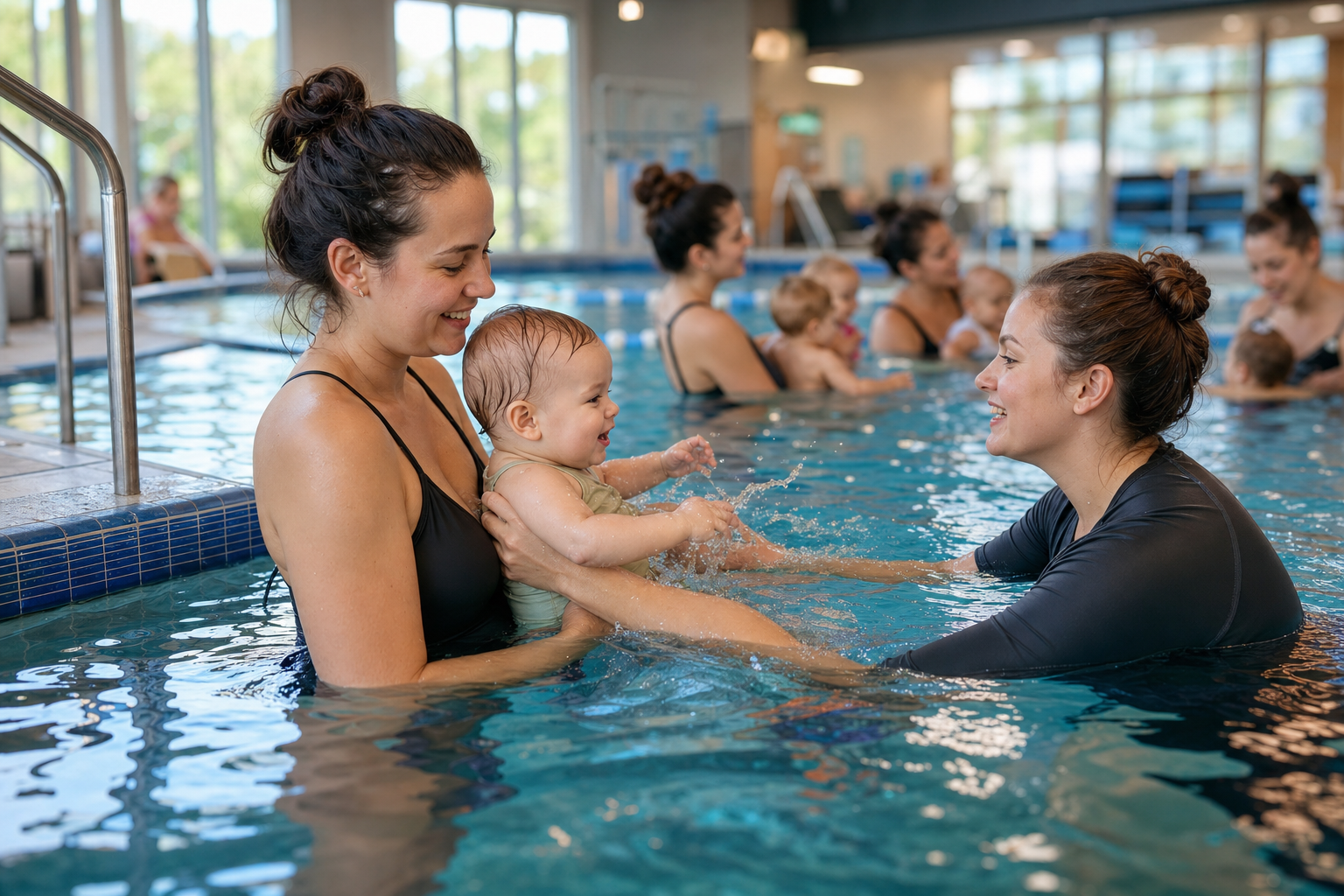
Choose classes and videos featuring water confidence, not forced survival stunts. Let me share what transformed my own experience as a parent. My baby’s swim lessons weren’t about dunking or claiming to teach her how to “save herself.” The instructors let her get used to water, splash, breathe, and then we introduced gentle floating—always with me in arm’s reach. That gradual, respectful approach built real comfort in the water—and peace of mind for me.
When selecting swim classes, search for ones that encourage age-appropriate water comfort. For infants under 12 months, “parent-and-child” or “toddler splash” type classes are better than survival swim products that promise fast results. Ensure instructors are certified, the pool is warm (ideally 87–94°F / 30–34°C), and the lesson structure includes very short durations for infants with lots of positive reinforcement.
If you want a structured way to build water confidence at home, the 10-Week Plan guides you step by step.
Programs that promise extreme feats—babies fully clothed floating backface, solo survival, or dramatic under-throws—often use “Infant Survival Resource” or similar branding. These classes can employ forced submersion, intense training sessions, and selling danger and rescue as entertainment. There’s controversy because such videos may give parents a false sense of safety or lead to infants having negative water experiences. (danswim.com)
Another standout option offered by swimy.org is the 10-Week Plan, which aims to build water confidence progressively rather than rushing into difficult survival skills. That kind of plan highlights developing comfort with water, support, and achievement in manageable stages.
[[ctababy]]
Risks Hidden Behind Dramatic Swim Clips
Videos of infants submerged or thrown into water, expecting them to float or swim themselves, may overlook real risks. Underwater times—even brief—can cause irregular heart rate, disrupted breathing, cold stress, or sheer terror for a baby. Ear infections, sinus issues, or more serious complications have been linked to repeated dunking in young infants. (pubmed.ncbi.nlm.nih.gov)
The biggest danger isn’t necessarily the technique itself; it’s how it impacts supervision. Dramatic clips can lead parents to overestimate their toddler’s ability and reduce vigilance. According to the AAP, swim lessons (even formal ones for older toddlers) do not make children drown-proof—adult supervision and secure pool barriers stay essential. (healthychildren.org)
How to Safely Encourage Water Confidence
Start with gentle water exposure: playing at your side, singing songs, splashing with a parent or trusted adult, always maintaining touch supervision. Don’t rush into under-water holds or unassisted floating beyond what your baby tolerates.
Pick video and class content that promotes positive experiences—videos where parents are present, there’s choice, smiling, and clear boundaries. Read reviews, ask instructors what methods they use, how long sessions last, whether babies lead progression.
Check with your pediatrician before enrolling in any survival swim program, especially under 12 months. Ask whether the instructor uses forced submersion, how often infants are exposed to cold or long underwater holds, and whether they monitor each baby’s response.
When your child turns one, you can consider formal lessons but always as part of multiple layers of safety. The AAP suggests lessons for children aged 1 and up may reduce drowning risk—but supervision, life jackets, barriers, and caregiver education must go with them. (cdc.gov)
Bottom Line: What Not to Copy
Don’t try to replicate videos of forced submersions, dramatic solo floats, or throwing infants into water under the belief they’ll “save themselves.” Those stunts are often built for spectacle, not safety. Under 12 months especially, there’s no proof survival swim tricks reduce drowning risk—and plenty of room for harm.
Focus instead on gradual, playful water confidence. Supervision and safety layers are not optional extras—they’re the whole foundation. It’s not about creating swimmers overnight; it’s about creating confidence, trust, and respect for water. And when parents make that choice, they’ll be protecting both body and spirit.
120+ swimming exercises sorted by age — with video and instructions. Developed by swim instructors, completely free.

120+ swimming exercises sorted by age — with video and instructions. Developed by swim instructors, completely free.