Backstroke Start Basics for Kids (No Wedge Needed)
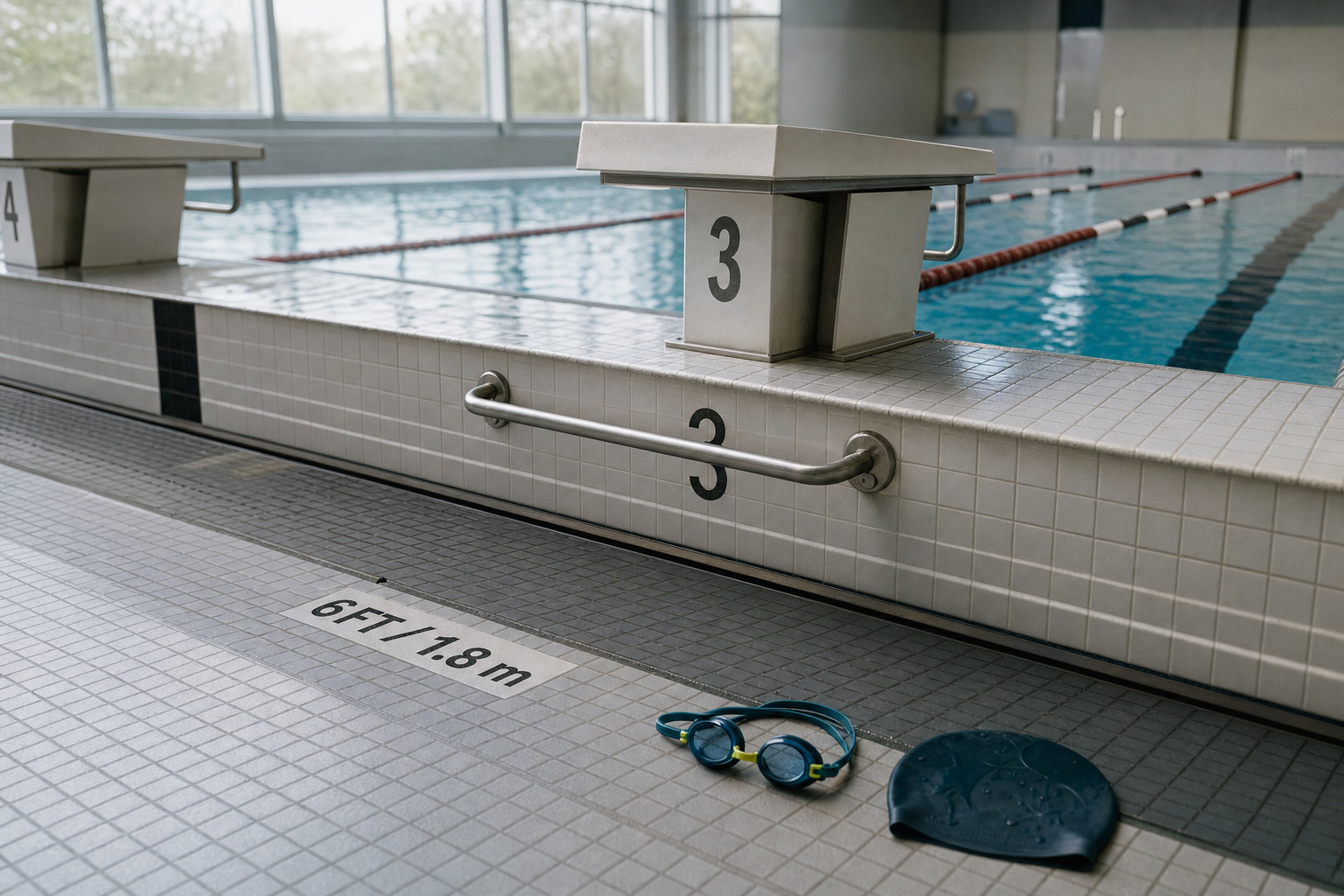
Let’s jump right into how to teach kids aged 8–12 a safe, legal backstroke start without using a wedge or ledge. This is for pre-team or early team swimmers. Coaches or parents must always be supervising, and the water must be deep enough for safety. We’ll cover handgrip technique, body tension, shallow push, depth rules, and common pitfalls.
What Is a Legal Handgrip and Why It Matters
Kids learning backstroke starts should use handgrips built into the pool wall. These are fixed bars or grips placed horizontally, 0.3 to 0.6 m above the water surface and parallel to the end wall. World Aquatics mandates these handgrips on pools that use starting blocks to allow safe, strong backstroke starts without using a wedge. (manuals.plus)
Children grasp the handgrips with both hands, thumbs wrapped around, fingers firm. This ensures control over their start entry. When hands are correctly placed, the swimmer pushes off with legs only, remains straight in the body, head tucked between the arms. The arms create stability and protect the head as they enter the water.
Body Tension, Shallow Push & In-Water Start Progression
Before attempting any racing start, young swimmers need fundamental strength and awareness in the water. They must be comfortable floating on their back, holding a tight streamline position (arms overhead, body straight, core engaged) while gliding and kicking.
Start progression is key. USA Swimming requires a multi-step learning path: first, practicing entries from a sitting position at the wall, then kneeling, then compact, then stride, then shallow head-first entry—all before moving into deeper or more competitive starts. (usaswimmingfoundation.org)
The shallow push from handgrip is next. The legs push off softly, keeping water entry shallow. Kids should not dive deeply or “bomb” in—sound handgrip and leg work ensures a controlled start that builds confidence. The shallow push develops control, making future use of blocks or ledges safer.
This kind of progress is exactly what the 10-Week Plan from swimy.org is built around—a week-by-week set-of skills that reinforce body tension, gliding, balance, and safe start basics before any competitive starts. https://www.swimy.org/10-week-plan
Depth Rules & Facility Safety: What Parents Need to Know
Water depth limits aren’t just suggestions—they’re rules. USA Swimming mandates that teaching racing starts (forward or backstroke) must occur in water at least 6 feet (1.84 m) deep at the starting end, measured between about 1.0 to 5.0 meters from the end wall. This depth is required until a swimmer is certified by a coach as proficient in racing starts. (studylib.net)
After certification, USA Swimming allows practicing racing starts in water as shallow as 4 feet (1.22 m), but only with control over depth and under coach supervision. ﹘ still with legal handgrips and body tension in place. (usaswimming.org)
World Aquatics (formerly FINA) also sets minimum depth requirements: any pool with starting blocks must have a minimum depth of 1.35 m, from 1.0 m to at least 6.0 m from the end wall. This ensures even with standard international conditions, backstroke starts have safe clearance. (manuals.plus)
[[ctakid]]
These depths matter because shallow water increases risk of injury. If a child’s head goes under too deep upon entry, or they cannot control the glide or bottom contact, serious harm can occur. Pools will often have depth markers—parents should check these and ask staff whether racing or backstroke starts are allowed.
Coach Supervision, Certification & Common Pitfalls
Only certified coaches should teach or allow backstroke starts in racing situations. USA Swimming requires that for kids aged 10 or younger, or with less than a year of competitive experience, they complete the full start progression before ever doing a shallow racing start. For older or more experienced swimmers, the coach must observe safe, controlled starts before granting certification. (usaswimming.org)
Parents should ask: Is the pool depth legally compliant? Are handgrips present and placed properly? Is the child completing the progression (sitting, kneeling, stride, etc.) before shallow head-first entries? Supervise practice times—unsupervised racing or starts outside of class puts kids at risk.
Pitfalls to avoid include attempting a racing or backstroke start in less than 6 feet before certification, using the backstroke ledge without legal training, or doing starts without supervision. Learning starts incorrectly can cause bad habits and injury risk. Following USA Swimming’s rulebook ensures safety and gradual skill building. (studylib.net)
Building Confidence & Pre-Team Readiness
When kids aged 8-12 master the basics—handgrip, body tension, shallow push—they build confidence naturally. They understand where their bodies are in the water, how to hold a streamline, how to push off with strength while maintaining control. Coaches often see big leaps in performance and comfort when swimmers don’t rush past these early stages.
Progress should be measured, not forced. Skills learned shallower first make moving to deeper water, block starts, or competition easier and safer. That confidence means fewer fears about pushes, starts, and being off-balance. Safety comes first, performance almost always follows.
Final Thoughts: What Parents Should Do Next
If your child is ready to learn the backstroke start, start with a talk with their coach. Ask to see the facility’s depth from 1-5 meters from the wall near the starting end. Make sure there are legal backstroke grips. Watch the start progression: sitting, kneeling, compact, stride, shallow entry. Ask for certification before any shallow or block starts.
Never allow unsupervised starts. If a pool doesn’t meet depth rules—or handgrips are missing—stay in water starts only, until everything is properly set up.
Following these guidelines protects your child’s safety, helps them learn the backstroke start for kids correctly, and makes team readiness something to truly build toward. Building control and confidence early paves the way for success in swim meets, pre-team trials, or just enjoying the water with strong, safe starts.
120+ swimming exercises sorted by age — with video and instructions. Developed by swim instructors, completely free.

120+ swimming exercises sorted by age — with video and instructions. Developed by swim instructors, completely free.