Wall-Finders: Fast Orientation Drills Kids Love for Safer Swimming
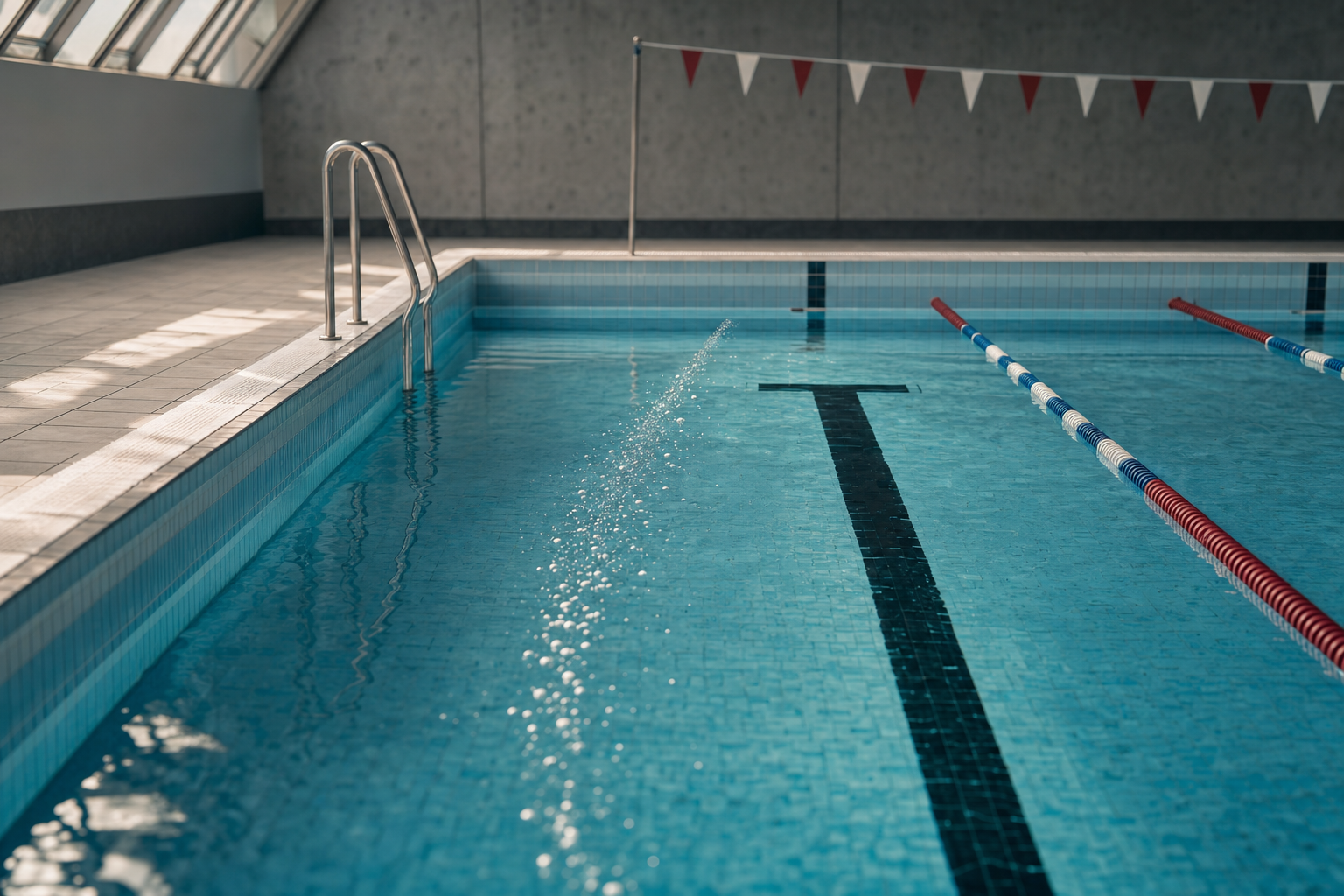
If your child gets disoriented in the pool—lost track of where the wall is or what lane rope to aim for—some fast, fun drills can make a difference. These wall-finders help children aged 5–12 quickly spot the nearest wall or lane rope, reduce panic, and recover smoothly. Teaching them to use spot T-marks, count strokes from flags, or follow bubble trails back makes pool orientation feel like a game, not a race.
Why Orientation Matters Now
Kids who master pool orientation drills gain confidence and safety. The Red Cross defines water competency as including the ability to “turn completely around… orient toward the exit,” as well as swimming a distance and then exiting safely.(redcross.ai) The Swim England Stage Outcomes include push-off/glide skills and being able to orient themselves during swimming and glide phases.(swimming.org) These outcomes mean more than speed—they mean control, calm breathing, and being able to find the exit when things don’t go to plan.
Your child might already be learning some of these in their regular swim lessons, but adding practice at home or during free-swim enhances those skills—and gives parents the cue words that help when panic hits mid-pool.
Key Drills Kids Will Actually Love
Spot the T-Mark
Every lane often has a long black line on the bottom with a T at the end, roughly two metres before the wall. That “T” tells swimmers the wall is approaching. Teach your child to glance for that mark rather than looking up at the wall. It keeps the body straight and prevents surprise hits.(swimy.org) Use cue words like “Spot the T” or “T-see wall” to rehearse during free swim.
Count Strokes from Flags
Backstroke flags hang five metres (or yards) in from each wall. From the moment a child swims under the flags, they count strokes until they turn. When practiced regularly, kids learn exactly how many strokes they take and when to prepare the turn without looking up. Cue words like “Flags, four, turn” or “Flags then count” make it easier.(swimy.org)
If you want a structured way to help your child progress at home, the 10-Week Plan guides you step by step.
Follow the Bubble Trail
If your child kicks off the wall and glides, or pushes off during freestyle or backstroke, there is sometimes a trail of bubbles behind. Teach them to notice that trail on their back, use it like a small compass, and follow it toward any lane rope or wall in case they feel off-course. This gives a sense of direction even when vision underwater is blurry or when vision is under stress.
Cue Words You Can Use (and Rehearse)
[[ctakid]]
Have short phrases your child hears often enough that they become reflexive. “See the T,” “Flags, count four,” “Bubble back,” “Find lane rope,” or “Reach and hold” all work well. Rehearse during lessons, before free swim, or while watching them practice. When anxiety starts, these cues act like an automatic response.
Avoiding Common Pitfalls
Emphasise taking frequent breaths. None of these drills should involve long underwater breath-holding. Stop when the child signals tiredness or discomfort. Always practise in water that’s depth-appropriate—deep enough for push-offs or glides—but shallow or supervised if they can’t yet swim confidently in deep water. Don’t turn these into endurance or breath-holding “challenges”—they’re orientation drills, not contests.
How These Fit with Big Learning Frameworks
These wall-finder drills support the Swim England Stage Outcomes by reinforcing push-off/glide phases and being water competent throughout a swim.(swimming.org) They also align with the Red Cross Water Competency Sequence—in particular, skills like turning around, orienting to an exit, swimming, and exiting safely.(redcross.ai) Introducing these orientation drills helps a child meet those important benchmarks sooner and more securely.
Tips for Parents Supporting at Home or Free-Swim
Practice doesn’t need to be formal. For example, use a free swim session to play “Wall-Finder Race” where your child swims toward a wall marked with a T, counts strokes from flags, or follows bubble trails. You can also use shallow-end drills where they float on their back, reach out to find the wall, rest, then try again. If you’re following a structured plan, the “10-Week Plan” by swimy.org includes many progressive drills to build spot-ting, count-ing, and orientation skills.(swimy.org) Use supportive cue words often and reinforce what they did well.
Bringing It All Together
When kids aged 5-12 learn orientation drills—spotting T-marks, counting strokes from flags, following bubble trails—they build resilience in the water. Panic gets replaced by pattern recognition. Disorientation becomes a cue to use a practiced drill. Parents working with instructors, or reinforcing at home, can accelerate progress. These tools aren’t just for swim trials or competition; they’re survival skills wrapped in fun.
Children become safer swimmers when orientation becomes second nature. Soon they’ll see the “T” and know what that means without thinking, count from flags without breaking rhythm, and follow bubble trails without visions of walls turning into surprises. That kind of preparation builds not just competence—but calm, confident swimmers year-round.
120+ swimming exercises sorted by age — with video and instructions. Developed by swim instructors, completely free.

120+ swimming exercises sorted by age — with video and instructions. Developed by swim instructors, completely free.