Fearless Toddler Near Water: 5 Behavior Lesson Goals
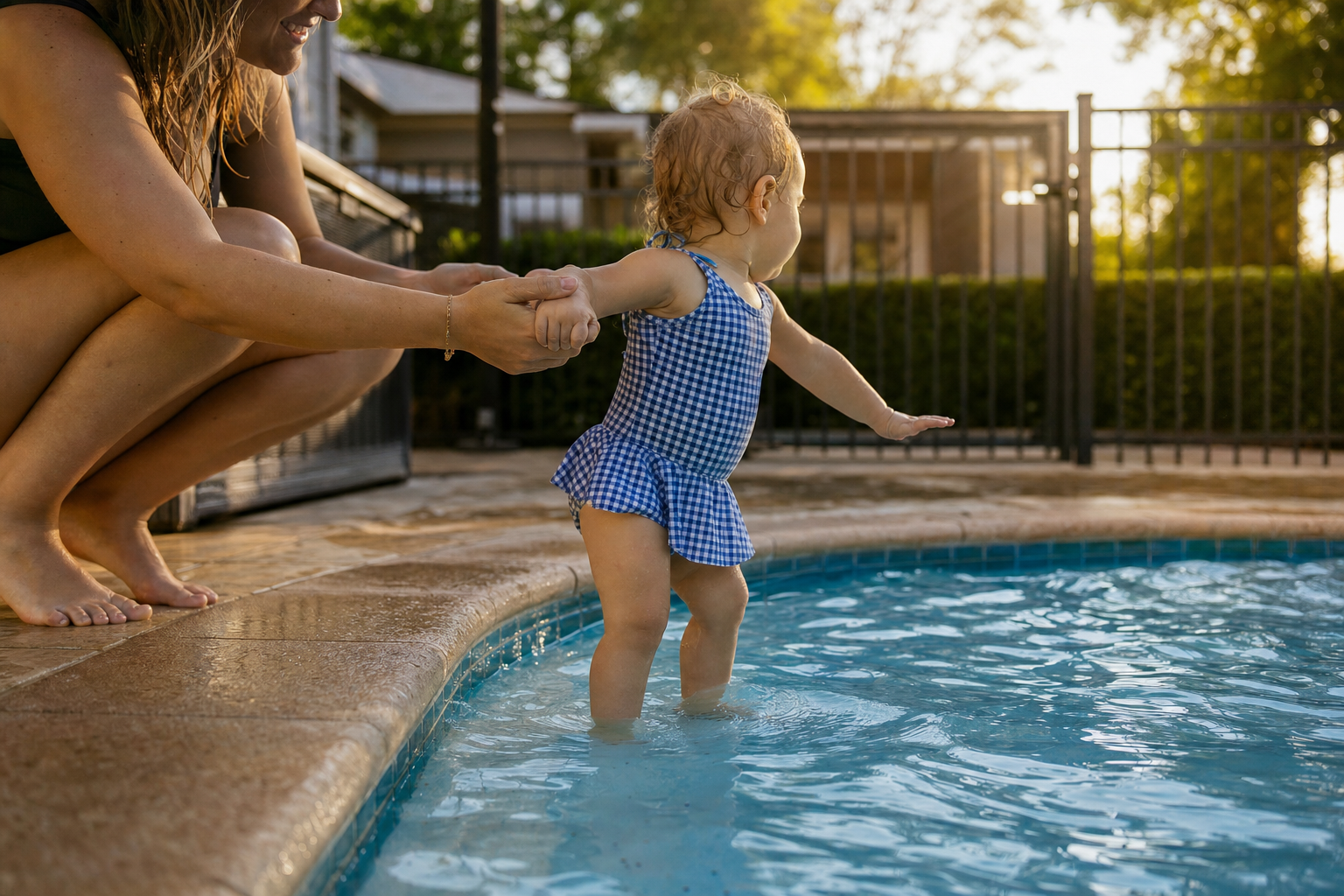
You’ve got a fearless 18-month-old who bolts toward the pool, arms out, full speed ahead. Before swim skills alone can keep them safe, there are behavior goals that matter—even more. Water safety for toddlers 12–36 months depends largely on what they do before they hit the water.
1. Stopping at Boundaries
One of the first lesson goals for a fearless toddler is the ability to physically stop when they reach a boundary—pool fence, edge of the patio, or the waterline itself. This stops risky running to a pool before swim skills are involved. Teaching “stop” in all settings—home, swim lessons, playground—helps toddlers build impulse control. Experts suggest using an “ask-permission” routine so children internalize: stop, look, ask, then enter only with adult help. (swimy.org)
2. Safe Entry
Toddlers need to learn how to enter water safely. Safe entry means walking in slowly with supervision, holding hands, or using stairs—not running or jumping near unseen depths. Swim lessons are part of this, but safe entry behavior starts long before full swim competence. As one tactic, playful practice of slow steps, touch supervision, and consistency embed habits. (healthychildren.org)
3. Turning Back
Another core behavior is “turn-to-wall” or turning back toward a safe edge when in water. Fearless toddlers often jump or fall in, only to find themselves facing away from safety. Teaching orientation—helping them flip, swim toward, or reach for the wall—gives them a chance to regain control instead of panicking. This early skill bridges curiosity and safety, building body awareness and confidence. (swimy.org)
4. Exiting the Water
Even confident toddlers must learn how to exit water safely. Exiting means climbing steps or using ladders, not relying on adult carry-outs every time. Practicing exiting routines teaches toddlers the limits of what they can do—and when they need help. This reduces risk when adult help isn’t immediately available. It’s part of helping children understand their boundaries, physically and safety-wise. (puddleducks.com)
If you want a structured way to build water confidence at home, the 10-Week Plan guides you step by step.
5. Accepting Adult Help
The final behavior goal for a water-loving toddler is knowing when and how to accept help. A toddler who runs toward a pool should also stop when you call, accept your hand, wait for you to assist, or allow you to pull them back. Consistency in rules like “stop, ask, help” builds trust: they learn adult help isn’t punishment, it’s protection. This also reduces resistance or surprises during a rescue. (swimy.org)
[[ctababy]]
Around the middle of your safety journey, it helps to tie these behaviors into a structured plan. That’s where resources like the 10-Week Plan from Swimy.org come in: it gives step-by-step building blocks tying safety routines like stop-look-ask, water skills, and safe entry cues—all aligned with instructor goals. It’s especially useful for parents bringing fearless toddlers into lessons. (swimy.org)
Why These Goals Matter Now, Not Later
Toddlers aged 12-36 months are mobile, impulsive, curious. Research shows children in this age group have the highest drowning risk; most pool drownings happen in residential pools when supervision fails or fences are faulty. (cdc.gov)
They don’t yet have full judgment, strength, or coordination, so rules turn into protective instincts. Teaching stopping, safe entry, turning back, exiting, and accepting help gives toddlers a better shot at staying safe until swim skills catch up.
Safety Caveat: Never Let Anything Replace Barriers and Supervision
Even with perfect behavior goals and swim lessons, adults must use multiple layers of protection. Fences that fully enclose pools, self-latching gates, removing temptations like toys near water, and supervising constantly and closely—arms-reach touch supervision—are vital. Swim lessons reduce risk—but they don’t eliminate need for these protections. That’s the message from both CDC and the American Academy of Pediatrics. (cdc.gov)
Putting It Into Practice: Real Tips
Spend short moments throughout your day practicing these goals: walk to the pool’s edge holding hands and stop. Play near bathtubs with “exit now” games. When you visit a friend’s house with a pool, model turn-to-wall drills and let your toddler exit independently. Always reinforce that they must ask permission. Praise them when they do: “You stopped at the fence! Thank you!”
Use routines so reactions become automatic. When swimming lessons or water play occur, keep same language: stop, look, ask, then water with me. Repeat them consistently.
Final Word
Your fearless toddler may love water, but until swim strokes, breaths, and distance become strong—behavior goals are what keep them safest. Stopping at boundaries, entering safely, turning back, exiting confidently, and accepting adult help are skills parents can start building now. Alongside trusted protections like fences and constant supervision, you’re helping your child not just grow fearless—but water-aware and safer.
120+ swimming exercises sorted by age — with video and instructions. Developed by swim instructors, completely free.

120+ swimming exercises sorted by age — with video and instructions. Developed by swim instructors, completely free.