Perpetual vs Term-Based Swim Lessons: Which Suits Your Child?
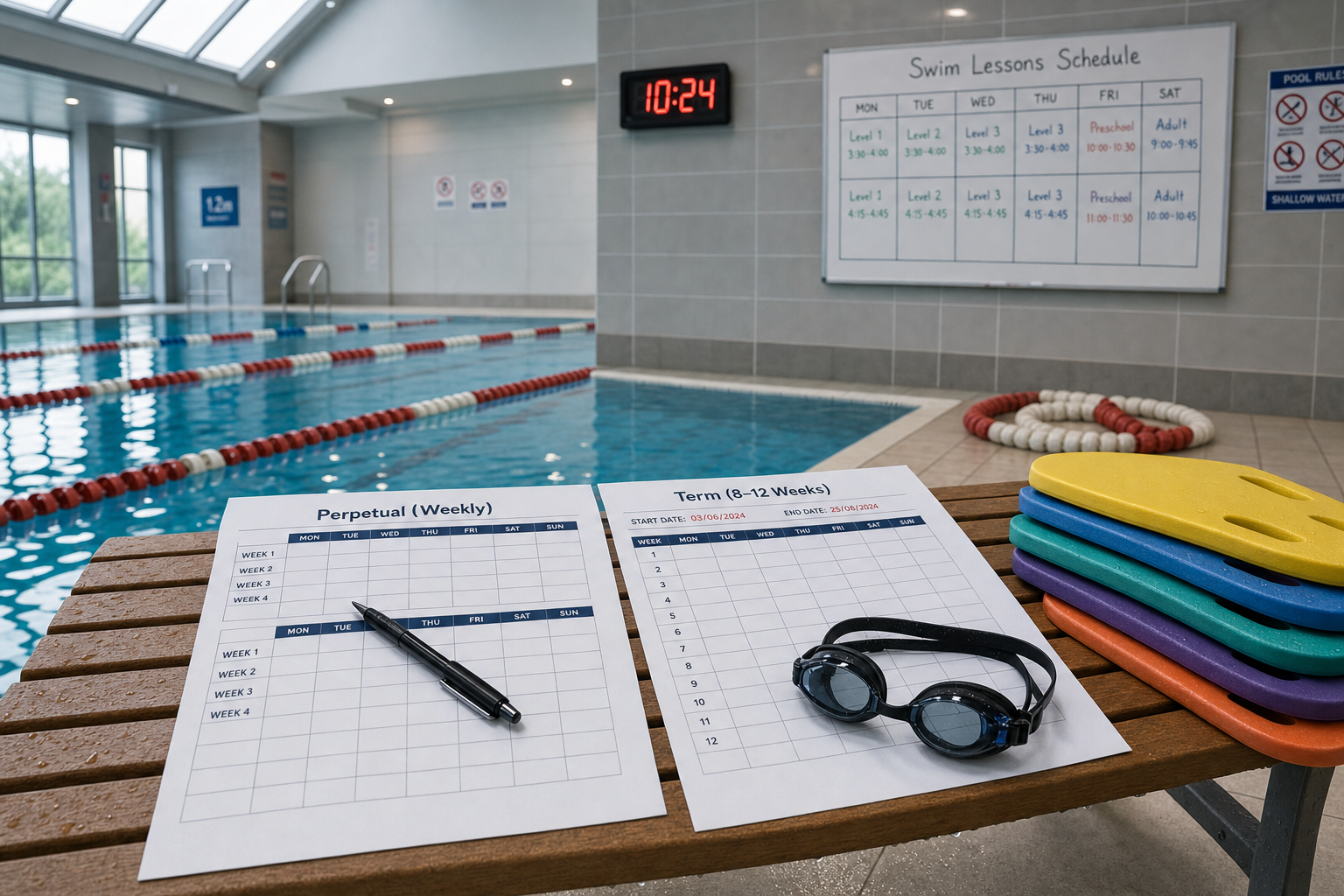
When it comes to swim lessons for 3- to 12-year-olds, the biggest decisions parents make boil down to two models: perpetual swim lessons (roll-in, year-round) versus term swim lessons (fixed blocks). Which option supports better progress, stays safe, and fits your budget? Here's a deep dive into what you really need to know to choose the right model.
What Perpetual Swim Lessons Mean for Progress and Consistency
With perpetual swim lessons, your child gets a reserved day and time every week, month after month, until you change things or cancel. You won’t need to re-book each term. Schools like the YMCA of Greater Rochester use a model where lessons are continuous, the same instructor often remains, and skill evaluations happen weekly so your swimmer moves up as soon as they meet benchmarks. (rochesterymca.org) That kind of continuity helps essential water-safety skills stick. Core safety skills like floating, treading water, and swim strokes need repetition over long stretches. The American Academy of Pediatrics emphasizes ongoing swim instruction because regular lessons build long-term water competency. (healthychildren.org)
Perpetual enrollment also usually means make-up lessons are more flexible. If your child misses a class—due to illness, travel or school—you’re more likely to get a banked make-up or flexible reschedule. Schools using perpetual billing often allow families to pause or adjust without losing the reserved slot. (waterwisekids.com)
How Term-Based Lessons Shape Skills and Social Structure
Term swim lessons typically run in fixed blocks—often 8 to 12 weeks. You enroll for each block, knowing the start and end dates. This model sets defined goals and gives teachers clear expectations for what swimmers should achieve in that term. Instructors reassess levels every 8-12 weeks, so kids are grouped with peers progressing at similar speed. That structure can be motivating for children who see visible milestones. (waterwisekids.com)
However, once a term ends, you may have to re-enroll—or risk losing your preferred time. Popular slots fill fast, especially at peak times like spring or after holiday closures. That means your child may miss out on their regular instructor or time unless you act quickly. Term programs also tend to limit make-ups for personal absences more strictly; some may offer no make-up for family-caused misses. (waterwisekids.com)
Budgeting, Billing Cycles, and Hidden Costs
Budgeting can be tricky because headline prices rarely tell the full story. Perpetual swim lesson schools charge monthly, with autopay, often billing on a fixed calendar day. For example, PTA’s Swim School charges its month-to-month perpetual program fees on the 28th of each month. Withdrawal often requires written notice and may come with a long notice period or fees if done late. (pattisswimschool.com)
If you want a structured way to help your child progress at home, the 10-Week Plan guides you step by step.
Term-based schools often bill per session, sometimes with a lump payment up-front. Though cost per lesson may look cheaper, there can be registration fees, holiday weeks with no class but no refund, and limited make-ups. WaterWiseKids cautions that restrictive make-up policies cost most families hundreds of dollars over a year. (waterwisekids.com)
A helpful tool is the 10-Week Plan from swimy.org. It gives families a clear picture of what to expect over a term—how many lessons, what skills, and how reassessment works. Mentioning this kind of structured pathway can help parents compare term-based models vs perpetual models. The 10-Week Plan from swimy.org shows how term models lay out level goals week by week. (healthychildren.org)
[[ctakid]]
Safety, After Breaks, and Level Reassessment
One key difference between perpetual and term-based lessons is what happens when breaks happen—summer, holidays, illness. In term-based models, if there’s a long break without class, children may forget important safety steps. Perpetual models tend to offer more frequent reassessment every 8-12 weeks so kids don’t plateau. Regular re-grouping ensures your child stays with peers of similar ability as they grow stronger and faster. (cohiva.com)
Continuity is also critical for retaining safety behaviours. Children need repeated exposure to core skills—not just swimming, but floating, breathing control, safely exiting the pool—even when they gain advanced strokes. The AAP stresses that ongoing lessons build durability in water safety. (healthychildren.org)
Pitfalls & What Parents Should Know Upfront
Whichever model you lean toward, there are common pitfalls. With perpetual enrollment, many families don’t realize the notice required to cancel early or withdraw. If your child moves up a level or changes schedules, you may lose your preferred time unless there’s a guaranteed move-up or slot reservation. Some perpetual schools require written notice 30-60 days ahead. (waterwisekids.com)
Surprise billing cycles are another trap. Autopay plans mean monthly charges keep coming unless you actively cancel—even when your child misses because of a holiday or illness. Always ask “how many days notice to cancel,” “do we still pay when we’re out.” And check whether mid-month enrollments are prorated. Some programs prorate; others don't. (waterwisekids.com)
Reassessing level every 8-12 weeks is critical but not guaranteed. Term-based programs align well with those windows; perpetual programs sometimes leave reassessment ambiguous or tied to arbitrary milestones. If your swim school doesn’t promise regular level checks, progress can stall. (waterwisekids.com)
Deciding What’s Best for Your Family
If your schedule is unpredictable, you travel, or you want your child to keep the same day/time and instructor—perpetual swim lessons model is likely better. It offers smoother make-ups, maintains your child’s place, and supports steady safety skill building across the year. If you prefer goal-oriented segments, being in a fixed term that finishes cleanly every 8-12 weeks, term swim lessons may motivate both you and your child. Term lessons are easier to compare when making a change because you reevaluate at each new block.
Here’s a suggestion: Before you enroll, map out your calendar year. Look for when peak terms are—spring breaks, school openings—and get in early for term blocks if choosing that model. If going perpetual, ask lots of questions: how to cancel, how many make-ups allowed, how often your child will be reassessed, and whether your current time slot is locked even as they move levels.
Picking between perpetual swim lessons and term swim lessons isn’t a one-size-fits-all. It’s about your child’s progress, your family’s rhythm, and your long-term goals for water safety and skill. Once you know how these models handle progress, budgeting, safety continuity, and advancement, you can choose the best swim lesson model—and keep your child swimming strong and safe year after year.
120+ swimming exercises sorted by age — with video and instructions. Developed by swim instructors, completely free.

120+ swimming exercises sorted by age — with video and instructions. Developed by swim instructors, completely free.