Bath-Time Minis: Safe Swim-Readiness for Ages 3–5
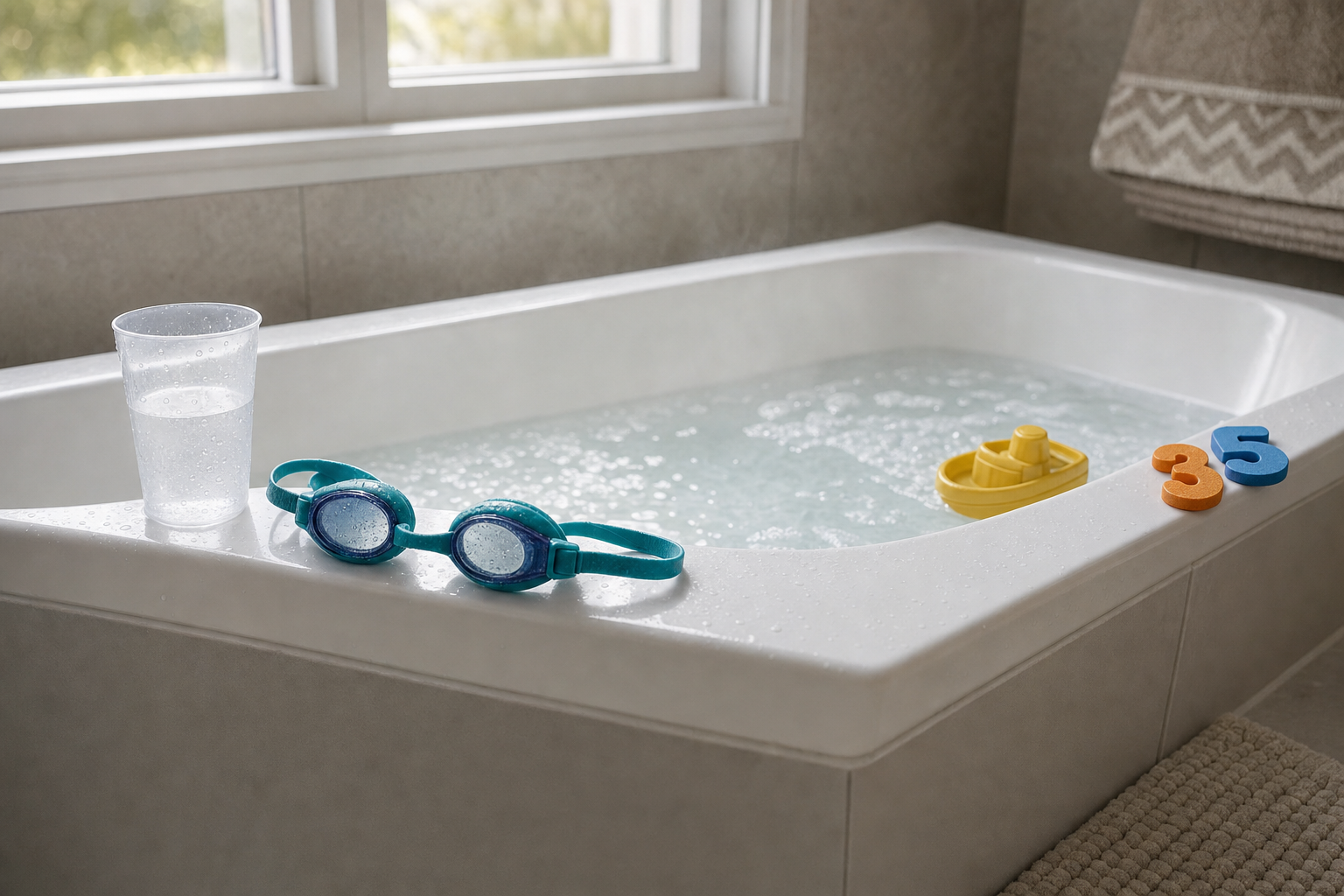
Bath time can be a powerful tool for building swim confidence in children aged three to five. When done safely, with gentle games like pouring, face wetting, and bubble-blowing, it reinforces swim readiness without pressure. This article shares what to do, what to avoid, and a simple script parents can use to make bath time both fun and instructional—no forcing or breath-holding allowed.
Why Bath Games for Swim Lessons Matter
Blowing bubbles in the bath for a 3-year-old, face wetting, and pouring water over their hair are foundational skills toward water comfort. According to Cleveland Clinic, encouraging children to blow bubbles and using pouring or a gentle stream of water over the head in a controlled environment helps them get used to having their face wet, which eases fear and supports swim lesson progress. (health.clevelandclinic.org)
The American Academy of Pediatrics emphasizes that formal swimming lessons reduce drowning risk for kids aged one to four, but they also stress the importance of water readiness skills, not just strokes. (healthychildren.org) Bath games for swim lessons allow children to safely explore breathing out underwater, trusting that they’ll get air again when needed, without being forced. This builds confidence and supports progression into pool lessons where bobs, floating, and basic glides are taught. (seattleymca.org)
What Helps vs. What to Avoid
What Helps
Encourage a child to pour water gently onto their face using a cup, slowly so they can anticipate how it feels. Use soft sponges or showerheads set to low pressure. Practice blowing bubbles—first with mouth only, then with mouth and nose submerged. Kellogg’s YMCA “Swimming at Home” materials show that bubble-blowing supports breath control and helps kids tolerate getting their faces wet. (fspymca.org)
Another helpful tool is goggles during bath time. Let them wear them while splashing, washing hair, or hand-washing to desensitize the idea of water in eyes. Also, pour water over their heads, pour small amounts of water from a toy bucket into their hands, let them practice putting chin in the water (under supervision), then lifting it out. These reinforce that water on the face isn’t scary and they can always come up for air. HealthyChildren.org outlines water readiness including face wetting and floating for preschoolers aged 3-4 years. (healthychildren.org)
What to Avoid
Never leave the bathroom “just for a second.” Even leaving to grab a towel or phone can create a risk. The CDC and American Academy of Pediatrics make it very clear that children must have constant, arms-length supervision whenever they are in or near water. (cdc.gov)
If you want a structured way to help your child progress at home, the 10-Week Plan guides you step by step.
Do not introduce breath-holding challenges or contests. These are dangerous. Extended breath-holds or games where children compete to see who can stay underwater longest have no place in bath-time using swim readiness games and are strongly discouraged. The US Swimming Foundation’s operational safety manual states explicitly that underwater breath-holding and extended submersion are unsafe. (usaswimmingfoundation.org)
[[ctakid]]
Gentle Games & Practice Ideas
Here are fun, simple bath games that reinforce swim readiness without pressure for ages 3-5.
Pour and Sip
Fill a small jug with warm water. Say: “I’ll pour water like rain over your forehead. Ready?” Then let water drip over the head slowly. Then switch: “Your turn, pour and sip water gently on your chin.” This helps them learn face wetting and blowing air out when water comes toward nose or mouth.
Bubble Blowing Bath 3 Year Old Favorite
Use bath bubbles or bubble bath. Encourage the child to blow through their mouth while lips are just at water level to make bubbles. Then gradually nudge them to dip the lips under and blow bubbles underwater. Praise the bubble sounds. A favourite game in YMCA programs is “Bubble Boat,” where child floats on tummy and blows bubbles pretending to be a motorboat. (fspymca.org)
Face-Dip Countdown
Use a cup to splash a little water on their face, ask: “Three, two, one…” before gently dipping chin, letting them lift back up immediately. No forcing under. Celebrate the bravery and breath. Reinforces control and confidence.
How This Fits Into Larger Swim Skills Plans
If you're following a structured swim-readiness path, things like bubble-blowing and face submersion are often embedded in early levels. For example, the 10-Week Plan from swimy.org offers parent-child water familiarization, fun safety skills, and gradual progression that includes exactly these types of activities. (swimy.org)
Programs like South Davis Recreation’s Preschool Aquatics list for ages 3-5 require exit skills such as submerging to mouth and blowing bubbles for at least three seconds before progressing. (southdavisrecreation.gov)
Sample Script: Fun, Gentle, No Pressure
This script helps guide bath games for swim readiness that focus on learning, not pushing.
Parent: “Today we’re going to play the Bubble and Rain game. I’ll pour water like little drops on your forehead. If it feels funny, we stop. You always tell me when to stop.”
Pour water slowly from cup.
Parent: “See, you can blow bubbles now. Big bubbles. Brrrr.”
Encourage child to blow bubbles with mouth only.
Parent: “Now we’ll try with your lips just under water. Ready? Three-two-one…”
Let them lift whenever they want.
Parent: “Great! You took control. You decided when you were okay. Do you want to try face dipping? Only if you want, totally your choice.”
Use lots of praise: “Wow, bubbles sound like a motorboat,” “You breathed out like a fish!” Keep tone playful, never threatening. If child resists, stop. Try again later. It’s about safety and comfort.
Expert Tips & Key Takeaways
Begin with shallow water, low pressure, short dips. Always keep child within arm’s reach; constant supervision is non-negotiable. Avoid breath-holding games and contests of underwater time—they are unsafe and increase risk of hypoxic blackout. (cdc.gov)
Use face-wetting, blowing bubbles, and small games frequently. Even five minutes in the bath, done right, can build swim readiness. Over time, this foundation makes formal swim lessons easier, less scary. Also, make sure water temperature is comfortable (not chilling) and avoid distractions—undivided attention matters.
Bath-Time Minis doesn't require a pool, only patience, care, and safe, fun moments. When you use these gentle, supervised practices consistently, ages 3-5 can build confidence in water breathing, face wetness, and bubbles—setting the stage for swim lessons to shine.
120+ swimming exercises sorted by age — with video and instructions. Developed by swim instructors, completely free.

120+ swimming exercises sorted by age — with video and instructions. Developed by swim instructors, completely free.