Open Swim or Class First? Choosing the Best Start for Baby’s First Water Experience
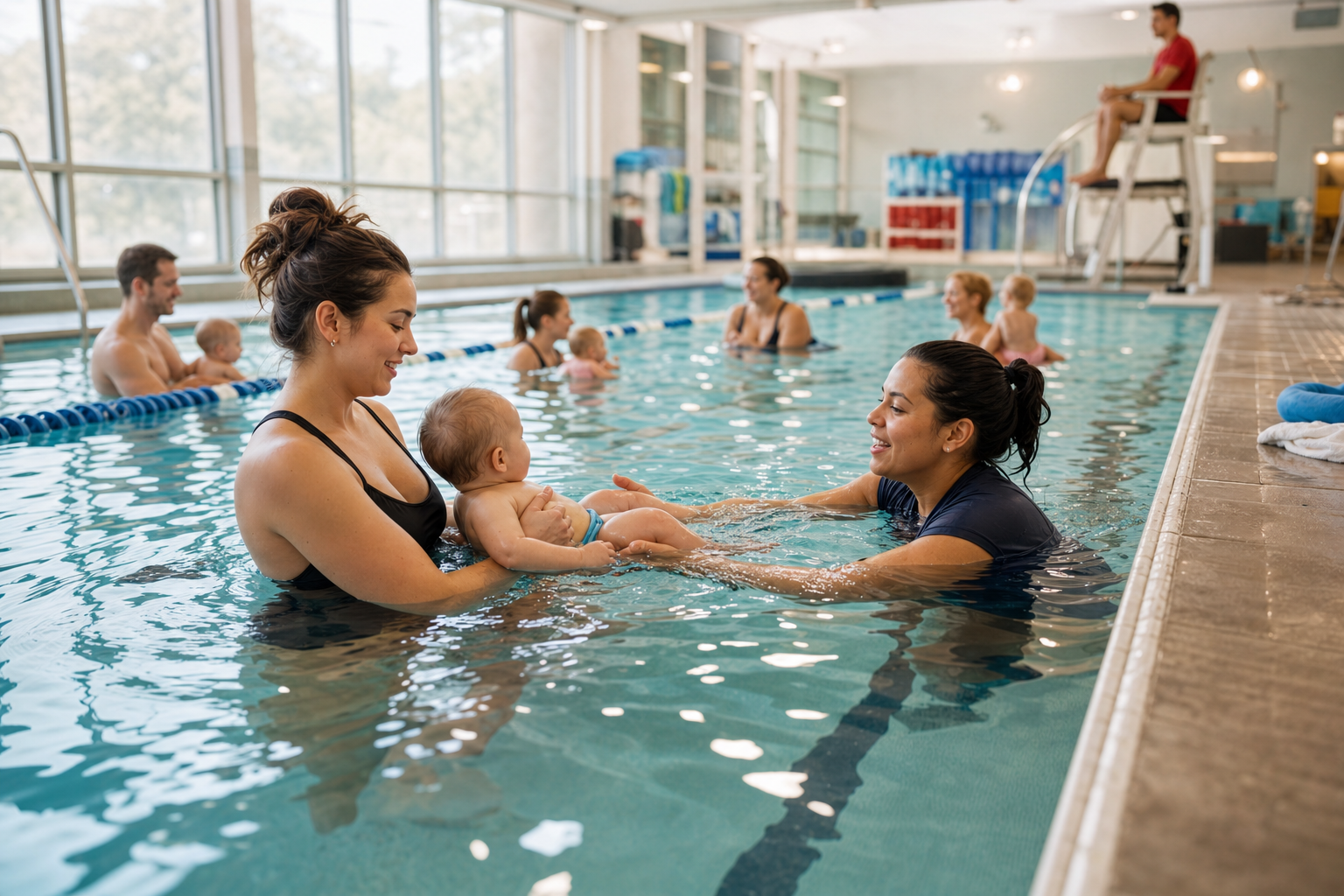
If you’re trying to decide whether baby open swim time or a structured parent-and-baby swim class is the best first step for your little one (ages 4-36 months), here’s what matters most: temperament, budget, and safety rules.How your baby reacts to new experiences, what you can afford, and whether you’ll follow water safety best practices will guide you. Let’s dive in.
Class First: What A Structured Swim Program Offers
With a parent-and-baby class, you get much more than splashing around. These programs are built for safety, progression, and skill building. They tend to include certified instructors who understand infant aquatic safety, water temperature requirements, and developmentally appropriate activities. For example, the Serenity Swim Network recommends classes be fun, playful, and capped at 30 minutes so babies aren’t overstimulated, with the water warmed to around 88-92°F and sessions paced by each child’s emotional and physical limits. (serenityswimnetwork.com)
Classes also teach foundational skills: floating, glides, breath awareness, controlled submersion, and entering and exiting the pool. Parent-and-child classes should meet guidelines like those from HealthyChildren.org and the American Academy of Pediatrics, which stress touch supervision (you’re there, in the water, ready to support) and ensuring instructors offer age-appropriate water safety, not just play. (healthychildren.org)
Structured lessons cost more, but you often get more value. In the US, parent-baby group classes usually cost $20-$45 per 30-minute class; private lessons are steeper. In the UK, 30-minute baby/toddler sessions cost around £15–£25; private or premium schools can be £35–£60. Australia fits somewhere in between depending on region and pool amenities. (swimy.org)
Open Swim First: Pros, Cons, and How to Do It Safely
Open swim gives flexibility. You can explore at your own pace, stay longer or shorter per session, and choose times when the pool is less crowded. This tends to be lower cost—often just a fee to enter the pool during public swim hours.
But pitfalls are real. Recreational open swim may be crowded, noisy, or have inconsistent water temperature. Without instructor guidance, parents might lean on floaties or neck rings that pose serious safety risks. The American Academy of Pediatrics warns clearly that inflatable swim aids—including arm floaties or neck floats—are not substitutes for life jackets and do not prevent drowning risks; there have been reports of infants slipping through neck rings and even fatalities. (healthychildren.org) Floaties can also interfere with learning proper body position, breathing techniques, and confidence in the water. (swimsynergy.com)
If you want a structured way to build water confidence at home, the 10-Week Plan guides you step by step.
So open swim can be a good way to start if you follow strong safety rules: always within arm’s reach (touch supervision), warm water, gradual exposure, no pressure, and avoiding floaties or making sure any flotation aid is a US Coast Guard-approved life jacket, not just a toy. Baby aquatic survival guidelines recommend spontaneous exploration under adult supervision rather than using flotation as a crutch. (boystownhospital.org)
[[ctababy]]
How to Pick What Fits Best: Your Baby, You, and Your Budget
Every baby and family is different, so match your choice to these three key dimensions.
Temperament matters: if your baby is nervous around water or easily overwhelmed, a structured class can help build comfort gradually. For confident and water-loving babies, open swim might be fun and supportive as a supplement.
What about you—do you swim? If parents or caregivers are comfortable in water, they’ll better support open swim. If you’re not swimming often or at all, a class will likely teach both of you skills and reduce worry.
Budget counts. Class costs are higher, but many offer packages or sliding scales; open swims tend to cost less but don’t provide instruction. We’ll map this in a decision table in the next section.
Season or pool type matters: winter indoor pools should be warm, well ventilated, with clean changing rooms. Outdoor pools in summer have temperature swings and public schedules that may limit off-peak quiet times.
Here’s a tool to help decide based on your situation:
| Scenario | Strongest Option | What to Look For | |----------|------------------|------------------| | Anxious baby, first time in water | Parent-baby class | Warm water (≈88-92°F), small group, instructors who adjust pace, gentle submersion | | Confident parent but non-swimming | Follow class first, supplement with open swim | Classes that teach you how to support baby, warm facility, frequent practice | | Non-swimming parent too nervous | Begin with open swim short sessions, then class once both adjust | Restricted time in water, choose pools with shallow gradual entry, avoid floaties; transition into class later | | Indoor pool in winter | Class may feel safer; warm, predictable environment* | Check air and water temp, infrastructure; short sessions | | Outdoor pool in summer | Open swim works better for exposure, plus class for structured skills | Shade, safety rules, clean lifeguards; use class to build skills and confidence before deep end |
Using Classes and Open Swim Together Well
You don’t have to pick one forever. Many parents do open swim as “free practice” alongside classes. Classes give skill foundation; open swim gives space to play, explore, build confidence and love for water.
If you plan both, use the 10-Week Plan from swimy.org as a way to build water confidence gradually. It lays out weekly goals and helps you blend structured and free play time so you’re not overwhelming your baby or wasting cost. (swimy.org)
Common Mistakes and How to Avoid Them
One big mistake is starting in a crowded recreational swim setting. It can heighten fear, reduce comfort, and make supervision harder. Also relying on floaties instead of real safety gear and touch supervision sets dangerous habits and may delay learning of essential skills. Be sure to use US Coast Guard-approved life jackets if needed, not inflatable toys or rings. (smilymom.com)
Another error is practicing skills unsupervised—trying to teach floating, submersion, or breath control on your own without proper guidance. Without feedback, you may unknowingly create unsafe placements or techniques.
Final Takeaways
If you want safety, steady progress, and confident baby water behavior, starting with a structured parent-and-baby swim class is usually the better bet. Open swim serves as a flexible, fun supplement if you follow safe practices. Match your decision to the baby’s temperament, your comfort level, your budget, and the kind of pool environment you have. Either way, never skip supervision, avoid unsafe floatation aids, and keep the first experiences gentle and joyful. Your baby’s first swims can set the tone for lifelong safety and love of water.
120+ swimming exercises sorted by age — with video and instructions. Developed by swim instructors, completely free.

120+ swimming exercises sorted by age — with video and instructions. Developed by swim instructors, completely free.