Bathroom Break Plan for Pool Days: Fewer Germs, Happier Eyes
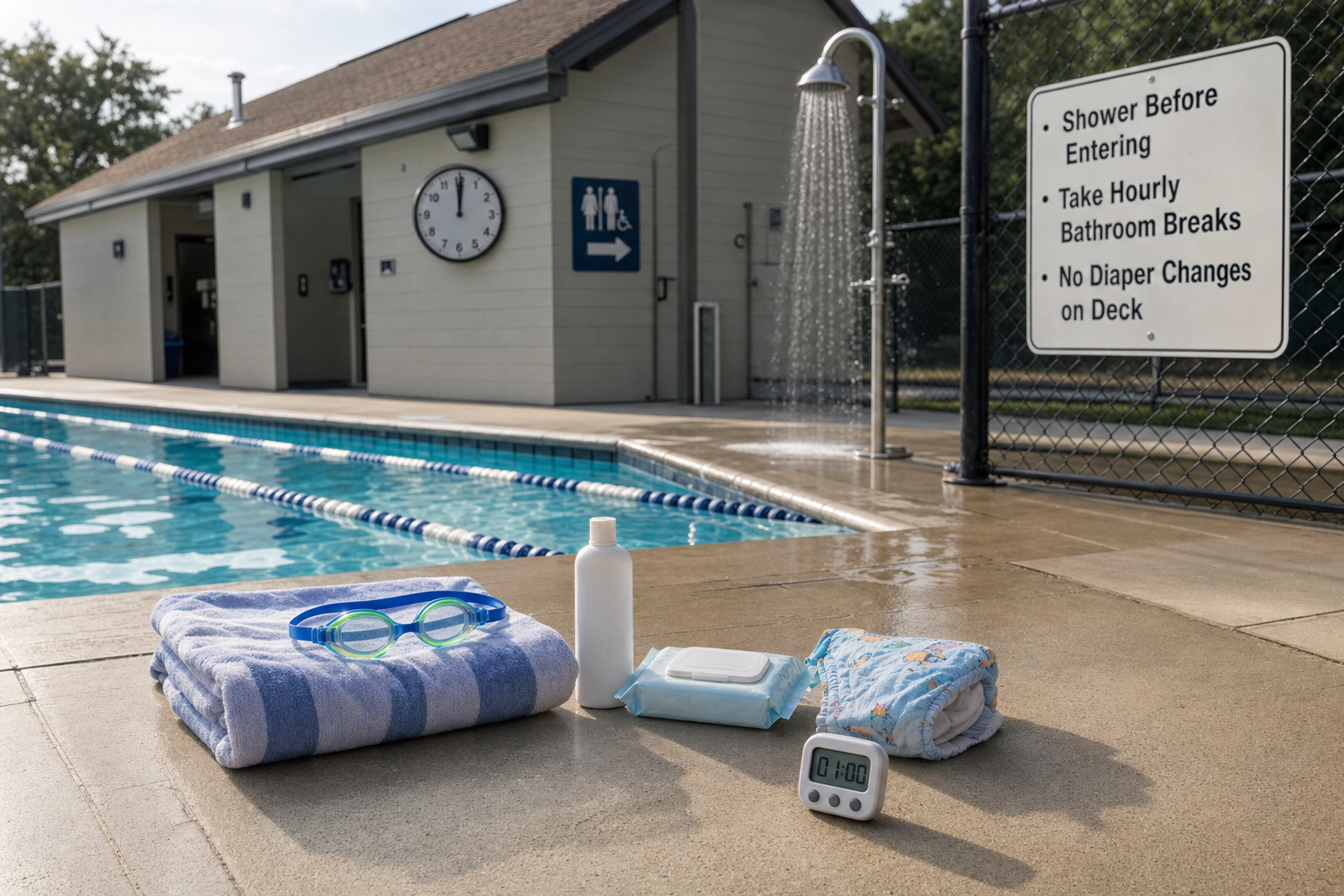
Show up at the pool with a clear plan—that’s the trick families often miss. Begin every swim day by making a firm deal with your kids: use the restroom before entering the water, take hourly bathroom breaks, and rinse off quickly after swimming. These aren’t just nagging rules—they come straight from the CDC to prevent red eyes and itchy skin caused by chloramines. Get this pattern down, and your 3- to 12-year-olds will walk out of class feeling clean, refreshed, and ready for dinner.
Why Your Family Routine Matters
Chlorine alone doesn’t irritate; it’s when it joins up with pee, sweat, dirt or poop that chloramines are formed. These chemical byproducts irritate eyes, skin, lungs and can leave kids scratching and red-eyed. The CDC explains that showers before getting in, avoiding pee or poop in the water, and taking frequent bathroom breaks are key to reducing those irritants. (cdc.gov)
Swim diapers? Useful, but not foolproof. They delay messes but don’t block germs completely. Every hour, shower and check diapers if your child still uses them. Don’t ever change diapers poolside; that just spreads germs. And always wash hands after using the restroom or handling diapers. These little habits cut risk in half. (cdc.gov)
Turning CDC Guidance Into a Family Plan
Here’s when and how to build these healthy swimming tips into your routine:
- Before swim class or pool day: Make sure your child uses the bathroom and rinses off for at least one minute. Removing sweat or dirt before entering helps keep chlorine levels functioning properly. (cdc.gov)
- Every hour: Set a timer or bump breaks between swim classes so kids can use the restroom or switch out swim diapers if needed. This prevents accidents and limits the buildup of irritants. (cdc.gov)
- After swimming: A quick rinse with clean water removes residual chlorine and chloramines that cling to skin or hair. It helps prevent red, stinging eyes long after class is over.
- Education: Explain WHY each step matters. Let your child know that dirt and pee + chlorine = red eyes and scratchy skin. When kids understand the cause, they’re more likely to cooperate.
Also, parents can follow broader guidance like the CDC’s “Steps for Healthy Swimming” and swim-authoritative programs (such as the 10-Week Plan at Swimy to build safe swim skills over time) linked into lessons and hygiene. Mentioning a program like the 10-Week Plan of swimy.org helps families build routines around swimming technique and safety, including bathroom breaks and hygiene habits. Incorporate it into your summer lesson schedule to reinforce this plan. (See Swimy’s 10-Week Plan)
[[ctakid]]
What Parents Often Miss
Many believe swim diapers protect everything—wrong. Swim diapers are not leak-proof and can’t stop germs from entering the water, especially during extended swim periods. CDC emphasizes checking or changing diapers every hour and always away from the pool deck. (cdc.gov)
Another frequent slip-up: skipping breaks during crowded or continuous swim sessions. Lessons or pool parties can stretch lines of kids in the water for too long. Not only does this raise chloramine levels, it increases risks of accidents or sickness. Set scheduled breaks and stick with them even when it’s busy.
People also tend to underestimate how quickly dirt, sweat, and pee reduce chlorine’s germ-killing power and create strong odors and irritants. A minute in the shower before jumping in goes a long way in strengthening chemical effectiveness and lowering risk. (cdc.gov)
Keeping Red Eyes and Itchy Skin at Bay
If you notice your child’s eyes turning pink or complaining about itchiness after swim class, here’s what speeds recovery:
- Rinse eyes gently with cool, clean water immediately. No rubbing.
- Use tear-free goggles during swim to protect eyes from direct exposure to chlorine gas and water splashes.
- Follow up with post-swim showers and gentle moisturizing lotions that soothe skin.
- Choose well-ventilated or outdoor pools where chloramine gas can disperse more easily. Indoor venues often accumulate higher levels above the water’s surface. (cdc.gov)
Sample Pool Day Checklist for Families
Morning: bathroom, one-minute rinse, gear check. During swim hours: hourly breaks for everyone, diaper changes in proper areas, wash hands after each visit. Between lessons: quick rinse, reapply sunscreen. Post-swim: rinse again, run a bath or shower at home, treat any irritation. And if anyone has diarrhea or is sick, skip swimming—germs spread fast. (cdc.gov)
Build this routine consistently. Kids learn quickly, and when children leave the pool without red eyes or scratchy skin, parents know their hygiene steps are those that actually move the needle. Healthy swimming isn’t optional—it’s part of summer fun.
120+ swimming exercises sorted by age — with video and instructions. Developed by swim instructors, completely free.

120+ swimming exercises sorted by age — with video and instructions. Developed by swim instructors, completely free.