Second-Hand Swim Gear: What’s Safe to Reuse (and What’s Not) for Kids 3–12
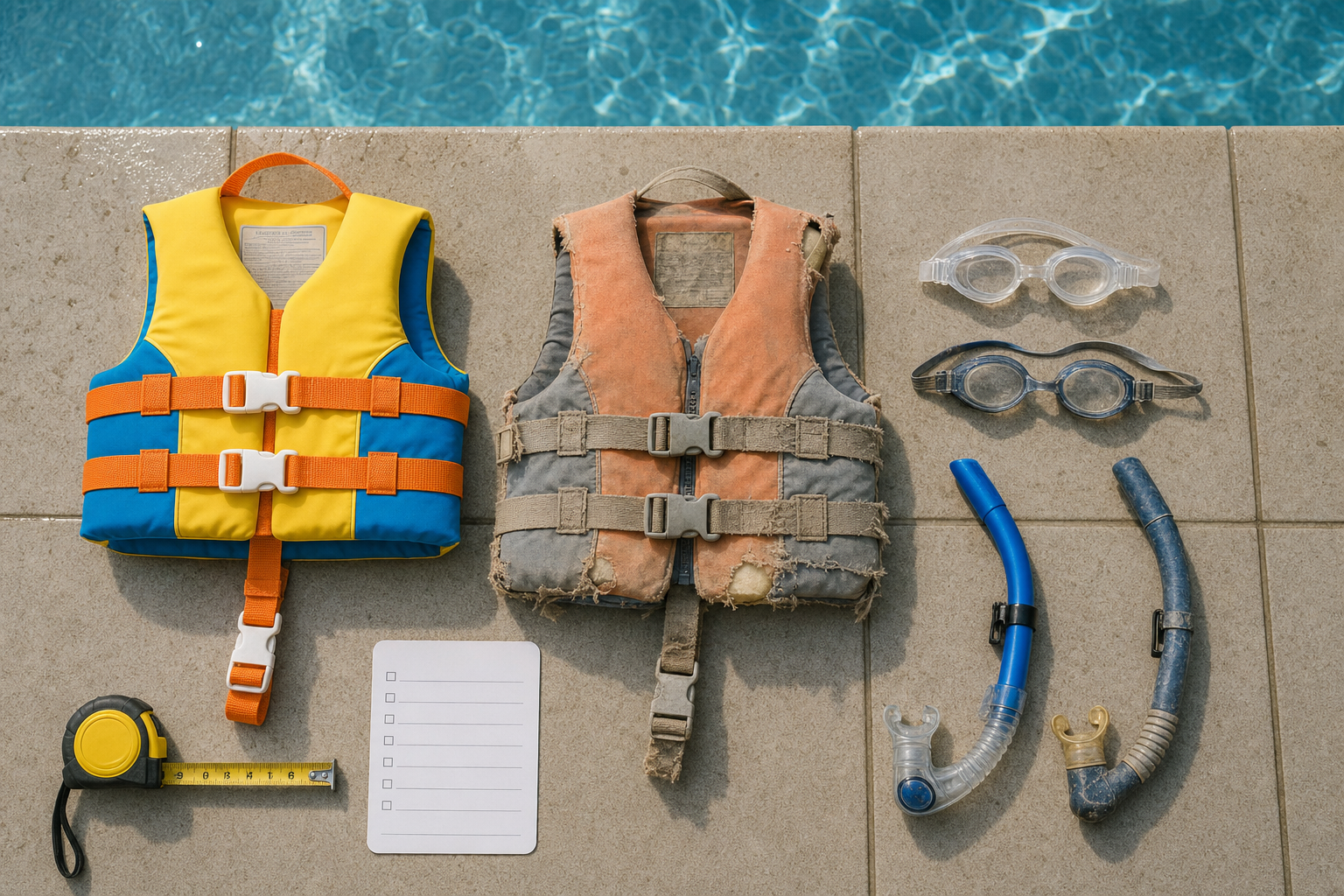
Here’s what matters most first: a used life jacket with a missing label, damaged foam, or broken straps isn’t safe, no matter how cheap. For second-hand swim gear, especially for ages 3-12, knowing what to inspect—and what to replace—is how parents save money without compromising safety.
## Inspecting Used Life Jackets & PFDs
When you're eyeing a thrifted or hand-me-down life jacket, the first thing you need to look for is the approval label. In the U.S., it should say “U.S. Coast Guard Approved” or cite an approval number under 46 CFR; if that label is missing, faded, torn, or unreadable, the vest must be retired. (legalclarity.org) Size information—child, youth, weight range—and chest measurement must match your child’s. A life jacket for a toddler or pre-teen are very different. (uscgboating.org)
Second, check the condition of the foam or buoyant material. If the foam panels feel waterlogged, stiff, compressed, or have soft spots, they’ve lost their floatation. That’s a red flag. Straps, buckles, zippers, and closures must all work smoothly. Damaged hardware means you’re not getting the secure fit your child needs. (cdn.ymaws.com)
Always try it on: raise the child’s arms overhead, then pull lightly at the shoulder fabric. If the life jacket rides up over the chin or face, it's too big. A properly fitting life jacket keeps the chin above water, with a snug fit. (uscgboating.org)
## What to Retire for Sure
Some second-hand items are not worth keeping. Any life jacket whose foam is failing, shell is torn, hardware is rusted, or label is illegible should be retired—tossed out or recycled if local rules allow. The same applies to inflatable PFDs missing safety indicators, with expired CO₂ cartridges, or with broken inflation mechanisms. (legalclarity.org)
Snorkel gear: cracked snorkel tubes, old mouthpieces that have hardened or cracked, or full-face masks (especially older or unbranded ones) can be dangerous. Some full-face masks create high carbon dioxide buildup risks, especially for younger children; recent studies document cases where kids under six lost consciousness when using full-face snorkel masks with failing valves. (pmc.ncbi.nlm.nih.gov)
A helpful resource for new swimmers is Swimy’s “10-Week Plan” for building confidence and water skills (ages 3-12). Pair that with safe, well-fitting swim gear and you’ll see improvement—and safety—for both fun and lessons. https://www.swimy.org/10-week-plan
Goggles that leak, straps that have lost elasticity, or seals that are warped should be replaced. Eye protection is more than comfort—it protects from chemicals, pool bacteria, and abrasions. If we see fogging, leaking, or irritation every swim lesson, that worn-out pair isn’t saving money. (waterwisekids.com)
[[ctakid]]
## When ‘Approved’ Labels Matter—Especially for Kid Life Jackets
"Approved" means tested. In the U.S., labels must include: USCG approval number, size/weight range, minimum buoyancy rating, and care or use instructions. For inflatable types, there should also be service indicators, date of manufacture, and warnings about where or how they may be worn. If the label doesn’t match, even if the jacket looks fine—it’s not safe. (law.cornell.edu)
States often have laws requiring kids under certain ages to wear approved PFDs on watercraft—for example, Kansas mandates that children 12 and under must wear a U.S. Coast Guard-approved life jacket while on a boat or being towed. (ksoutdoors.gov)
## Goggles, Snorkels, and Other Reusable Gear
Goggles: press the eyecups against the child’s eyes (strap off) to test suction for a few seconds. If that seal fails, the gasket is wrong for their face shape. The nose bridge and strap position matter—over-tight straps distort the gasket; too loose lets water in. Inspect lenses for scratches that obscure vision. (waterwisekids.com)
Snorkels: check mouthpiece material—soft silicone is better. Look for cracks or brittleness. Dry-top snorkels reduce splash-in, but their valves and purge vents must be intact. Full-face snorkel masks have been flagged by the U.S. Consumer Product Safety Commission (CPSC) in 2026 for potential drowning risks because of problems with breathing resistance and CO₂ buildup. (cpsc.gov)
Swim shirts, rash guards, and swimwear don’t carry life-saving weight, but worn-out gear can lead to irritation, rubbing, or worse distractions during lessons. Replace faded, threadbare swimwear.
## Practical Buying Guide: How to Shop Smarter
Start your thrift-search with life jackets: inspect the label, check the physical condition, and try it on your child. Always assume gear has been stored poorly unless proved otherwise. Ask when gear was last used, in what environment (sun, salt water, heavy chlorine), and how it was cleaned.
About half-way through summer, bodies grow, foams age, and straps loosen—mid-season checks are wise. Also, before school starts or before a holiday when swimming picks up, run through your gear bag: life jackets with brittle foam, goggles that leak, snorkels that no longer fit properly—they go in the replace pile.
## Summary: Save Money—But Not Safety
Second-hand swim gear absolutely has a place. But safety depends entirely on condition and fit. Here’s a quick mental checklist: is there an approval label? Does it clearly list weight/size? Is the foam still buoyant or inflated properly? Are straps and hardware sound? Does goggles fit without leaks? Are snorkels safe to breathe through? If any of those fails, budget to replace. Good gear may cost more up front than worn-out freebies, but it lasts—and protects. For ages 3-12, those details matter: the wrong life jacket isn’t just uncomfortable—it can be dangerous. Choose smart. Swim safe.
120+ swimming exercises sorted by age — with video and instructions. Developed by swim instructors, completely free.

120+ swimming exercises sorted by age — with video and instructions. Developed by swim instructors, completely free.