Swim Vests in Class: Buy or Borrow for Toddler Swim Lessons?
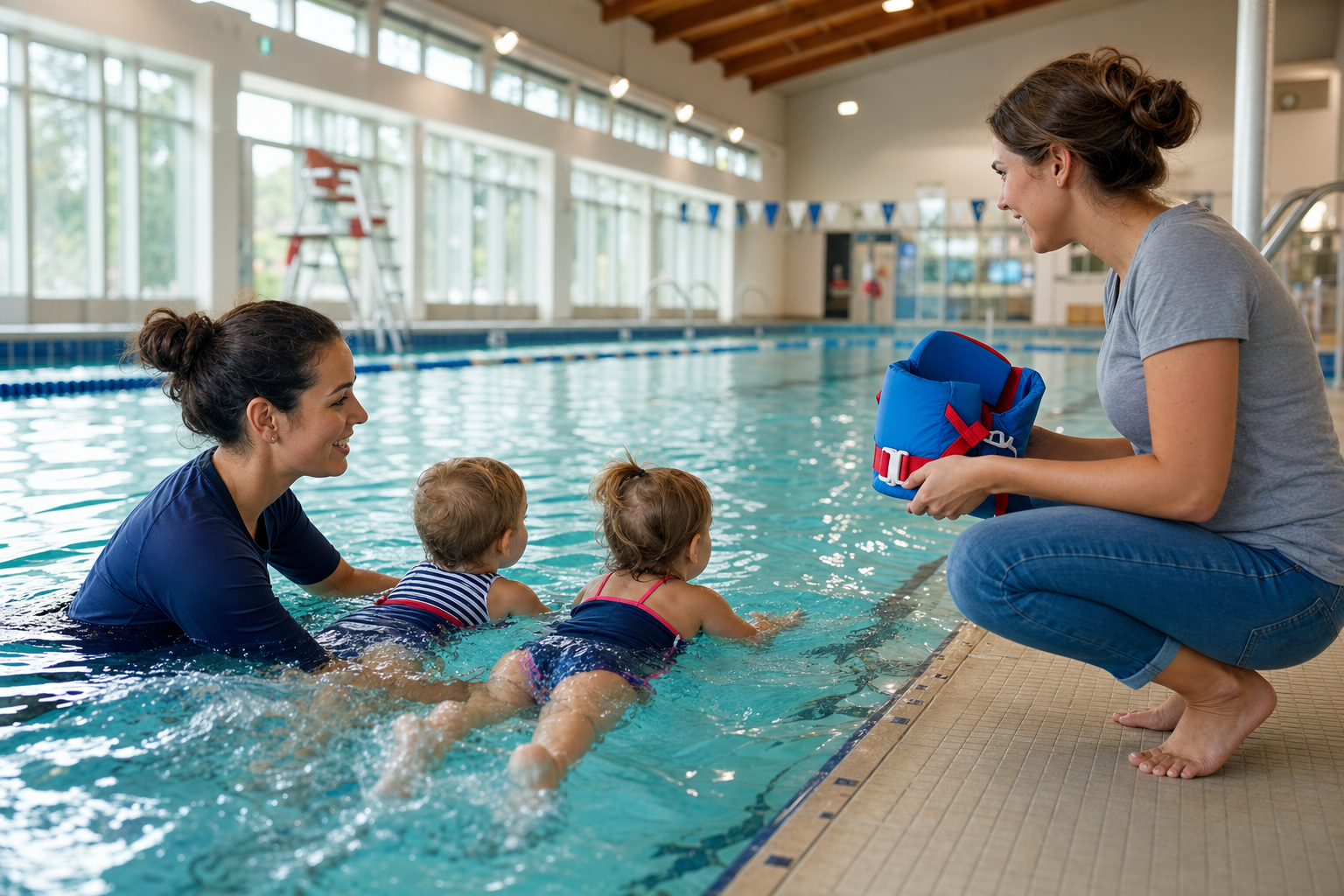
When signing your toddler (ages 12–36 months) up for swim lessons, one of the biggest questions is: should your toddler wear a swim vest in class, or should you leave that decision to the instructor? The short answer: always check with the swim school first. Buying gear before knowing the class policy can lead to confusion, extra costs, and even habits that make learning harder.
Why Swim Schools Differ in Use of Swim Vests
Many swim programs teach without flotation aids, while others provide buoyancy tools like belts or vests for beginners. For example, AQUA Schools in Australia specifically state that they do not use flotation devices like bubbles or armbands in lessons. They believe children develop better mobility, buoyancy, and technique without them. (aquaschools.com.au) On the other hand, in places like NSW, Australia, floaties are recognized as tools to help confidence but are clearly labeled as “not life-saving devices” and mustn't replace adult supervision. (schn.health.nsw.gov.au)
If you buy a "swim vest for toddler lessons" without knowing whether your child’s school permits them, you risk buying something your child won’t use in class—or worse, something that interferes with their technique. Some schools only allow structured buoys or bars that help maintain a horizontal swimming position; many prohibit vests that force vertical body posture or restrict arm movement. (support.sunsationalswimschool.com)
The Difference Between Class Tools, Safety Gear, and Recreational Flotation
It helps to know three distinct categories:
Class Tools
These are aids instructors may use inside classes to build swimming skills. Tools include noodles, foam boards, or swim vests designed to keep the child horizontal in the water so they can kick and learn breathing techniques. While helpful, overuse can slow progress. (bluebuoy.com)
Safety Equipment
Legally approved life jackets or PFDs (personal flotation devices) are made for real safety in open or deep water. They help in rescue situations, not swim training in controlled environments. Using them during lessons where they're not allowed—or that conflict with curriculum goals—can be a problem. The AAP warns that equipment like life jackets used incorrectly during lessons may impede swim competency. (publications.aap.org)
If you want a structured way to build water confidence at home, the 10-Week Plan guides you step by step.
Recreational Floatation
Floaties, puddle jumpers, arm bands, water wings: these are fun for splash time, but they're not tools meant for formal learning. Many schools ban them because they push children into vertical positions and reduce arm movement, making skills like submersion or face-in-water confidence harder to develop. (floatyswimschool.com)
When Buying Before Asking Can Backfire
Spending money on a baby swim lesson flotation aid without checking class rules can cause frustration. If the school doesn’t allow flotation vests, you’ll end up with an unused piece of gear. Even worse, using the wrong aid can instill bad habits—like floating upright when the goal is a streamlined, horizontal body position. Some aids push the head down, blocking breathing and causing panic. (floatyswimschool.com)
[[ctababy]]
Also, parents sometimes lean on the equipment too much, assuming the vest can replace supervision. The American Academy of Pediatrics strongly reminds caregivers that no swim vest, floatie, or PFD substitutes for close, attentive, adult supervision. (publications.aap.org)
How to Know What Your Child’s School Does
Before your toddler's class begins, get clear on lesson goals and policies. Ask specifically: do we provide or allow swim vests or flotation aids? Are armbands allowed? What style of vest—horizontal support, belt, life vest? Is there a swim school system you can preview? For example, Swimy.org offers an 10-Week Plan that shows how exercises build toward skill progression with or without flotation aids. (swimy.org)
Reading the school’s FAQ or lesson guide often reveals whether floatation aids are used. McKeon’s Swim School in Australia, for example, requires that they do not use floatation aids like bubbles or armbands, as these tools interfere with fundamental swim skills like submersion and propulsion. (mckeonswimming.com.au)
Guidelines for Parents: Making the Right Choice
If your school allows swim vests, choose one that supports teaching goals: it should promote horizontal posture, allow full arm movement, and be safely approved (look for local safety standards or US Coast Guard certification where applicable). Use it sparingly—just enough to support progress, but remove it as the child builds control. Use class-free practice time for vest-free play so kids learn what swimming without aid feels like. (bluebuoy.com)
Also, be cautious in open water. Even if a vest or life jacket is required or legal, it's still not a substitute for supervision or training. Floatation devices might lull both parent and child into overconfidence. Always stay within arm’s reach of toddlers in or near water. (publications.aap.org)
Bottom Line
For toddlers aged 12 to 36 months, whether your child should wear a swim vest in class depends entirely on the swim school’s policy, lesson goals, and teaching style. Don’t assume a gear purchase is necessary—or helpful—before asking. Use floatation wisely if the school supports it, and always double down on supervision and skill-building. When done right, swim lessons build confidence, safety, and water competence. When done without coordination, they can set back progress and cause frustration.
You can avoid that by checking class policies first, understanding the difference between safety gear and learning tools, and choosing equipment only when it aligns with your school’s goals. The result? Better lessons, safer learning, and more fun around the water.
120+ swimming exercises sorted by age — with video and instructions. Developed by swim instructors, completely free.

120+ swimming exercises sorted by age — with video and instructions. Developed by swim instructors, completely free.