Meet-Day Nerves: Simple Routines for Ages 8–12
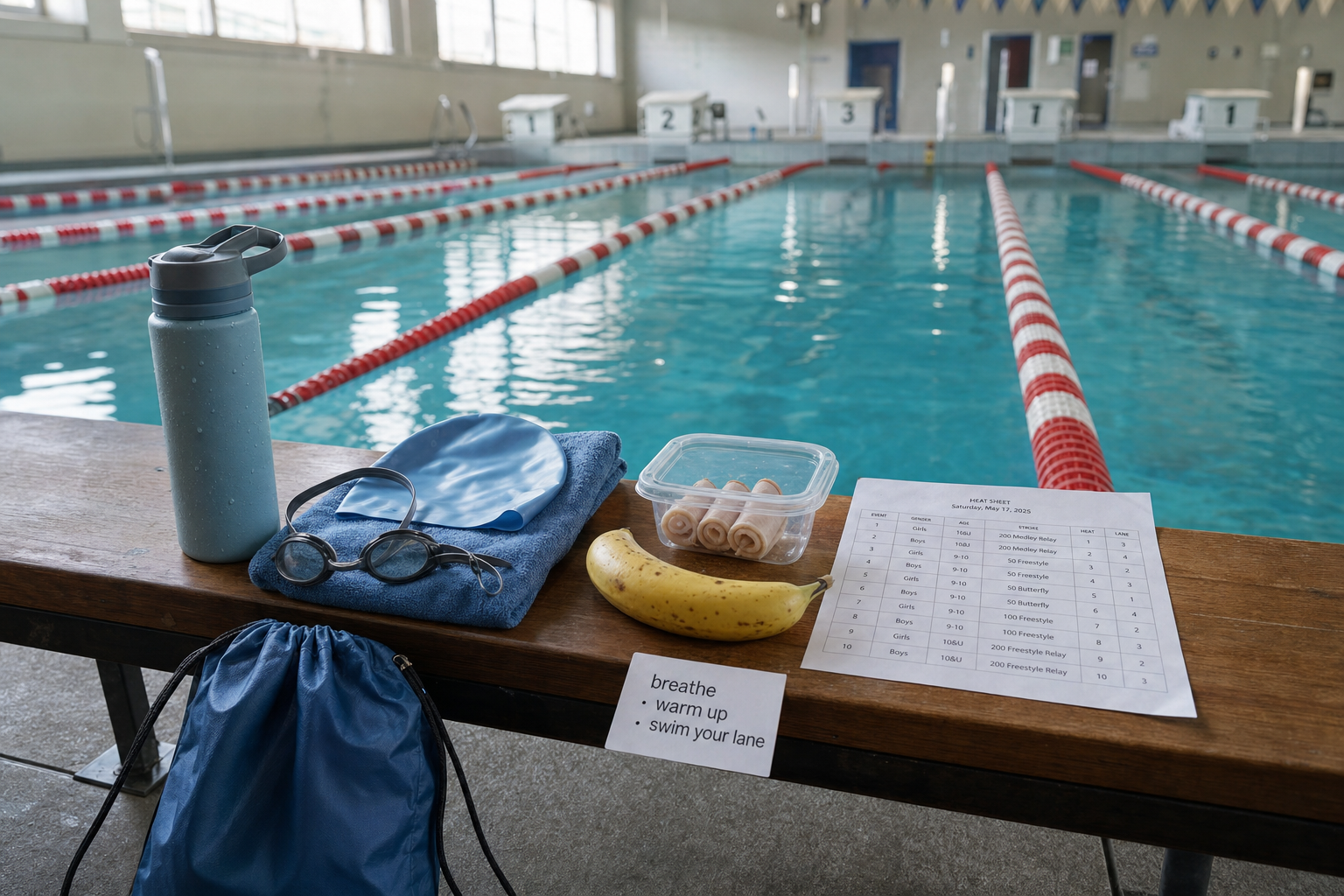
When your 8- to 12-year-old ocean of butterflies is doing laps in their belly before a swim meet, the best thing you can do as a parent is have a tight pre-meet routine. These are the scripts you speak, the breathing drills you run, and the warm-ups you use that flip those nerves into a sharp focus.
What to Say Before the Meet
If you’re wondering how to talk to your child so they feel calm rather than overwhelmed, start with framing. Say things like “you’ve trained for this, you know the water,” or “just swim your race, not theirs.” These boost confidence. Avoid comparisons (“you have to beat that swimmer”) or warning them not to mess up—it adds pressure.
A pre-meet script might go: “You get to swim today. When you hear start beep, you do all the strokes we’ve practiced. Let your breathing be calm. I’ll be cheering your effort, and that’s what matters.” These words help anchor focus. If the stopwatch and scoreboard distract, this script reminds them what they control.
Parents in the 8–12 age range especially benefit from stepping back after delivering the script. Let the coach give technical direction. After that, your role is cheerleading, snack-offering and reminding: “just swim your lane.”
Breathing Drills That Turn Butterflies Into Calm
Before a race, doing breathing drills helps a child switch from anxiety to readiness. Calm nerves before swim meet aren’t just about breathing in; they’re about breathing out too. Start with simple exhaling underwater: blow bubbles, not hold breath. This is one of the foundational ways children learn breath control and calm in the pool. (usms.org)
Build from there into rhythm drills: breathe every two, three, or four strokes, but only after the exhale underwater is solid. Using side-glide or “catch-up” drills teaches the timing between body roll, arm stroke and breath. Bilateral breathing (breathing on both sides) matters later but avoid rushing into that if your child is still struggling with balance or head-lifting. (swimy.org)
If you want a structured way to help your child progress at home, the 10-Week Plan guides you step by step.
Around mid-season practice, the “10-Week Plan” from swimy.org provides structured progressions: stage by stage, from rhythm drills, side breathing, to alternating patterns. That way you avoid overload before meets. (swimy.org)
Safety is vital: no long breath holds, no hyperventilation. Hydrate early. Keep rest short. Watch for signs of light-headedness. Your child should never feel pressured to hold breath underwater just to “get used to it.”
[[ctakid]]
Compact Warm-Up Before Race
A warm-up thirty to forty minutes before a race gives muscles time to wake without tiring them out. Start with a few easy laps: swim slowly, with a focus on exhaling fully underwater, then inhale with intention. Do a side-kick drill: one arm extended, body flat, kick while breathing on your practiced side. This brings rhythm and reduces tension. Next, full strokes at a relaxed pace, including breathing every three strokes if that’s part of your child’s plan.
Don’t introduce new gear today. New goggles, swim cap, or suits can cause discomfort or distraction. Save those until after the meet.
Hydration and simple protein snacks (like turkey roll-ups or bananas) are better than sugary treats right before warm-ups. Sugar plus nerves often means a crash when the race starts.
Parents: What to Pack & When to Step Back
Pack a “meet bag” with goggles, cap, towel, change of gear, inhaler if needed, snacks (protein and complex carbs), water bottle. Include something familiar: a favourite towel, a lucky charm. Make sure nothing is new on race day to avoid surprise issues.
Step back when your child is on the blocks. Your voice matters in warm-ups and in pep moments, but once racing starts, you silently support. Watch, cheer, smile. Avoid coaching or critiquing in those tense moments—it heightens nerves. Let coaches do coaching; parents do believing.
Final Tips & Pitfalls to Avoid
Pitfalls include rushing out of the house and arriving just in time, giving sugary snacks, or trying to practice or correct technique right before the race. All of these stir nerves, reduce focus, and undermine calm nerves before swim meet. Timing is everything.
Never let breathing drills turn into breath holds or competitions—those are unsafe and can lead to hyperventilation or fainting. Also, avoid over-coaching close to the start. When muscles are warm and nerves high, simple cues or reminders are fine (“steady here,” “breathe softly”), but deep technical corrections belong to earlier practice sessions.
If your child is training through spring and summer school galas or seasonal meets, begin routines weeks ahead. Habit reduces anxiety. Rehearse the pre-meet script, the breathing drills, the warm-up. By the time gala day arrives they already know the play. That way, instead of butterflies, they’ll feel grounded.
Use these routines, words, and warm-ups together: pre-meet script for mindset, breathing drills for calm, compact warm-up for body readiness, and smart packing plus stepping back for stress control. When you line up together, you’ve turned those nerves into focus—and long after the race, your child will remember their confidence more than the time.
120+ swimming exercises sorted by age — with video and instructions. Developed by swim instructors, completely free.

120+ swimming exercises sorted by age — with video and instructions. Developed by swim instructors, completely free.