Best Time of Day for Swim Class: A Parent’s Guide for Babies Aged 3–36 Months
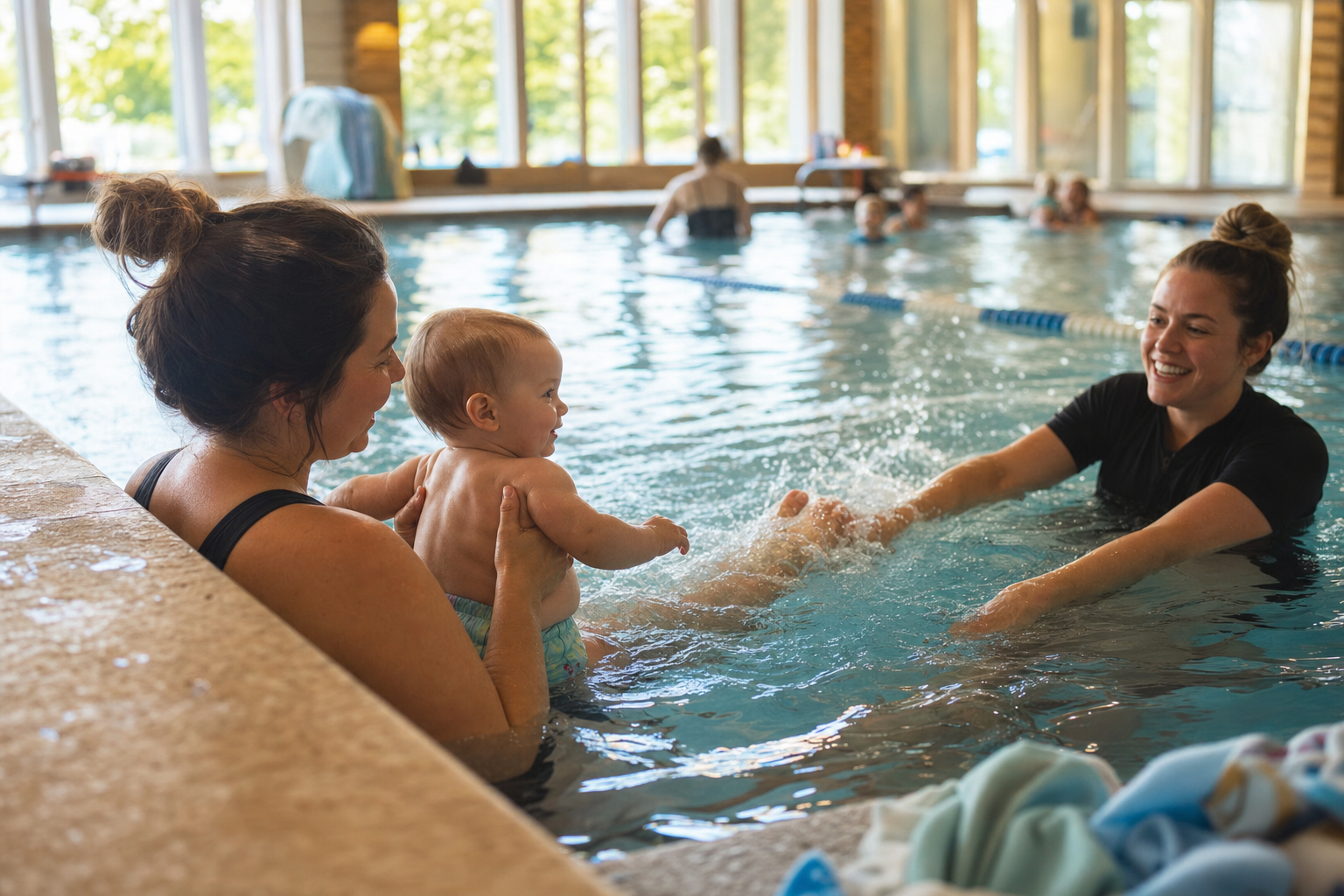
Picking a swim class time isn’t just about what hours are available—it’s about naps, feeds, temperature, parking, changing rooms, siblings, and making the whole thing feel calm instead of rushed. Here’s how to find the sweet spot for your little one, and why some times work better than others.
What wakes up the whole class: naps, feeds, and moods
Babies and toddlers on a two-to-four nap schedule really depend on rest. Class right after a nap means your child arrives more rested, regulated, and able to enjoy the water without fussing. Try to start class in the first half of a “wake window” when they’ve had time to settle after sleeping and feel alert. If class falls just before or during the tail end of a nap, expect more tears or meltdowns.
Feeding matters: plan to feed around 20-45 minutes before class. Too full and there might be spit-ups; too hungry and you’re racing against tears. Toddlers with strong meal routines are often happier when class slots fall between meals.
An article from Europe emphasizes that the ideal time is often “late morning after the first nap and a small snack.” That time combines a rested baby, a recent feed, and a pool that’s probably less busy. (swimy.de)
Pool and changing room stress: temperature, logistics, and comfort
Water and air temperatures make a big difference. Babies lose heat faster than adults, so heated pools around 32-34°C (≈ 89-93°F) are usually best. Aquanat in Australia recommends that range especially for infants under six months, noting your baby can become cold quickly, which makes focus and enjoyment harder. (aquanat.com.au)
Beyond the water, changing rooms are a classic stress point. If you arrive just at class time, you’re likely sprinting through changing and rushing into the pool already rushed. That adds tension—for parents and baby. Leave buffer time to park, change, collect swim diapers and towels, and give your child time to adjust. Also consider sibling schedules; if you have another child’s sports class 15 minutes before, it may make every swim class feel like a mad dash.
Safety caveat: a tired, cold, or hungry baby is harder to supervise and comfort, so leaving class early can sometimes be the safest choice.
Use tools like the 10-Week Plan from swimy.org, which helps parents build rhythms and routines around swim-class times. That plan emphasizes aligning swim class with sleep windows, feeding routines, dress-times, all to make classes feel more predictable.
When during the day tends to work best
Based on research and parental experience, many families find that late morning after the first nap is the sweet spot for baby swim classes—you get rested babies, warm pools, and less crowded facilities. Early afternoon can also work, especially if a midday nap is long or if parents can make a mid-morning meal work. Late afternoon is trickier—energy levels drop and babies may already be past their wake window, making meltdowns more likely. (swimy.de)
[[ctababy]]
Here’s how Toddler and infant programs generally frame timing: classes are often 20-30 minutes long, water temperature ideally between 87-94°F (≈ 30-34°C), with warm air in the facility. Babies under one year often need shorter lessons. (coachslava.com)
How your schedule and sibling routines play in
If you have an older child, their school or daycare drop-offs/pick-ups already shape your day. It’s more predictable to book swim classes when everything else isn’t conflicting—when siblings are at preschool, or when partner availability makes driving and parking smooth.
Also make parking and commute part of the calculation. If you regularly have traffic at rush hour, an early spot might seem ideal but becomes stressful in practice. Choose a time that gives you cushion: parking, changing room, walking from car into building all take more time than you expect.
Practical schedule tips to try
Have two or three good candidate times and experiment. Note how your baby does: are they alert? Do they smile? Do they shut down early? After a couple of weeks one slot might clearly work better.
If you notice repeated fussiness, being cold, or getting rushed, consider moving the class earlier or later, shortening drive time, or adding in a calming pre-class ritual at home.
Final take-aways: safety, predictability, peace
Safety is always first: never push when your child is overtired, cold, or hungry—these lead to less supervision and higher stress. Babies who are well-rested and comfortably fed are easier to keep safe, regulated, and engaged.
Predictability matters more than perfection. A regular class time your baby thrives in builds trust—you’ll know what to expect in terms of mood, arrival, changing, and post-class routine. That makes swim lessons feel like part of your rhythm instead of a frantic appointment you scramble to get to.
In the end, the best time for baby swim lessons is the time that supports your baby’s nap schedule, ensures a comfortable pool and warm changing room, fits your family logistics, and gives you margins for arrival and departure so you're never racing the clock. When all those pieces fall into place, the splash begins to feel not just fun, but calm—in other words, just right.
120+ swimming exercises sorted by age — with video and instructions. Developed by swim instructors, completely free.

120+ swimming exercises sorted by age — with video and instructions. Developed by swim instructors, completely free.