Bilingual Water Cues for Toddlers: Choose Consistent Pool Words in English and Your Home Language
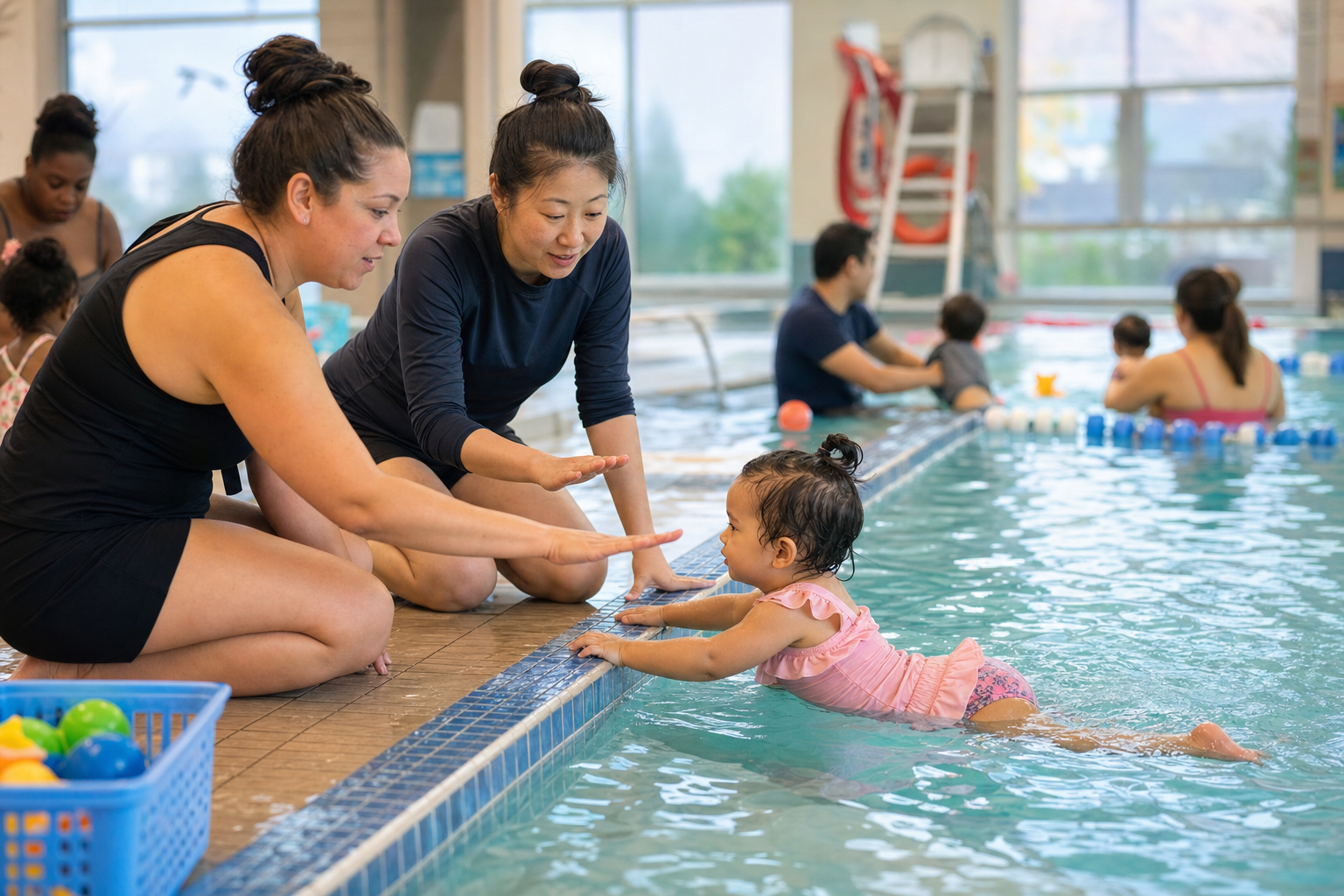
Toddlers between 12-36 months are ready to follow simple directions—but only when they hear the same words consistently. For multilingual families, aligning toddler water safety words across English and a home language helps kids recognize cues quickly, especially in urgent moments. Words like “stop,” “wait,” “hold,” “kick,” and “wall” become habits when used by parents, grandparents, and instructors together.
Why consistency matters right now
At this age, toddlers are exploring mobility and testing boundaries. They can misunderstand mixed cues—one adult says “stop,” another uses “alto,” “잠깐” (jamkkan), or “esperar.” That slows reaction time when safety depends on it. If every caregiver uses the same short cue with the same gesture, toddlers learn to respond fast, not translate fast. Formal swim instruction that starts after a child’s first birthday gives them a huge advantage—swim lessons are proven to reduce drowning risk in kids aged 1-4 years.(cdc.gov)
Choosing the right cues to use
Pick five to seven core cues. Keep them short (one to two words), action-oriented, used in the same way in both languages. English words frequently used by swim instructors include “stop,” “wait,” “kick,” “reach,” “wall,” “hold,” “bubbles,” and “ready, go.”(waterwisekids.com) Learn the cues the instructor will use, then choose equivalent words in your home language so your child hears both. For example, if English is “wait,” Spanish could be “espera,” Arabic “انتظر” (intithir), or Mandarin “等” (děng). Decide on “stop” vs “alto” vs another—don’t mix in the same session.
How to teach and practise cues before the pool
First practise out of water—in the living room, in the bathtub. Say “wait/wait-home”, hold your hand or show a gesture. Then say “kick,” practise kicking legs in a tub. Make it fun so toddler expects cues. Near water, stop at the edge, say “stop,” then only enter the water when you say “go.” Also teach “wall” or “hold wall” so child knows to orient toward the edge when needed.
Use signage or picture cards at home with both languages to pair word with image—“wall / pared,” “kick / patear,” etc. That helps grandparents or new caregivers learn too.
Working with swim classes—parents, grandparents, and instructors aligned
If you want a structured way to build water confidence at home, the 10-Week Plan guides you step by step.
From the first swim lesson, have a chat with your instructor: ask what English cues they’ll use. Tell them the home language words your toddler knows. Agree to use both words interchangeably, always with the same gesture and tone. For example: “Instructor says ‘kick’, can you also say ‘踢’ (tī) ‒my home language version?”
Grandparents often have their own natural words. Give them a cheat sheet with agreed cues in both English and home language and practice times—like “stop / basta,” “wall / valla,” or “hold / sostener.” Make sure everyone—including babysitters—uses the same version.
[[ctababy]]
What to avoid: using lots of different cue words that mean the same thing. If one says “wait,” another “hold on,” another “pause,” the toddler gets confused. Too many cues = too little clarity.
Core cues to consider and align
Here are cue examples and their purposes:
- Stop / Home-word to pause everything before danger.
- Wait / Home-word to hold until an adult says it's safe.
- Hold (the wall) / Home-word so child reaches or grasps pool wall.
- Kick / Home-word to move legs toward wall or to swim.
- Reach / Home-word to extend hand for wall or parent.
Combine gestures and consistency: always tap edge when you say “wall,” hold hand out when you say “reach.” That reinforcement builds fast recognition.
Sample plan you can follow
Try structuring home and class practice across several weeks. Use something like the 10-Week Plan from swimy.org to guide building blocks that combine safety routines and swim cues.(swimy.org)
Week by week, practise safe entries: wait, sit, slide or step in; then use “turn to wall,” “hold wall,” “kick.” Keep sessions short, playful, ending with a calm exit. Use bath or backyard sprinklers to practise cues like “bubbles,” “kick,” or “reach.”
By about week 4-5 toddlers should respond to “stop/wait” in both languages before going into water—or stop climbing on pool furniture. By weeks 7-10 cues like “turn to wall” and “kick” should be “automatic” with the real motion.
Safety routines beyond words
Words are powerful—but safety also depends on environment, supervision, and habits. Always have a supervising adult within arm’s reach (“touch supervision”) of toddlers. Pool barriers and fencing are vital. Teach toddlers to ask permission before entering any water. Swim lessons add an important layer of protection, but they don’t make a child completely safe without these routines.(cdc.gov)
Putting it all together
Aligned home & pool cues make a difference: toddler sees water, hears “stop / home word,” immediately pauses. Hear “kick,” legs go to work. Every adult in their life uses the same words. It takes a bit of planning up front—picking cues, agreeing with instructors and grandparents, practising—but the payoff is clarity, faster toddler response, greater safety.
Multilingual families have an extra gift: kids learning two or more languages are already good pattern-matchers. Harness that by giving them consistent, simple cues in both. Safety routines like “stop,” “wait,” “hold,” “kick,” and “wall” then become tools your toddler can use in any language—or with any caregiver.
Start today: choose your five core cues in English and your home language. Tell your instructor. Practice them in bath, then pool. Regular use, repetition, and alignment across home and lessons turn words into safety.
120+ swimming exercises sorted by age — with video and instructions. Developed by swim instructors, completely free.

120+ swimming exercises sorted by age — with video and instructions. Developed by swim instructors, completely free.