Breaststroke Chant Kids Remember: Pull, Breathe, Kick, Glide — Timing Made Easy for Ages 6–12
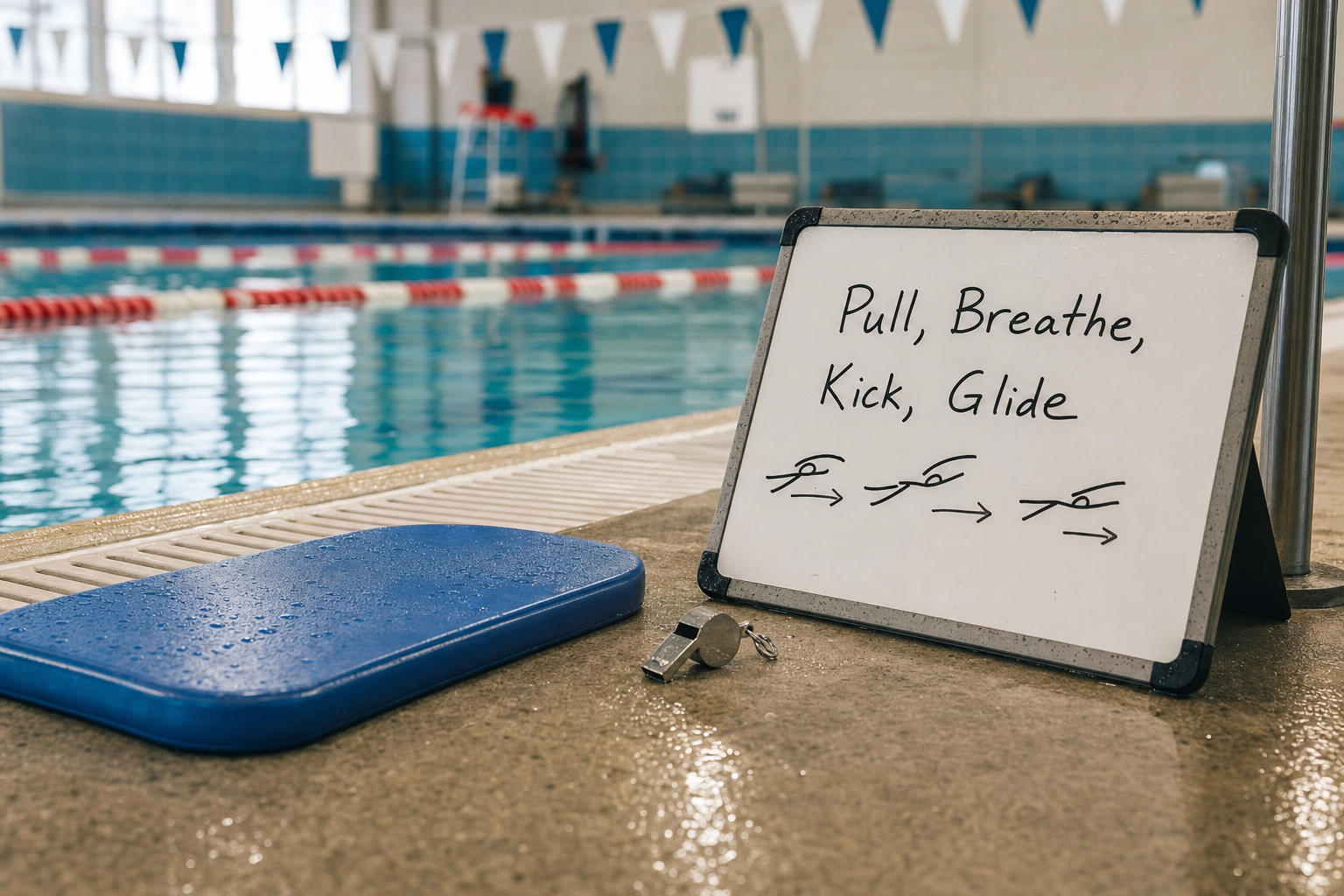
When a child’s breaststroke is rushed—breath too late, kick and pull both coming together, and glide barely felt—you’ll see energy wasted and progress stalled. Using the chant “Pull, Breathe, Kick, Glide,” two land-to-water progressions, and knowing what to watch for, parents can help kids ages 6-12 clean up breaststroke timing effectively between lessons.
Why “Pull, Breathe, Kick, Glide” Matters
In breaststroke timing for kids, the correct order—pull first, breath during or right after the pull, kick following the breath, and then glide—ensures propulsion isn’t cancelled by overlap or incorrect sequence. When breathing happens before the arms set the pull, or the kick is thrown in too early, the rhythm collapses. Experts stress that good breaststroke timing makes the stroke smoother, reduces fatigue, and allows kids to swim more efficiently rather than just faster.(swimmer.life)
Kids often show common pitfalls: breathing late (over-lifting the head), no glide (legs or arms always moving), kick from hips only (frog-kick too wide or too much from pelvis). These reduce speed and can strain knees and hips if overworked.
The Chant: How to Use It
Teaching breaststroke children can be helped by a simple chant: “Pull, Breathe, Kick, Glide.” The chant is a cue for correct sequencing. Say it slowly first, so that kids sync each word with the body motion in the water. Repeat during practice: pull (arms move in sweep), breathe (head lifts just enough), kick (legs finish together), then glide (body fully extended, still).
When kids can recite the chant while swimming short swim drills, the timing will begin to fall into place naturally.
Two Land-to-Water Progressions
These progressions build confidence and muscle memory day by day.
Land Progression
On dry land, mirror swimming or sitting at pool edge. Have the child lie prone on bench or towel, curl knees, turn feet out, sweep kick around (whip-kick), reach arms forward for the pull. Practice “Pull – Breathe – Kick – Glide” in slow motion. Breathe when pull completes, then kick, then stretch arms and legs for glide. Verbal cues and mirror work help correct frog-kick extremes or early breathing before pull finishes.(royallifesavingwa.com.au)
Another excellent resource for structured guidance is the 10-Week Plan at swimy.org which lays out progressive drills, practice days, and timed feedback to help kids internalize legal breaststroke timing in small, manageable steps.
Water Progression
Start in the shallow end using a kickboard or noodle for support. First, do drills focusing just on kick with arms at sides and breath timed right after the kick when legs fully extend. Then, let them walk or swim slowly while doing pull with face in and arms only, then add breathing. Finally combine all: pull, breathe, kick, glide—working through one full stroke cycle. Keep swim sets very short (5-10 meters) to protect knees; avoid whip-kick extremes.(swimy.org)
[[ctakid]]
Between swimming lessons, parents can reinforce legal timing by practicing the chant and land‐to‐water progressions for just five or ten minutes at home or poolside.
What to Watch For: Parental Checklist
Keep an eye on four common timing red flags.
Breathing too late – if the child lifts head after arms are already past the pull phase, that’s too late. Head lift should align with or just at the end of arm pull. No glide – arms and legs should stretch forward after kick, not immediately start the next pull. If limbs keep moving, there is no glide. Frog-kick from hips – legs should bend at knees, rotate feet out, sweep and squeeze together; not just push from hips or scissor out wide. Also watch knee safety: knees should never come inside too close or flare wide.
When seeing these mistakes, use correction drills (see above) and pause feedback: after each short swim, ask “Did you pull first? Did you glide?”
Drills & Schedule Suggestions
Integrate timing drills into regular swim practice. One example is a weekly mini-set parents or instructors could plan: 4 x 25 yards/metres where first 2 focus just on pull + breathe drills, next 2 on kick + glide, always using the chant. Use games like whistle drills: blow whistle when chest returns to glide position, get child to freeze and reflect on timing. Or variations like “two kicks, one pull” to slow things down and emphasise the glide phase.(usms.org)
Safety, Seasonality, and Keeping Motivation Up
Keep sets short, especially for younger kids, to protect knees and avoid fatigue. Avoid forcing whip-kick extremes; let the legs drive naturally, without twisting the knees. Timing improvements work year-round, indoors or outdoors. Encourage continuous reinforcement between lessons — praise when they glide well, give positive feedback on breathing timing. Swim meets or informal timed swims can help kids see progress.
Final Thoughts
Learning breaststroke timing for kids depends on consistent cues like “Pull, Breathe, Kick, Glide,” thoughtful progressions from land to water, and watching for specific mistakes — breathing too late, no glide, or frog-kick from hips. With practice, even short daily drills will help kids ages 6-12 swim with better rhythm, less fatigue, and more speed. Once pull-breathe-kick-glide becomes intuitive, swimming becomes not just a lesson, but a skill they carry for life.
120+ swimming exercises sorted by age — with video and instructions. Developed by swim instructors, completely free.

120+ swimming exercises sorted by age — with video and instructions. Developed by swim instructors, completely free.