Childminders at Baby Swim Class: Permissions, Safety, and Language Tips
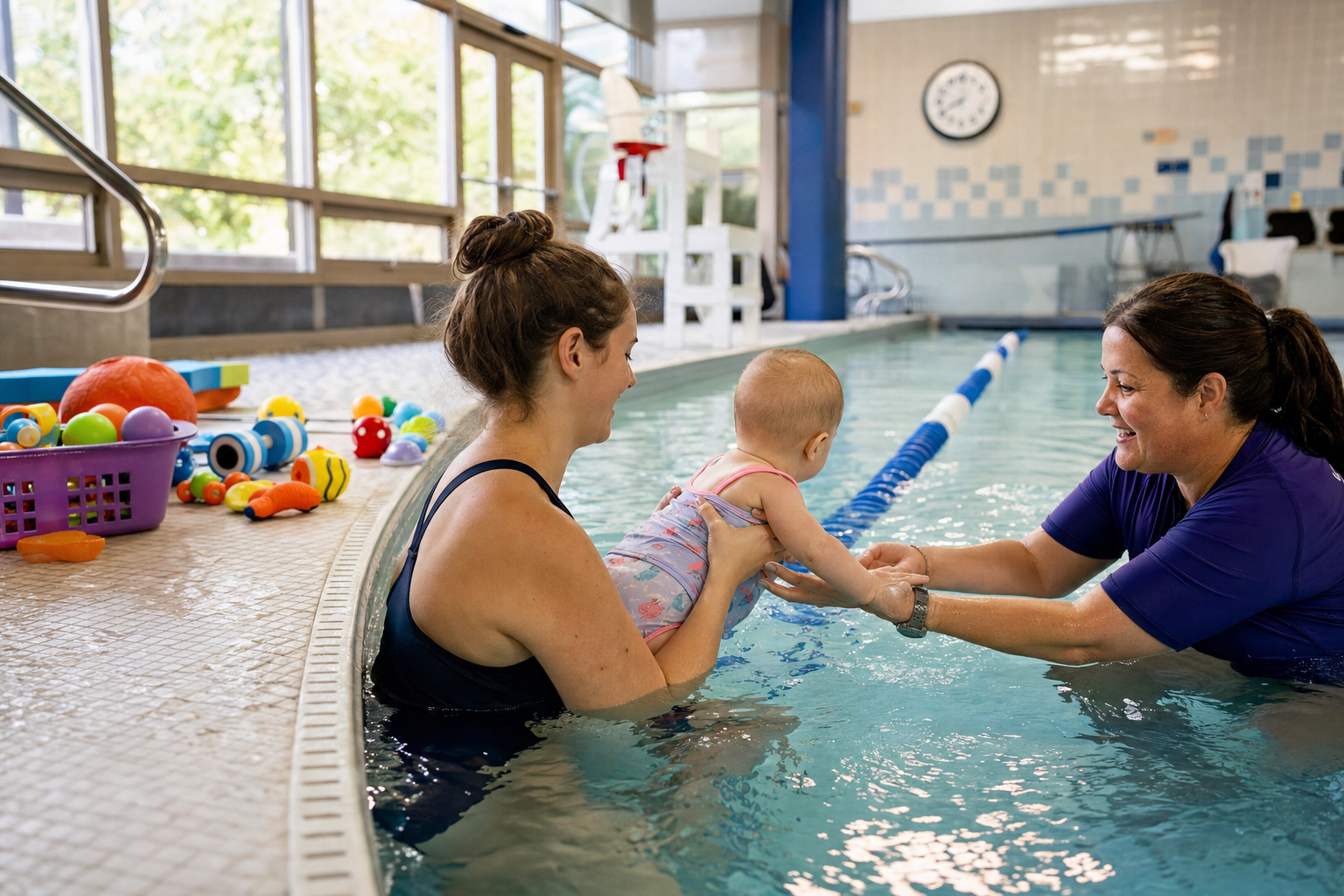
Can a nanny, au pair, childminder, grandparent, or other caregiver take your baby to swim lessons instead of you? The short answer is yes—most sibling-, parent-baby, and stroller brown-bag swim schools allow it. But to ensure your 0- to 36-month-old child gets consistent, safe support, you’ll want to set clear guidelines around permissions, emergency contacts, class roles, and water-boundary language before day one.
What Parents Should Confirm Before Letting a Caregiver Attend
First, you need to check the swim school’s policy. Ask whether any authorized adult may enter the pool with the baby or whether they require a specifically named guardian in writing. Swim schools in the UK, for example, may have rules similar to “you or the nominated Guardian must enter the water with your baby,” which means not just any adult. One UK school’s Terms and Conditions require notification of illness, medical conditions, and that a guardian is present. (babyswimming.co.uk)
Also verify swimming classes’ emergency protocols. Find out who is allowed to collect or respond for the baby if the parent is unreachable, and keep written permission and up-to-date contact numbers on file with the school. These protocols matter when someone else regularly takes your baby to class.
Role & Skills of Caregiver in the Pool
Even with permission, the attending adult must be physically able to hold the infant securely at all times, follow instructor cues without delay, and respond effectively in emergencies. These include lifting the baby, keeping hands under head and bottom, and aiding with floats or back-rest positions. According to guidelines for parent-and-child classes, adults should be within arm’s reach, in the water, always supervising closely. (healthychildren.org)
Caregivers should also learn medical notes your baby has—any allergies, past ear issues, or recent illnesses. Swim schools often require parents to disclose and maybe even sign off on medical conditions before lessons. (babyswimming.co.uk)
If you want a structured way to build water confidence at home, the 10-Week Plan guides you step by step.
Permissions & Emergency Details You Should Share
When you authorize a caregiver to take your baby to swim lessons, put the agreement in writing. Include which class times you’ve approved, who is allowed in the water, and whether they have permission to share photos or video (many swim schools ban underwater filming during classes). (babyswimming.co.uk)
[[ctababy]]
Give the caregiver your child’s routine: feeding times, comfort objects, calming techniques. Also provide them with emergency contacts, medical information, and a signed release so the swim school knows the caregiver is officially acting on your behalf.
Building Water-Boundary Language & Safety Signals
You can do a lot to help your child—and your caregiver—by defining clear water-boundary language and cues. Swim schools teaching 4- to 36-month-olds often introduce consistent verbal cues like “Ready, one, two, three” just before pouring water on face or beginning submersion. These cues give babies a moment to prepare and reduce fear. (swimy.org)
Using encouraging, calm language and avoiding surprises is crucial. Teach your caregiver the same words and tone you use at home. Same songs, same cues. That consistency builds trust in water and smooths transitions from bath time to swim time.
Why Home Practice Helps and a Valuable Resource
When you practice at home—during bath time, in shallow water, with soft verbal cues—you help your baby learn what swim class will be like. For example, you might pour a cup of water over their head while saying your cue phrase. This makes the first lessons less overwhelming. (superheroswimacademy.com)
One helpful tool in this journey is the “10-Week Plan” from swimy.org, which guides parents through aligning daily schedules, feeding, arrival routines, and practicing short exposures so both parent and baby gain early confidence.
Avoiding Common Pitfalls
A common mistake is assuming that any adult—including caregivers—can automatically attend in place of a parent. Always get written authorization from the swim school. Another trap: forgetting to pass along medical notes or not informing instructors of things like recent ear infections, which might affect safety during lessons. When a caregiver is unaware of your baby’s comfort cues—like being cold, frightened, or tired—the experience can go poorly.
Also, don’t underplay the importance of caregiver’s capability: the attending adult must be strong enough, emotionally calm, capable of following teacher’s directions, and prepared to respond in an emergency such as if your baby slips or panics.
Final Thoughts
Yes, you can have someone else take your baby to swim lessons—but only if you set the rules clearly, check the school’s policy in writing, share medical info and emergency contacts, train the caregiver on your baby’s cues, and establish consistent safety-language at home and in class. When these pieces are in place, your childminder or nanny can provide the same safe, loving presence you would—helping your baby develop confidence in the water without compromising safety.
120+ swimming exercises sorted by age — with video and instructions. Developed by swim instructors, completely free.

120+ swimming exercises sorted by age — with video and instructions. Developed by swim instructors, completely free.