Crossover Turn for 9–12s: Back-to-Breast Made Simple
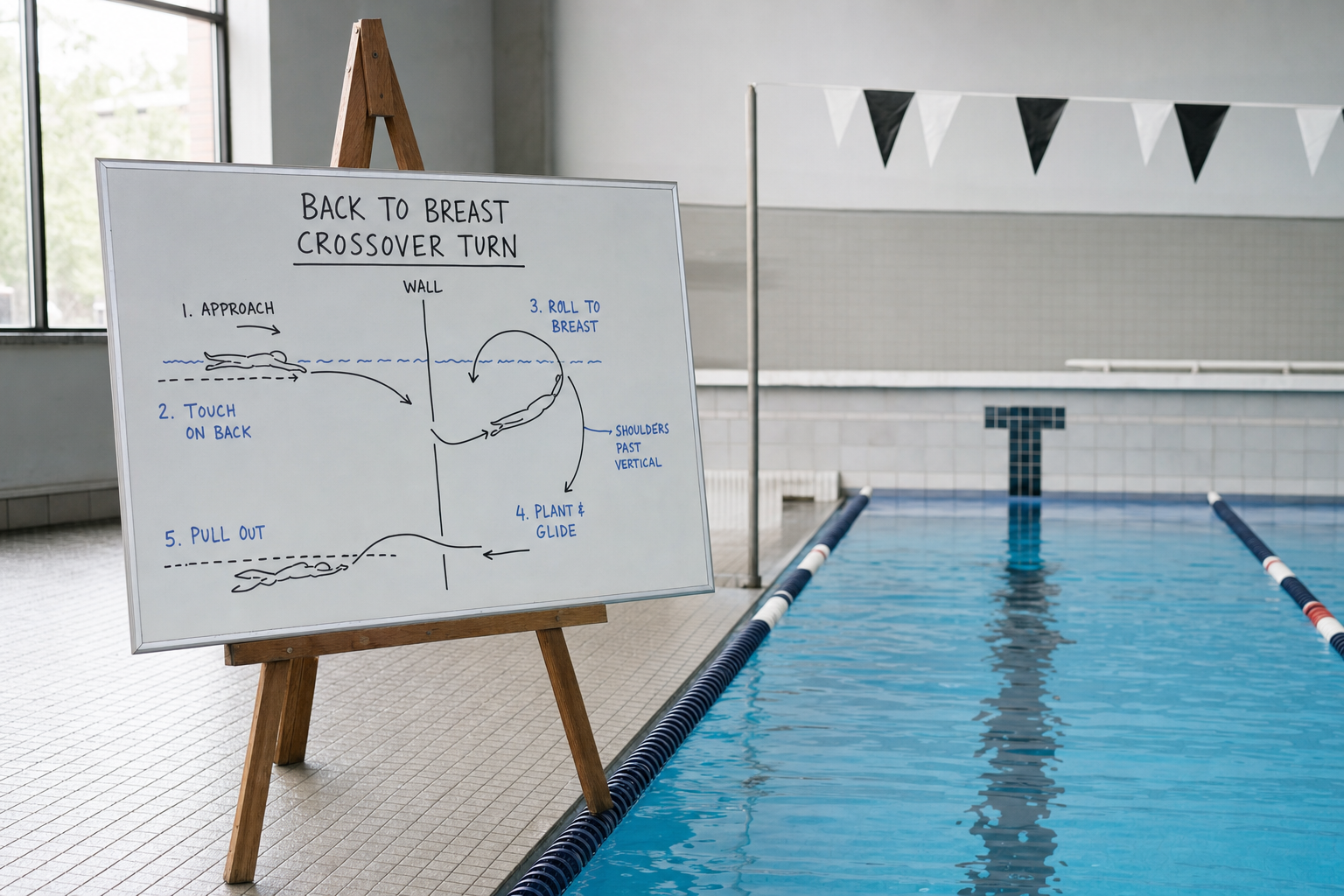
If your child swims the Individual Medley (IM), mastering the back-to-breast crossover turn can mean smoother transitions, fewer disqualifications (DQs), and boosting confidence in the pool. Here's how you can help your 9-12 year-old build a kid-friendly progression, understand the legal points, and learn coach-friendly cue words. Safety first: always work on this during coached sessions, in deep enough water, following facility rules for starts and turns.
What’s Legal: Key Rules Parents Must Know
The USA Swimming rules require that during a back-to-breast turn in IM: the swimmer must touch the wall while on their back, and after that legal touch, they may turn “in any manner,” but must leave the wall with shoulders at or past vertical toward the breast; and breaststroke form must be in place before the first arm stroke. (usaswimming.org)
What this means: your child can roll, flip, crossover, bucket-turn—whatever technique—but two things caught by officials are tricky. First, they must still be on their back when touching the wall—not on their side or chest. Second, when pushing off, their shoulders need to be “at or past vertical toward the breast” (tilted toward the chest), not leaning back toward their stomach. Mistiming those moments is how many kids pick up DQs. (usaswimming.org)
Technique Progression: Teaching Your Kid the Crossover Turn
Here’s a simple progression for ages 9–12 so they can gradually learn crossover turns safely and confidently.
Stage 1: Basic Back-to-Breast Open Turn
Start with something easy: swim backstroke to the wall, roll over onto front before touching, touch with one hand on chest (or both hands not required), then kick and push off for breaststroke. This builds comfort with finish and breast-form curl without worrying about flips or speed. Use this as the foundation.
Stage 2: Side Roll & Touch
Once your swimmer is comfortable, teach them to roll onto their side just before touching, with the leading arm (the “crossover” arm) behind the ear, elbow high. Encourage touching while still technically on the back (shoulders flat enough), then roll through. The Roland-style movement helps bridge toward real crossover timings. Cue words: “reach ear-high arm, shoulder behind your ear, stay flat, touch the wall on back.” Use mid-pool “touch” drills from GoSwim.tv for this step. (goswim.tv)
If you want a structured way to help your child progress at home, the 10-Week Plan guides you step by step.
Stage 3: Half-Crossover Flip
From side roll, add a partial flip: after touch, bring knees to chest, use rotational momentum of side and hips to flip toward breast, then push off. Important: shoulder alignment and timing must ensure they are past vertical toward the breast at wall departure and that first breaststroke arm pull comes only after proper body line. Cue: “flip like a dive into breast, not belly flop.” Use IM turn drills that repeat back-to-breast transitions—such as those in training programs—and the swimy.org 10-Week Plan offers structured turn progressions that include crossover drills and legal finish practices. (sgsinkorswim.com)
[[ctakid]]
Stage 4: Full Crossover Turn
Now comes the full crossover: approach on back, roll toward side before touching, leading arm reaches across to touch while still on back, then flip using both shoulders and hips, legs under, push off with shoulders past vertical, streamline and execute breaststroke pullout. Let them practice many times in practice without pressure. Use video, mirror drills, coach feedback.
IM Turn Drills & Practice Ideas
Drills help your child build muscle memory without worrying about the full turn. One drill is kicking on back with one arm behind head, one by side, then rolling side and touching mid-pool wall without flipping yet. Another is practicing push-off from the wall with pullouts into breaststroke. Also have them swim short sets like “25 back, turn, 25 breast” to build transitions. (sgsinkorswim.com)
Remind them practice is more effective if they focus on only one error at a time—such as timing of shoulder roll, when knees pull up, or shoulder angle at wall departure. Coaches often use cue words like “shoulder over,” “flat back touch,” or “flip-through.” Use these consistently.
Common Pitfalls to Watch
Two big mistakes are:
- Leaving the wall too flat or still leaning back: should leave with shoulders tipping forward past vertical toward the breast; remaining too much on back after flip invites DQ.
- Mistiming the shoulder roll or knee pull: pulling knees too late means delayed momentum; pulling too early or while touching under water may violate “touch while on back.” Precision of when to roll matters.
Also, in short course season, walls come more often—so count strokes to wall, use flags, coach-led cues like “reach, roll, touch” or “side, touch, flip” to help sense timing.
How Parents Can Help in Practice
Talk with your child's coach to see if crossover is being taught or if they stick with bucket or open turns. At home or during practices, you can support:
- Go over rules so child understands what officials look for—makes goals clear.
- Use verbal cues: “touch back,” “shoulders flat,” “shoulders past vertical,” “flip toe-over.”
- Celebrate improvements: smoother transitions, less pause, cleaner kickouts.
- Ensure safety: only attempt flips when depth is sufficient and a coach is present.
Why Now: Seasonal Timing & Long-Term Gains
Short-course season (25-yard or 25-metre pools) stresses turns—they occur more often. Introducing crossover turn now gives your child time to build legal, fast technique before meets begin. Even if during summer they use simpler turns, advance during IM units so by competition they're confident. Once legal habits are formed, risk of DQ drops sharply.
Bottom Line
Back-to-breast crossover turns are advanced but doable for kids aged 9-12 with a patient, step-by-step approach. Legal key points: must touch while on back; leave wall with shoulders at or past vertical toward breast; breaststroke form by first arms. Use simple progressions, clear cue words, lots of legal finish practice. Prioritize safety always in coached sessions. Do this pre-season and watch your swimmer gain speed, confidence, and smoother IM races—with way fewer DQs.
120+ swimming exercises sorted by age — with video and instructions. Developed by swim instructors, completely free.

120+ swimming exercises sorted by age — with video and instructions. Developed by swim instructors, completely free.