Culturally Inclusive Swim Lessons: A Parent Checklist for Ages 3–12
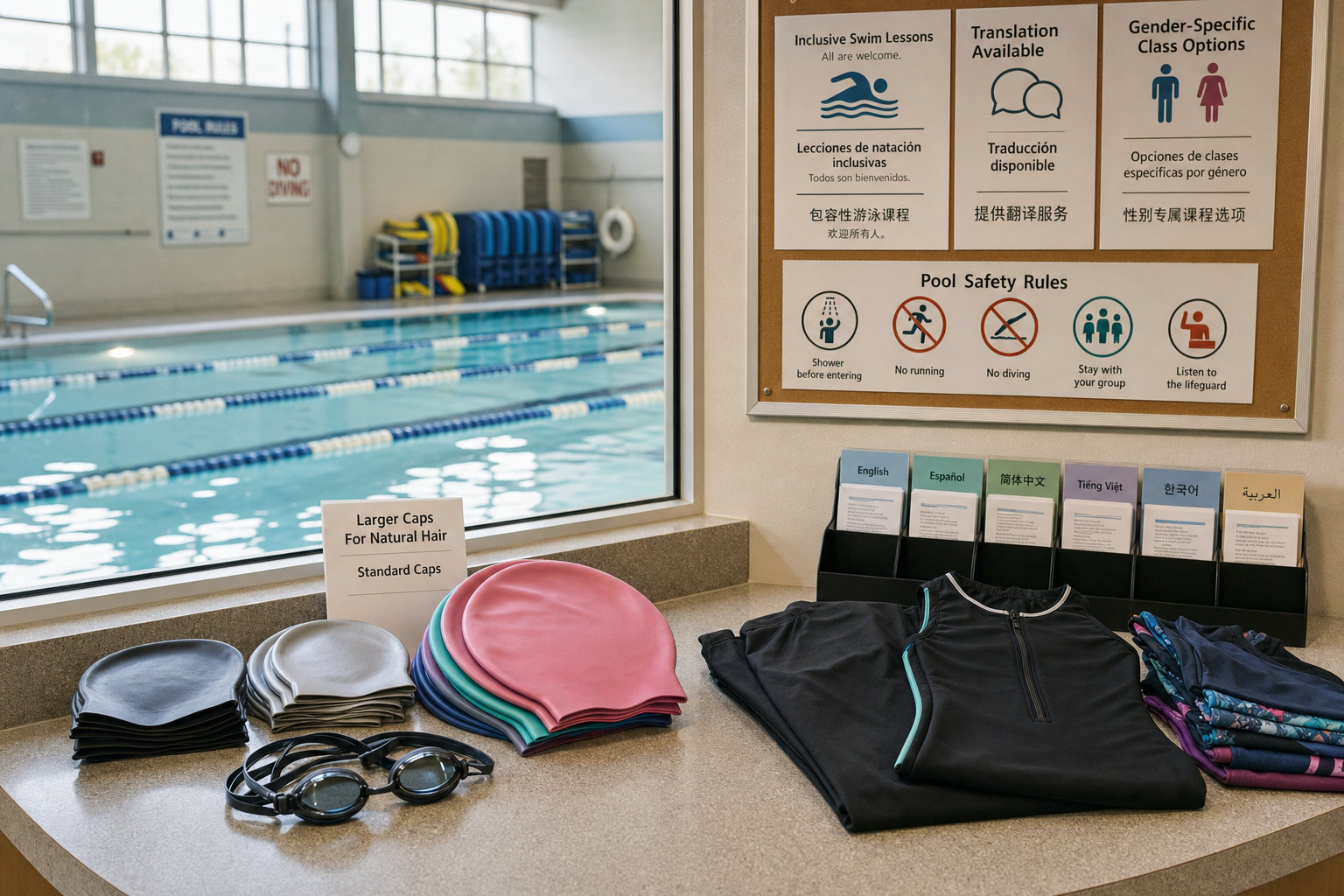
Ensuring your child ages 3–12 thrives in swim lessons isn’t just about teaching strokes or floating—it’s about making sure the environment reflects who they are. With inclusive swim lessons or culturally responsive swimming classes, kids feel seen. They stay enrolled. Parents gain clarity. Here’s what to ask and why it matters right now.
Instructor Diversity & Staff Training
First off, ask: Do the instructors look like a mix of your community? It matters. Representation builds trust. Research shows that when kids see instructors who share their race or culture—especially Black or Asian children—participation and confidence increase in swim settings. Pools with diverse staff better overcome historic barriers. (link.springer.com)
Beyond diversity, check whether the facility offers cultural safety or responsiveness training to all staff—not just instructors but lifeguards, front desk, and maintenance too. One case study from the Canadian Red Cross swim program found that instructor training matters, but organizational culture must shift if the programs are truly inclusive. (researchgate.net)
Ask specific questions: Are classes led by instructors with multilingual skills? Have they been trained to understand modesty preferences, religious swimwear, or gender-exclusive classes? What ongoing training deals with bias, cultural traditions, or physical concerns (like curly hair)?
Language & Communication Support
Language barriers silence big issues. Seek programs with translated materials—sign-up forms, safety rules, pool signs—in your home language. Also ask if interpretation is available during lessons if English isn’t your child’s first language. Studies in Australia show that swimming programs tailored for culturally and linguistically diverse (CALD) families need dual-language instruction and strong mentor support to succeed. (researchonline.jcu.edu.au)
Check if feedback or progress reports are provided in ways that all parents can understand. Photos or videos may help if literacy or language catch-up is needed. Don’t assume that an “access” offer means that the quality is cushioned—true inclusive swim lessons maintain high safety and rigorous instruction standards.
Hair, Skin Care & Swimsuit Policies
Natural hair—curly, kinky, braids, protective styles—often gets overlooked. Many Black families report fearing hair damage from pool chemicals or not being allowed protective swim caps. An equity-driven study highlights that swim programs should include swim caps designed for natural hair and policies that normalize protective hairstyles in aquatic settings. (link.springer.com)
If you want a structured way to help your child progress at home, the 10-Week Plan guides you step by step.
Also ask: What guidance or facilities are available for changing, rinsing, conditioning hair after class? Do instructors understand that hair needs differ across cultures? Are towel-drying or washing stations accommodating? What kinds of swimsuits are accepted—do policies allow modest swimwear like full-coverage suits or burkinis without making families feel judged?
Community Partnerships & Feedback
Programs rooted in the community tend to meet cultural needs better. Find out whether the swim school partners with local cultural centers, religious groups, or language/cultural service organizations. Does the facility welcome feedback from parents from diverse backgrounds—and listen? Parent surveys, town-hall meetings, or advisory boards can help. Programs shaped by community input often feel safer and more relevant.
[[ctakid]]
Also ask for success stories: a pool that changed swim lesson times to suit work schedules, or introduced female-only classes to respect religious practices. For instance, Seattle’s “Equity in Aquatic Programming Guide” emphasizes community co-development, multilingual messaging, and diversifying images in advertising so parents see themselves reflected. (hiprc.org)
Questions You Should Ask Before Enrolling
To uncover true cultural responsiveness, here are questions that reveal more than surface marketing:
- Can I meet the instructor my child will be with and ask about their experience teaching children from my culture or background?
- Are your lesson plans and safety rules available in my home language or with visuals?
- How do you accommodate kids with natural or textured hair? Do you allow swim caps, turbans, or wash/rinse stations?
- What are your policies around swimwear? Do you accept modest attire?
- How often do you train staff on cultural awareness, bias, and inclusive practices?
- How do you get feedback from families? Have you changed anything based on parent suggestions?
Sample Program Comparison: What Excellence Looks Like
To bring it to life, imagine two swim programs side by side. Program A simply advertises “inclusive swim lessons.” Program B does these things: lists its instructor diversity, has bilingual staff or interpreters, allows protective swimwear, provides natural hair-friendly options, holds gender-specific classes when requested, has community advisory input, offers translated materials, showcases children from diverse backgrounds in its marketing. Which one sounds more truly inclusive? Obviously B. That’s the kind of environment your child deserves.
It also helps to pick programs with planned, structured curriculum like the 10-Week Plan from swimy.org—this gives you transparency into progression and safety benchmarks so you know that "inclusive" doesn’t mean cutting corners. Such programs articulate what skills your child should master each week, how progress is measured, and how culturally responsive content is embedded. By week 6 or 7, for instance, protective hairstyle accommodations might be in place, or instructors might be using language cues tailored to different learning styles. Consistency and clarity matter.
Safety & Quality Aren’t Negotiable
Finally, inclusion doesn’t mean reducing standards. Make sure any program you consider has certified lifeguards, appropriate child-to-instructor ratios, regular safety audits, clean water, and protocols in place for medical or cultural emergencies. Ask how staff are trained in emergency responses that may intersect with cultural needs (for example, modesty during a rescue or different levels of parental involvement).
Swim lesson providers should meet or exceed local standards—Swim England in the UK, US Swimming, or AUSswiim in Australia. Even when programs reduce cost or offer scholarships, safety and curriculum integrity must stay solid.
When parents look beyond surface promises and ask the right questions, children not only learn to swim—they feel valued and seen. Culturally inclusive swim lessons and culturally responsive swimming classes aren’t just nice to have; they make a difference in confidence, attendance, safety, and how a child relates to water for life. As you explore options, trust your instincts and don’t settle for anything less than inclusive swim lessons your child deserves.
120+ swimming exercises sorted by age — with video and instructions. Developed by swim instructors, completely free.

120+ swimming exercises sorted by age — with video and instructions. Developed by swim instructors, completely free.