Underwater Mirrors for Kids: Smart Tool, Safe Use
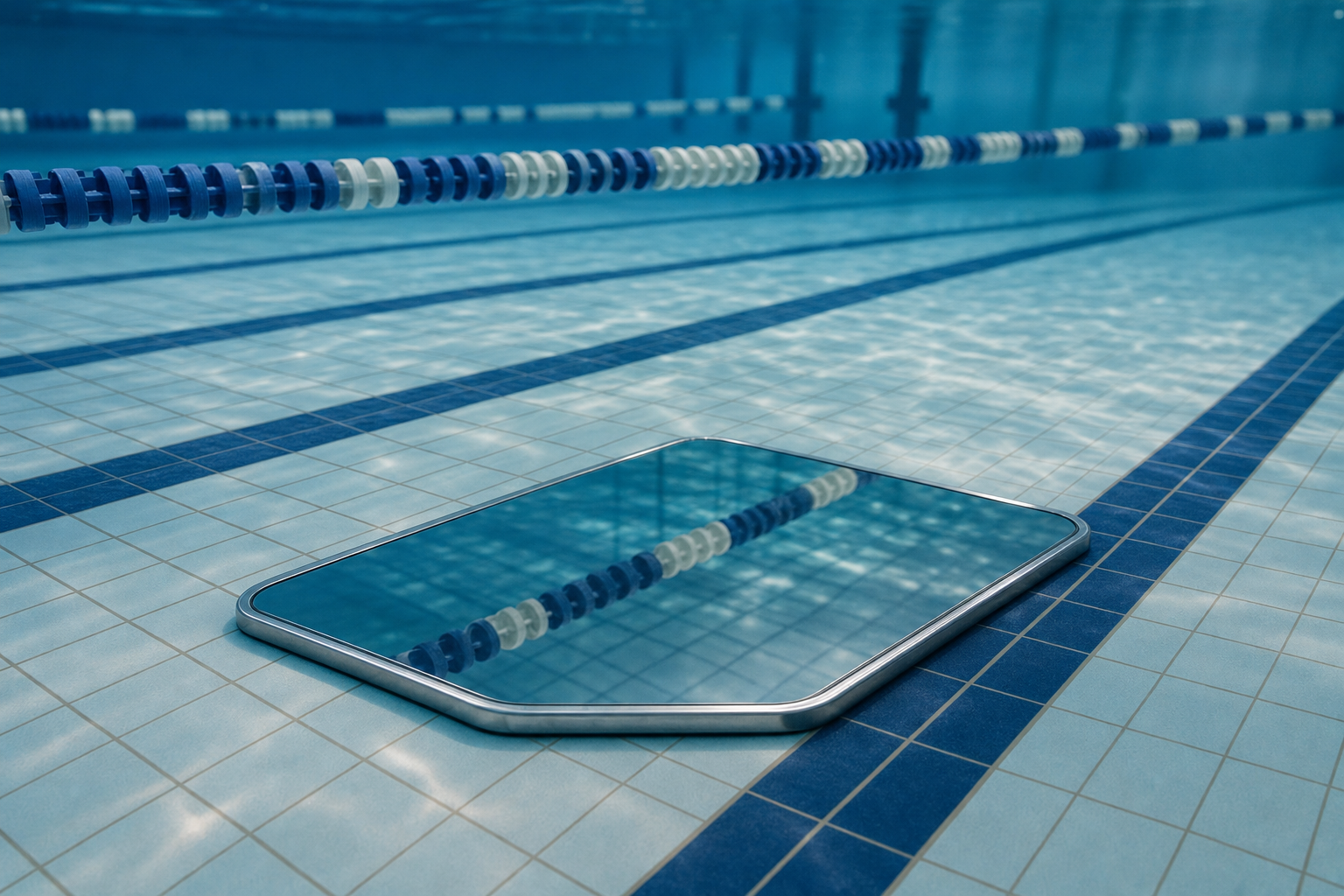
If your school-age swimmer (roughly ages 7–12) wants to improve swim bodyline, kick rhythm, or head position, an underwater mirror swimming setup could be one of the smartest tools in your swim bag. Using a swim mirror for kids gives instant visual feedback that shows where their body is misaligned or where breathing and head tilt need tweaking. Parents and coaches can see results fast—but also need to know how to use mirrors wisely so they genuinely help, without causing safety issues or discouraging beginners.
How Visual Feedback Swim Drills Help Swimmers 7-12
When children use an underwater mirror, they get to see what they’re doing—all while they’re doing it. That visibility helps them understand bodyline: a strong, straight alignment from fingertips to toes. It sharpens kick rhythm by showing whether legs are flicking from the hips or just bending at the knees. It reveals head position: is their neck strained because they raise the head too much when breathing, or is their head too low, causing drag?
Research into visual feedback and video feedback in swim instruction shows strong benefits. Studies demonstrate that children aged 6 or older respond particularly well to visual forms of feedback, combining it with instruction to learn freestyle swimming skills more effectively than verbal feedback alone. These methods improved technique and motivation in novice swimmers. (pmc.ncbi.nlm.nih.gov) In fact, a review of motor learning in 5- to 12-year-olds highlights how visual instructions enhance accuracy and retention of stroke technique especially when combined with practice and instructor cues. (journals.plos.org)
What Equipment Looks Good, What Works Best
For school-age kids, portable pool mirrors or floor-mounted mirrors are usually ideal. For example, tools like a waterproof acrylic “Learn to Swim Mirror” of 16-inch diameter give lightweight, safe visual access for children learning backfloat or streamline drills. (convexmirrorshop.com) Brands like SwimMirror offer large polished sheets (roughly 45 by 28-inches stainless steel) that can be placed underwater so kids see themselves while practicing laps. (swimmirror.com) These mirrors are shatter-proof, corrosion resistant, and designed for repeated pool use. Pool-bottom mirrors like those from Splashables offer whole-floor mounting options that allow swimmers to see during flip turn drills and streamline practice. (splashables.com)
Choosing a mirror for your child means prioritizing safety and reflection quality. Acrylic faces should be impact resistant with edges smooth enough not to catch straps or toes. Backings should be sealed and lightweight so mirrors don’t sink or shift dangerously. Bright pools—and indoor pools especially—help mirrors reflect better without dangerous glare.
For organized swim programs, using a structured plan helps. The swimy.org 10-Week Plan, for instance, offers thoughtful progressions, adding tools like mirrors at just the right moments so that children build confident technique rather than relying on feedback early if they’re not yet ready. Hyperlink it here as https://www.swimy.org/10-week-plan to help you see how mirror drills can be slotted in properly.
Best Practices to Use Mirrors Safely and Effectively
To make sure your child gets the most out of visual feedback swim drills without risking injury or frustration, keep sessions short and focused. Limit head-down viewing so that swimmers spend only a few strokes at a time looking into the mirror, then return to normal stroke flow. This prevents neck strain and helps the swimmer rely on feel between mirror check-ins.
[[ctakid]]
Ensure that lifeguards and coaches can always see lane safety lines. Mirrors installed on the pool floor or lane walls shouldn’t block sightlines between kids and supervisors. Disinfect mirrors and gear before and after use, especially shared or rental mirrors, to avoid skin or eye infections. The CDC’s healthy swimming guidelines remind us that water and shared equipment can spread germs if not properly cleaned. (cdc.gov)
Also important is matching the drill to the swimmer’s readiness. Beginners may benefit more from verbal cues and external modeling (watching others) before using mirrors directly. As children become more skilled (often around age 7-8), combining self-observation via mirror or video with verbal feedback accelerates improvement. This mirrors what studies show: children aged about 6 or older improve most from visual feedback methods. (pmc.ncbi.nlm.nih.gov)
Sample Routine: Mirror Drills in Practice
Here’s one way to weave underwater mirror sessions into a swim plan for an 8- to 12-year-old who already swims laps. Warm up for 5 minutes with easy freestyle, backstroke, or drills. Then do two sets of four strokes in bodyline blocks where face is briefly underwater looking into the mirror to check alignment. Follow with kick rhythm sets: kick 25 yards while glancing into mirror each few kicks to check leg straightness and motion from hips. Use head position drills: freestyle with breathing, but once each breath look slightly forward into mirror for split second to ensure head isn’t lifted too much.
Monitor for signs of fatigue or neck soreness. Keep mirror-visible time brief (perhaps 15-30 seconds per repetition), then revert to normal strokes without mirror to reinforce muscle memory. Trainers report that too much attention to mirror detail can distract beginners who are still learning coordination. Always prioritize flow and feel once technique awareness is established.
When to Hold Back: Risks and Limits
While swim mirrors are powerful tools, there are some pitfalls. Overuse can strain neck muscles or cause tension in the upper back, especially if a child holds their head down too long. Mirrors in crowded lanes can become hazards: swimmers bumping onto mirrors or having them block movement cause accidents. Distractions are real: children sometimes become obsessed with seeing their reflection instead of focusing on breathing rhythm or stroke feel. For some beginner swimmers, mirror feedback might overwhelm before basic skills are solidified.
Another risk is that the mirror mirrors (pun intended) only what’s visible. It won’t show internal alignment like hip rotation or core engagement, nor does it replace proper coaching. Always pair mirror drills with verbal feedback from a coach or parent who can see things the mirror doesn’t.
Final Thoughts for Parents
When used correctly, underwater mirror swimming is one of the smartest tools in your toolbox. For school-age swimmers, mirrors help build better bodyline, sharper kick rhythm, and balanced head position. Keep feedback sessions short, use the right mirror tools, ensure clean and safe pool practice, and integrate them with verbal coaching. Oversight—by you, a coach, or a trusted program—makes the difference between mirrors being a fun toy or a real performance-charger. Add in good rest, strong motivation, and steady practice, and you'll likely see form improvements faster than expected.
120+ swimming exercises sorted by age — with video and instructions. Developed by swim instructors, completely free.

120+ swimming exercises sorted by age — with video and instructions. Developed by swim instructors, completely free.