Warm Shower Transitions Before Swim Class: Calming Babies Scared of Pool Showers
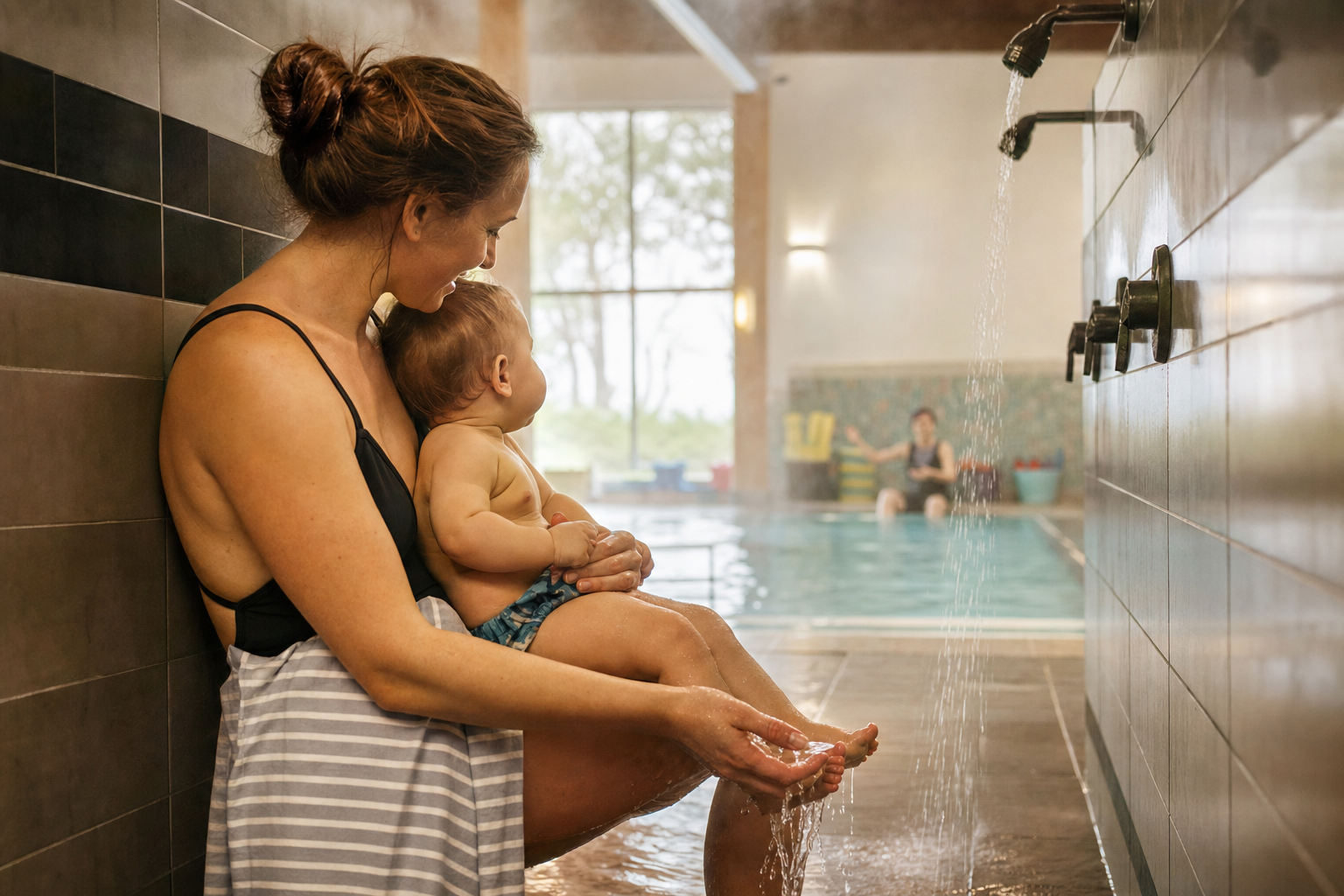
If your baby freezes at the harsh spray, jumps at the sudden noise, or shivers with unexpected cold at the pool shower, you’re not alone. Babies aged 4–36 months don’t like surprises—especially before their very first or winter swim lesson. Predictable sensory preparation helps. Parents can follow a gentle sequence—cuddle, feet first, shoulders, cue words, then pool entry—as a calm, warm, optional routine when baby is distressed, not rushed. This method offers baby control and parents structure, setting up a more confident and joyful pool entry.
Why Predictable Routines Matter
Babies don’t just react to water—they react to change. Water temperature, sound, spray intensity almost always trigger a startle reflex if introduced suddenly. A routine that builds up slowly gives time to adjust emotionally and physically. Experts emphasize that pre-swim routines involving warm bathtub-like experiences, soft touch, and familiar cues reduce anxiety and resistance in young children.(americanswimacademy.com) Following safe practices in water work, like gradually conditioning exposure, protects baby skin and senses while making the transition less frightening.(babyswim.info)
The Gentle Transition Sequence: Baby Swim Shower Routine
Here’s a simple sequence: cuddle, feet first, shoulders, cue words, then pool entry. Each step builds trust, avoids rushing, and is suitable for babies aged 4–36 months. If at any point your baby looks distressed, pause, soothe, and skip or shorten the routine.
Step 1: Cuddle
Begin outside the shower area, wrapped in a towel or held close against your chest. Soft eye contact, gentle singing, or hum a favourite lullaby. Parents can stroke the baby’s back, tap the feet, or rub their hands gently. The goal is safety through closeness before any water touch.
Step 2: Feet First
As you edge toward the shower or poolside rinse, let warm water drip first over their feet. This gives time to adjust. Try cupping water in your hands and letting it run up to their ankles, then shins. Keep the water warm—pool showers indoors should be warm enough to feel like a bathtub, not cold or blasting. Experts suggest indoor pool temperature for infants be about 87–94°F to keep comfort and avoid shock.(waterwisekids.com)
Step 3: Shoulders
Once they tolerate feet contact, move splash to shoulders and upper back. Hold baby in a cradle or over your hip so they feel supported. Avoid spraying directly on the face. Keep your grip steady and positive—this comfort helps babies feel heard and safe rather than rushed into something overwhelming.
If you want a structured way to build water confidence at home, the 10-Week Plan guides you step by step.
Step 4: Cue Words
Pick simple, consistent words like “ready,” “warm,” or “easy.” Use the same phrase every time. For example: “Feet warm… shoulders next… ready for pool.” These cues help babies predict what comes next. Over time, they anticipate and calm themselves rather than fight fear. As with many infant swimming readiness plans, using consistent cues helps build confidence.(babyswim.info)
[[ctababy]]
Step 5: Pool Entry
Finally, with baby calm, gently enter the pool. Hold them securely, letting them step or float in, depending on their age. Be slow to adjust from shower to pool. Sudden changes in noise, spray, and depth can undo all the soothing you’ve done.
Incorporating This into First Baby Swim Class Tips
Parents preparing for their baby’s first swim class should arrive early—at least 10–15 minutes ahead—to let baby hear pool sounds and smell chlorine before things begin.(waterwisekids.com) If possible, practice similar warm shower or bath exposure at home a few times; this makes the pool setting feel less foreign. Some programs offer a structured build-up approach, including resources like the swimy.org “10-Week Plan” which guides parents gradually through confidence-building exercises in and around water.(swimy.org)
Especially during winter or in indoor pool settings, where the contrast between dry air and wet spray is sharp, keeping everything warm matters. Make sure towels, swim diapers, and anything touching your baby is dry until needed. Rinse and warm shower water, and avoid blasting the face or dousing suddenly. These first lessons are more about sensory trust, not stamina.
Common Pitfalls and How Parents Can Avoid Them
One big mistake is rushing or blasting water on baby’s face because class must start. If that happens, infant often backs off or cries, which reinforces fear. Instead, go slow. It’s better to have a 30-second delay and a calm baby than to force a rapid face down and make class uphill from that moment. Another common pitfall is pulling baby too quickly under full spray before they’ve adjusted to feet, shoulders, and warm touch. Use the sequence.
Also, don’t fight it if baby clearly hates the shower that day. Make it optional, skip steps, or try again next lesson. The routine’s power comes from repetition, not perfection. Rather than a rigid checklist, it should be a flexible guide toward comfort.
Real-Life Example: One Parent’s First-Class Tale
When my daughter was 9 months old, her swim class had just begun. She panicked at the pool shower: water on her face, cold spray, echoing walls. So the instructor and I tried something different the next week. We cuddled her tight outside the shower stall, dripped warm water over her feet, then shoulders, using “ready… warm… gentle” before letting her into water. Within three lessons she leaned into the shoulder water touch with little fuss. That predictability and sequence helped. What felt like chaos became something she knew.
Final Thoughts: Keeping It Warm, Safe and Optional
If your baby is scared of pool shower, start with the pre-swim shower routine—cuddle first, then feet, shoulders, cue words, then pool entry. Keep things warm, brief, and adapt to baby’s comfort. Avoid rushing into spraying faces or forcing exposure. These steps may seem small but they build trust, reduce anxiety, and help your baby look forward to swim lessons.
Your calm presence and consistency make all the difference. Pool time doesn’t have to start with tears—it can begin with comfort, connection, and joyful splashes.
120+ swimming exercises sorted by age — with video and instructions. Developed by swim instructors, completely free.

120+ swimming exercises sorted by age — with video and instructions. Developed by swim instructors, completely free.