Cuts and Scrapes: Pool-Day Rules for Toddlers (0–36 Months)
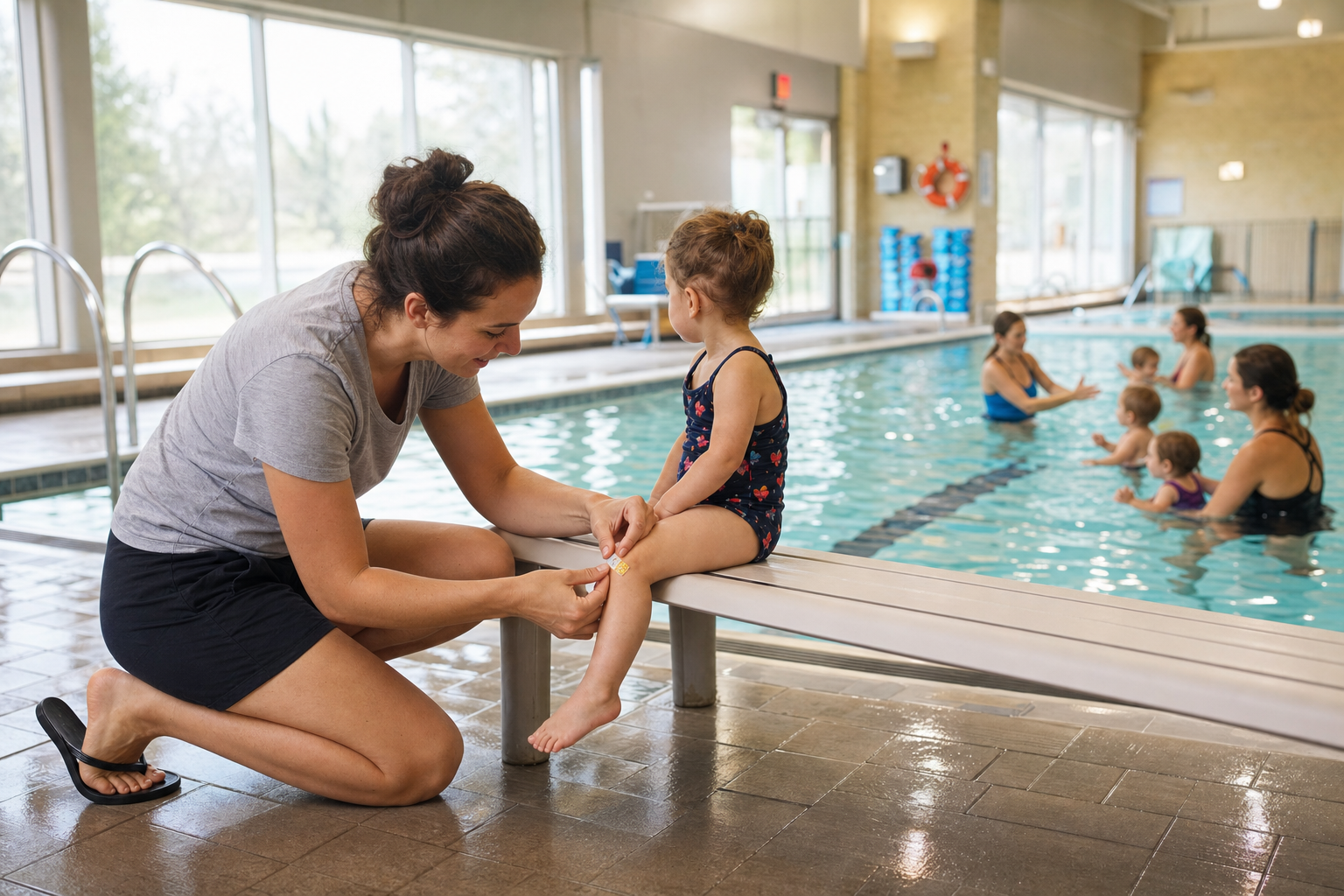
If you’re standing at the edge of the pool wondering “can baby swim with a cut?”, here’s what to consider right now—before you grab the goggles and go.
What the Experts Say First: Open Wounds + Swimming
If your toddler has an open cut or wound—anything raw, bleeding, or clearly not healed—CDC guidelines are very clear: stay out of the pool. Pools carry germs, and an open wound is a direct route in for bacteria and viruses. The water’s chlorine does some germ control, but it’s not enough to make swimming safe with a fresh cut. You’ll want a clean, covered wound before even thinking of swim class.(cdc.gov)
Minor Scrapes and Healing Wounds: Can You Cover It?
Many tiny scrapes—maybe the baby fell and skinned a knee—don’t bleed much and have started to form a light scab or thin layer of healing skin. These are trickier. If it’s healing well, clean, and not too deep, you might think it’s okay—but only with a fully sealed waterproof bandage pool child–style. That means the cut is totally covered, with no edges lifting. And that bandage must stay clean, dry before going in, and replaced if it gets soggy or loose.(cdc.gov)
Cuts After Stitches or Medical Glue: What's Safe?
If your child had stitches or a wound closed medically:
- With skin glue or wound closure tape, many paediatric recommendations suggest no swimming for one week. Baths or submersion are to be avoided in that time.(rch.org.au)
- With absorbable stitches, avoid water for about 5 days; non-absorbable must stay dry until removed.(rch.org.au)
After that, complete coverage with a waterproof bandage is essential if the wound is still not fully sealed.
Simple Parent Decision Guide
Here’s how to decide whether to skip class or not for tiny toddler scrapes:
If you want a structured way to build water confidence at home, the 10-Week Plan guides you step by step.
- Check the wound immediately after injury and before class. Is it still open or oozing? If yes, no swimming.
- Is it dry and forming a scab or healed layer? If so, you may use a tight waterproof covering.
- Bandage fully: if you go ahead, seal the wound completely with a waterproof adhesive bandage. No part of it exposed.
- Monitor signs of infection, like redness, swelling, warmth, or yellow discharge. Stay out if any appear.
- Follow medical advice for stitched wounds/glue/tape. No rushing it.
[[ctababy]]
Role of Swim Programs: Building Confidence
Toddlers do well if swimming routines are consistent. One program that many parents find helpful is the “10-Week Plan” at Swimy.org, which gradually builds skills and water confidence through small steps. Including a minor scrape properly managed, this sort of plan makes it easier for parents to judge if their child can safely join swim lessons or pool time without risking infection.(nct.org.uk)
Programs like this teach both toddler and parent what’s expected: clean cuts, waterproof bandages, no full submersion of healing wounds until healed. That helps families avoid unnecessary class cancellations.
Practical Bandage Tips for Pool Days
Waterproof bandages? You’ll want ones that won’t peel off the moment your toddler splashes. Here’s what works best: reliable adhesive edges (look for terms like “water-resistant” and “completely sealed”), and replace them as soon as they lift or wrinkle. Double check everything before getting into the pool. If a swim instructor or pool staffbe helpful, ask them if the bandage seems tight enough or fully sealed—they see these issues often.
Also, always pack spare supplies: extra waterproof bandages, sterile wipes, a clean dry towel. Better prepared means less stress on pool day.
Why You Don’t Leave Healing Cuts Uncovered
Even small cuts can become a source of infection—pool water doesn’t sterilize everything. Minor injuries exposed to pool water risk swimming pool granuloma, a nasty bacterial infection that comes from cuts touching water containing certain bacteria.(medlineplus.gov)
Also, wounds still in early healing stages need protection. Healthcare sources make clear that keeping a wound dry and clean encourages better healing and lowers scarring risk.(rch.org.au)
The Final Word: Stay Safe, Swim Smart
Parents often worry: “Is this too strict? Am I overreacting?” But in practice, sticking to these precautions lets toddlers with minor scrapes safely keep going to swim class without risking infection. Strong immune systems develop, comfort in water builds up, and skipping only happens when really necessary—not for every tiny scratch.
So, when you wonder "can baby swim with a cut?" here’s what you’ll choose: no swimming for open wounds, wait for proper healing after stitches or glue, and always use a quality waterproof bandage for small scrapes that are dry. Follow those rules, and your toddler can splash worry-free while parents keep peace of mind.
Stay clean. Stay covered. Keep swimming.
120+ swimming exercises sorted by age — with video and instructions. Developed by swim instructors, completely free.

120+ swimming exercises sorted by age — with video and instructions. Developed by swim instructors, completely free.