Grippy Hands in Baby Swim: What’s Really Going On (and How to Help)
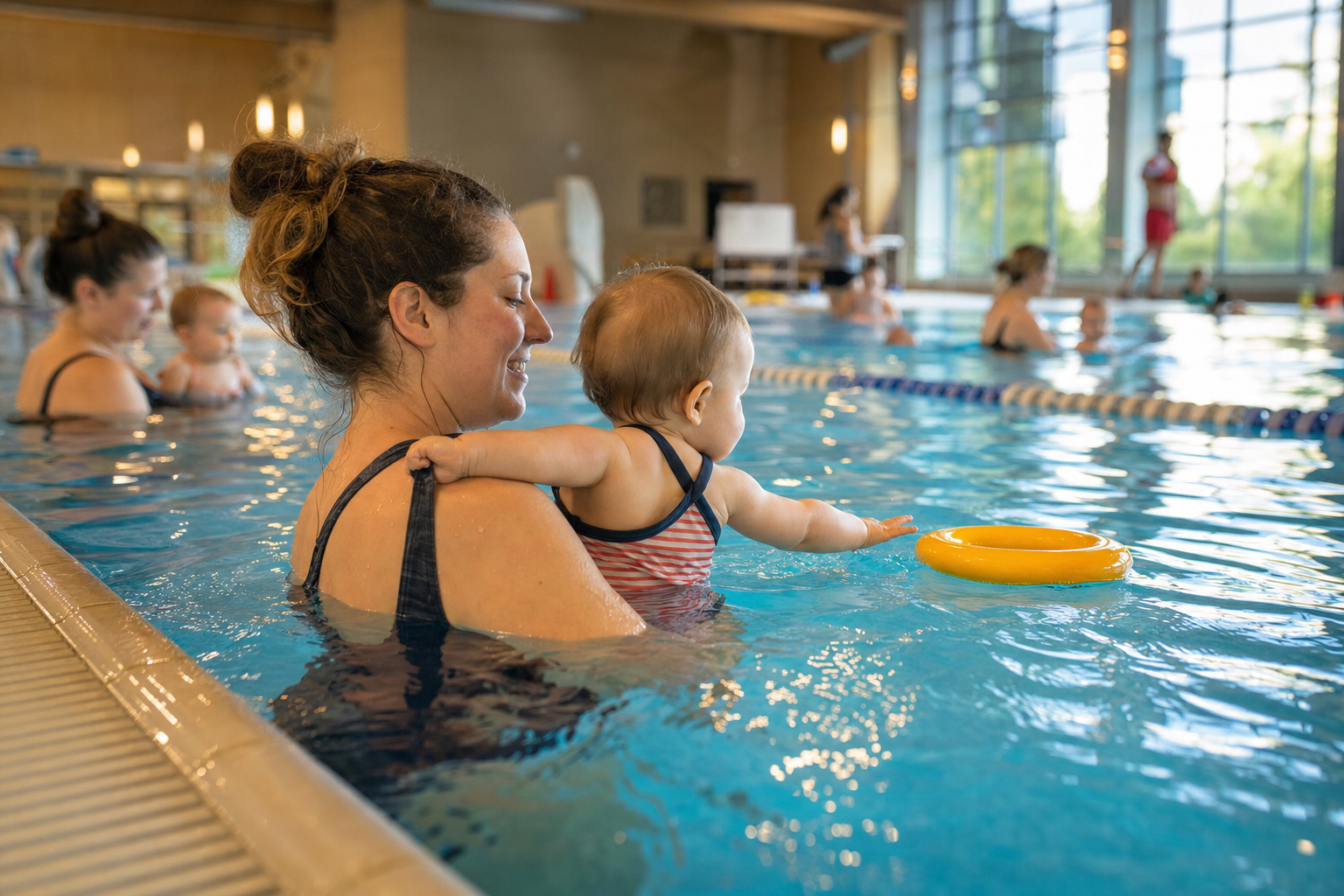
If your 4–18 month old baby clenches fists, grips your swimsuit, or refuses to reach for pool toys, you’re not alone—and it’s not a sign something’s gone wrong. In most babies, these behaviors are part comfort, part survival, and part developmental growth. Understanding what’s natural here helps you support their confidence, balance, and early motor control instead of worrying about perceived failure.
Why Babies Clench Fists or Grip When Swimming (A Good Thing, Mostly)
When babies are in the water, there are strong neurological reflexes and sensory signals activated. Reflexes like the palmar grasp (fist clench around anything in hand) or Moro responses (startle reactions) aren’t “bad”—they’re part of how infants adapt to a new environment. MedlinePlus explains newborns often have hands mostly fisted and reflexive grips as part of early motor development.(medlineplus.gov)
Gripping onto you—your swimsuit, your arm—is a comfort cue. Your body becomes a stable anchor that helps them feel secure in an unfamiliar buoyant space. Tight hoisting or reluctant kicking often point to a need for reassurance, not lack of ability.
In fact, research shows baby swimming boosts motor development including grasping. A non-randomized pilot study found 6–10 month old infants in swim programs scored higher in reflexes, grasping, fine-motor skills and overall motor development compared to infants who weren’t in water classes.(pmc.ncbi.nlm.nih.gov)
Reaching Games That Build Confidence, Balance, Motor Skills
You don’t need fancy gear. Gentle games that encourage reaching help babies learn coordination and confidence without forcing anything. These play ideas are tailored by age and ability, emphasizing emotional safety.
1. Supported Reach During Parent Rotation
Face your baby as you hold them securely under arms. Slowly rotate your torso so baby turns from facing you to outward and back. Offer a floating toy, your fingers, or a colorful ball in view. Reaching during or after rotation supports vestibular awareness (balance sense) and eye-hand coordination. Systems like this show strong effects in water-based motor development studies.(pmc.ncbi.nlm.nih.gov)
2. Gentle Tilt and Pause
Hold baby under arms or allow them to sit (if they can) and gently lean to one side, pausing. Encourage them to reach toward the pool edge, a floating ring, or just one of your hands. Then return to center. These frontal-plane tilts help with trunk control and core strength.
3. Float-Pause Reach
For babies sitting with support, let them sit sideways on your lap or using a pool float. Position a toy across their body—on the opposite side—and prompt them to reach across midline. Let them pause and feel the stretch and effort. This helps balance, reach, and body awareness.
If you want a structured way to build water confidence at home, the 10-Week Plan guides you step by step.
4. Splash & Pour Rituals
Outside the pool—in the bath or shallow water—use soft pouring onto shoulders, arms, and cheeks. Let them splash first, feel water on their skin, then gradually move toward face contacts. Repeating this helps babies accept splashes or drips rather than fear them.
If you want structure, something practical that builds week by week, you might use the 10-Week Plan of swimy.org to build progression from water comfort to basic movements and orientation games.(swimy.org)
[[ctababy]]
Typical Pitfalls: What Turns Help Into Pressure
Many parents interpret gripping or clutching as failure. That mindset risks pushing too early. Forcing a baby who holds tightly onto you to reach for a toy, or prying fingers open, usually backfires—they tighten more or shut down emotionally.
Loosening the hold too soon—before baby’s ready—is also risky. If you start letting go when they’re startled or slipping, it can feel unsafe. Safety—and your close grip—must remain until baby feels secure and can actively balance themselves.
Safety Caveats Parents Should Always Observe
Never pry open fingers or force reaching when baby is clearly startled or losing grip. Keep holds secure, always within arm’s reach, and never trust flotation devices over your own hands. Supervision is key. Water temperature should be warm (around 98–100°F or 37–38°C), especially for infants under 6 months who lose heat fast. Formal guidelines caution that while infant swim lessons are fun, there is no clear evidence they reduce drowning risk before age 1.(publications.aap.org)
Use floating toys only as prompts—never bait—so baby doesn’t feel shamed for not reaching. Let the reaching emerge naturally over time.
How Comfort and Development Grow Together
As babies become more comfortable grip looseness tends to follow. As head control improves (around 4-6 months), as sitting support appears (often by 6-9 months), and crawling begins, they will begin reaching more confidently. Motor control improves in stages: head, trunk, limbs. Consistent water exposure combined with gentle reaching games supports this growth.
Emotions matter too. When baby feels emotionally safe and when a parent responds calmly to fear or rising tension, trust grows. That trust becomes the foundation for reaching, kicking, and eventually stroke practice.
What to Expect by Age
Around 4–6 months, expect lots of clenching, gripping swimsuits, occasional reaching for big loud toys—if and when baby’s supported and feeling safe.
Between 6–12 months, head control improves, support decreases, baby may start reaching for gentle floating toys when encouraged.
From 12-18 months, sitting more independently or perhaps cruising, balance games, toy reaching, maybe simple arms-and-legs paddling. Motor coordination improves substantially.
Parents on forums like Reddit often worry when their baby “just grips” or “doesn’t kick.” But caregivers and swim instructors repeatedly confirm: it’s one of the early, normal infant reactions—a signal that development is happening, that comfort is still building.(reddit.com)
Gentle reaching games and understanding grippy hands as cues—not problems—are powerful tools. With careful safety, responsive parenting, and gradual play that lets baby lead, these early months in water become foundations for motor control, balance, trust—and someday, confident swimming strokes. You’re doing more than you know.
120+ swimming exercises sorted by age — with video and instructions. Developed by swim instructors, completely free.

120+ swimming exercises sorted by age — with video and instructions. Developed by swim instructors, completely free.