Pool Markings 101: Lines, Ts, and Flags Kids Should Know
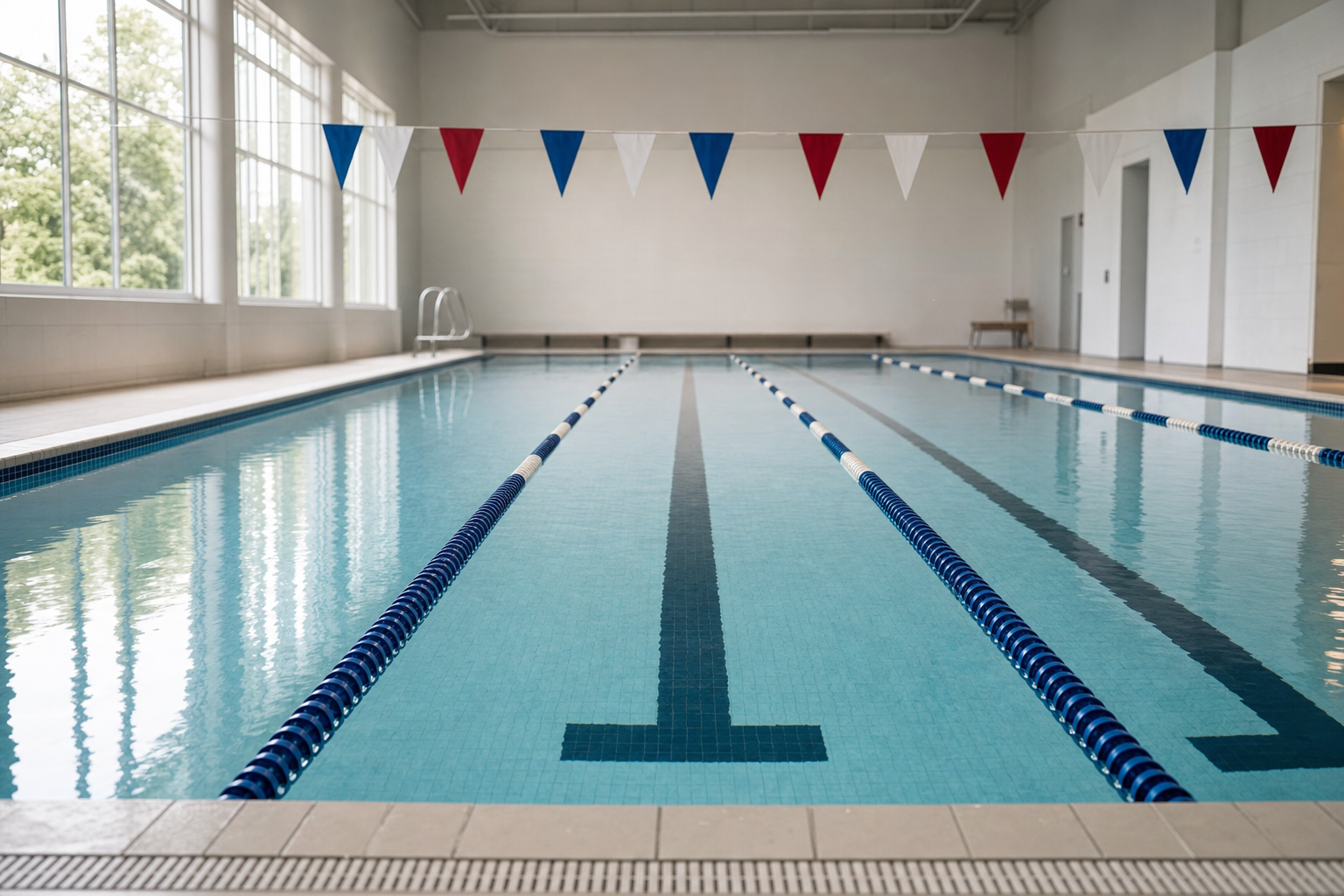
Kids aged 5–12 often hit the pool before school blocks or team tryouts, so knowing what pool lines mean, how backstroke flags work, and what the black T on the pool floor signals really matters. These markings help children navigate the water safely, turn correctly, and finish strong. Parents can be the map guides: letting their swimmers understand, not guess.
What the Black Line (Centre Lane Line) Tells Your Child
The long black line painted straight down the bottom of each lane is called the centre lane line. It’s a visual highway: your child’s spine and feet align with it helps them swim straight, so they don’t drift into other lanes or hit the lane ropes. USA Swimming rules require bottom lane markers to be a dark color (usually black), and at least 10 inches wide, to make them easy for kids to see underwater. (studylib.net)
At the end of each lane that black line turns into a “T” shape. This “T” marks that the wall is near—often about 2 meters (around 6 feet 7 inches) from it. That space gives a visual alert for freestyle or backstroke swimmers: time to prepare for a turn or a strong finish. (studylib.net)
If your child lifts their head to look for that “T,” it can mess with body position and speed. Instead, teach them to count strokes after they pass under window-level markers like flags, or rely on feel and timing. We’ll get into that soon.
Backstroke Flags: Why They’re Up There
Backstroke flags hang across the pool at each end so swimmers lying on their back can judge how far away the wall is. Why? Because you can’t see the wall when swimming backstroke. These flags are set at 5 yards or 5 meters from each wall depending on pool length. (usms.org)
Coaches use them as starting points for stroke count drills: your child swims through the flags, counts how many arm pulls or kicks until touching or turning at the wall, then practices to make that number consistent. That way, swimmers can predict when to start their turn without looking up. It’s much safer and more efficient. (usms.org)
How to Teach Ts and Flags Without Lifting the Head
One mistake young swimmers tend to make is lifting their head to check for the “T” or flags. This disrupts alignment and slows them down. Instead, use cueing:
Teach a stroke count: for example, from the flags to the wall might normally take four strokes. Practice with drills so that number becomes reliable for your child.
Use sighting cues: tell your child to notice the flags in peripheral vision or learn depth cues like the black stripe fading into the wall, or how your kick feels in the lane. These help them sense when the wall is close without changing stroke rhythm.
Drills work wonders. One popular method is from the swimy.org “10-Week Plan”—after a few weeks of consistent practice, swimmers begin to time turns and finishes with little need to glance up. It’s one of many progressive plans building awareness of pool lines, Ts, backstroke flags, and stroke control. (learn more about this plan here: https://www.swimy.org/10-week-plan)
[[ctakid]]
Legal Turns & Finishes: What Matters in Lessons or School Swim Blocks
Understanding the markings matters not just for going fast, but for going legal. In freestyle and backstroke, swimmers are allowed flip turns. The “T” signals that your child should transition into the turn: tuck, flip, push off. Coaches will expect them to touch any part of their body to the wall, streamline off it, and obey stroke rules. For butterfly and breaststroke, rules often demand a two-hand touch before the turn—so the timing with the “T” must account for that too. (en.wikipedia.org)
Backstroke rules include special timing around flags: after passing the flags, swimmers typically begin turns or finishes without lifting their heads—if they break the surface too late or too early, they risk disqualification. The markings, when used with stroke count, help them keep both head position and stroke legal. (usms.org)
Drill Ideas & Parent-Friendly Tips
When your child is doing swim lessons or preparing for tryouts, pick one or two markings to work on at a time. One day, focus on staying over the black line; next day, work on recognizing the “T” and turning without looking; teach stroke count past the flags for backstroke.
Use playful games: have them pretend the “T” is like a finish line arch—strongest push to the wall counts. Or do variation sets where they swim freestyle and reach the wall with a specified number of strokes from the flags—changing speed, so they get aware when strokes go faster or slower.
Encourage reflection: after practice, talk together about what each mark meant—where did they feel their head lifting? Did counting from the flags feel smoother? Over time your child builds awareness.
Why It Gets Safer, Smoother, and Cleaner
Knowing what pool lines mean means fewer head-bumps, fewer lost last strokes, fewer messy turns. Using backstroke flags means no surprises when pulling into a wall. Watching for the “T” helps every turn be legal, strong, and fast. It boosts confidence.
For parents, this means you can support lessons or team tryouts by reinforcing practice at home or at local pool: count strokes together, explain why markings exist, cheer for clean turns. Your guidance turns markings into tools, not mystery.
If your 6- or 10-year-old walks into the water already understanding the black line, the “T”, and the flags, their lessons and school swim blocks will feel less scary and more powerful. They’ll turn safely, finish cleanly, swim straighter—and that makes practice count.
120+ swimming exercises sorted by age — with video and instructions. Developed by swim instructors, completely free.

120+ swimming exercises sorted by age — with video and instructions. Developed by swim instructors, completely free.