Diabetes and Swim Lessons: A Safe, Confident Parent Plan
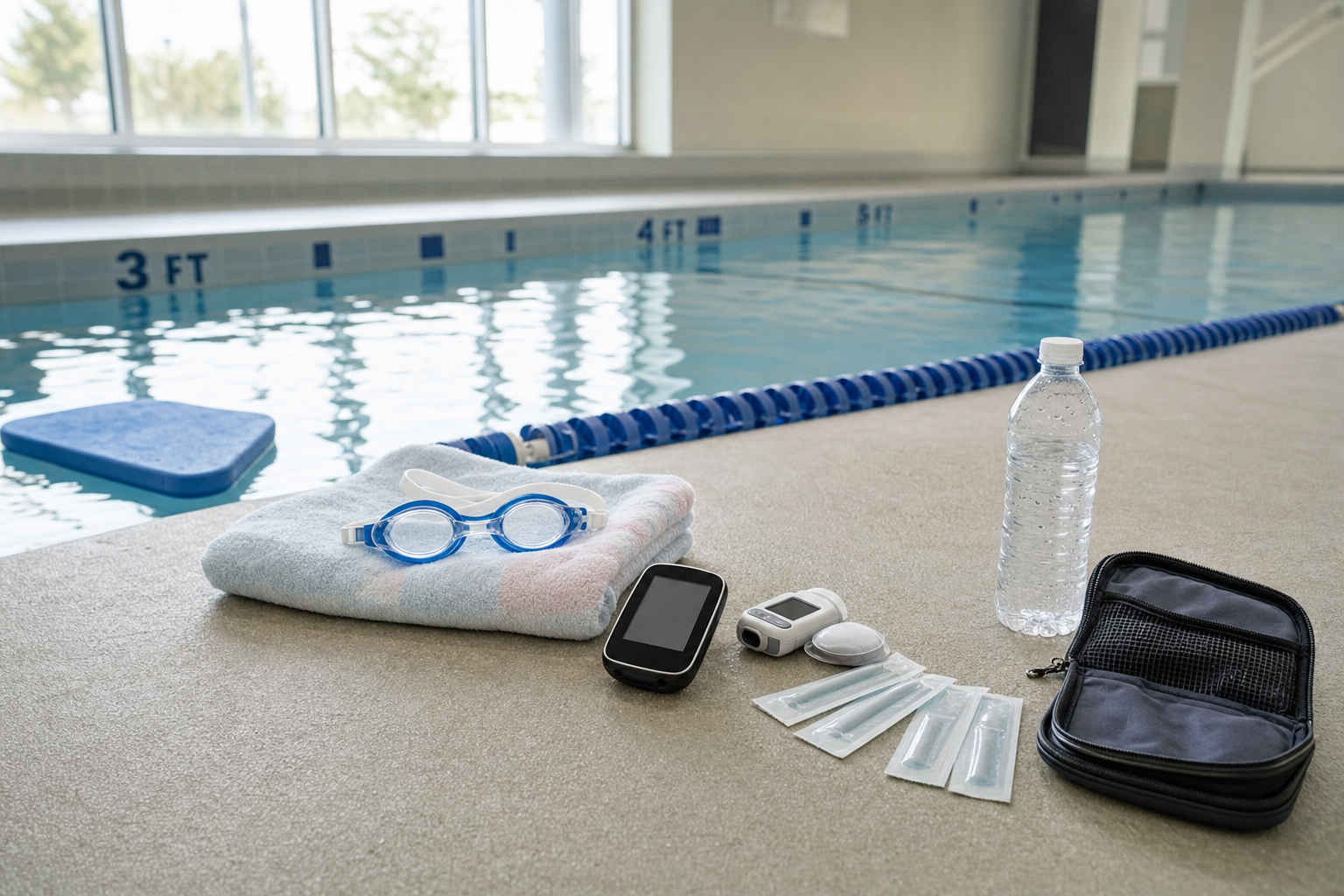
If you've got a child aged 6-12 with diabetes and you're signing up for swim lessons, the most urgent thing is safety. This guide takes you through exactly what to do before, during, and after swim class so your kid can enjoy swimming with confidence, while avoiding lows and device mishaps.
What to check before swim class
First things first: pre-swim checks with diabetes team input. Always get their go-ahead for a personalised plan. Begin by checking blood glucose ideally 30 minutes before going in. Your target depends on their usual readings, but general guidance from Diabetes UK suggests aiming for levels around 5–12 mmol/L (roughly 90-215 mg/dL) before exercise. If it's under 4 mmol/L (≈72 mg/dL), bring glucose up first. If above 15 mmol/L, especially with ketones present, wait or take action. (diabetes.org.uk) Make sure to fuel with a light snack containing carbohydrates. Something like fruit, crackers, or half a sandwich will do. Adjust insulin doses ahead of time if your child uses timed boluses or pumps.
Insulin pumps & CGMs in water—the truth
Many parents assume devices are waterproof. Reality is more complex. According to the CDC, “most CGMs are water-resistant, and some are fully waterproof.” But they don’t behave the same across models. (cdc.gov) For example, the Omnipod 5 automated insulin delivery system has a waterproof “Pod” with an IP28 rating, meaning it’s designed to stay underwater up to about 25 feet for 60 minutes. Still, Bluetooth signal strength drops during submersion, and data gaps happen. (pmc.ncbi.nlm.nih.gov) Pumps themselves vary wildly: some are only water-resistant, not waterproof. Manuals often warn about disconnecting the device for water sports unless it explicitly says it’s waterproof. Always check the owner's guide. (pmc.ncbi.nlm.nih.gov)
What CGMs and AID systems can’t do in water is totally reliable data streaming or signals—expect brief gaps. Also, immersion in water (especially cold water) can alter insulin absorption, especially around the pump site. So, plan for those shifts.
Fueling and preventing dips—before, during, after
Your child’s glucose levels may drop not just during swim class, but afterward—sometimes up to 12 hours later. That’s called delayed hypoglycemia. (diabetes.org.uk) Start by giving a snack with fast-acting carbs 30 minutes before class. During class, carry something easily accessible like glucose gel or chewables—lifeguards may need to know where to find them. After class, give another snack or a meal with both carbs and protein—this helps prevent blood sugar from plummeting overnight. Drink always—hydration impacts how well insulin and glucose work.
If you want a structured way to help your child progress at home, the 10-Week Plan guides you step by step.
This kind of plan works best when coordinated with the child’s diabetes care team. They may recommend adjustments like reducing basal rate on pumps or delaying boluses. Try tracking patterns: record readings before, during, and after swim lessons for several weeks. See what’s consistent, what’s risky—and what your child tolerates best.
[[ctakid]]
Communicating with instructors & lifeguards
Instructors and lifeguards need to know essentials: that your child has diabetes, signs of hypoglycemia, and what to do in case of a low. Before the first lesson, meet with them to explain which symptoms look like a low versus normal swimming fatigue (e.g., shaky hands even after a swim, sweating, slurred speech). Make sure there’s someone with training or your child’s hypo treatment nearby at all times. Bring spare glucose and longer-acting carbs, keep them poolside where agreed. Also show them what your child’s insulin pump looks like, how the CGM alerts might appear, and what to expect if there are gaps.
A structured swim program like the “10-Week Plan” from Swimy.org can help you build a predictable routine—breaks, snack timings, insulin adjustments—so everyone involved understands the rhythm. You can weave your diabetes plan into such a program so instructors know when the child is lit up, when they may need a pause or fuel. (diabetes.org.uk)
What to expect during and after
During the swim, CGM readings may drop or go blank temporarily. That’s normal if sensor is submerged or Bluetooth signals are blocked. Don’t panic. Once they’re out, check glucose immediately. If the CGM is waterproof, it may still register peaks or troughs but just with less frequent updates. If the pump is detached or disconnected, reconnect as soon as safe, and follow your team’s guidance for priming or bolusing if needed.
After the swim, keep checking often for at least a few hours—blood sugar might continue falling, especially during rest or overnight. Plan for extra carbohydrates as needed, reduce basal insulin if your child is on a pump, monitor for delayed hypoglycemia. Always discuss these post-exercise plans in advance with your diabetes health care team to avoid surprises.
Personal example & wrap up
I remember preparing for my daughter’s first swim lessons. She uses a CGM and pump. Before her class, she’d have a granola bar 25 minutes ahead, her pump set to “activity mode” (as advised by us and her endocrinologist). During class, she wore a patch over her CGM. Instructor knew where her emergency glucose gel was. Afterward, I added a snack and checked in with her glucose every hour for three hours—she was fine. Overnight, I reduced her pump basal by about 20% as we’d learned from tracking swim days. That became our blueprint for every lesson.
Swimming should be fun, not frightening. Armed with a clear plan for pre-swim checks, honest understanding of what CGMs and pumps can and can’t do in water, good communication with instructors, and a post-exercise fallback plan, your child with diabetes can gain skill, confidence, and joy at each lesson.
Let your child splash with peace of mind—you’ve got this.
120+ swimming exercises sorted by age — with video and instructions. Developed by swim instructors, completely free.

120+ swimming exercises sorted by age — with video and instructions. Developed by swim instructors, completely free.