Dock Rescue Kit: USCG Ring Buoys and Throw Lines for Families
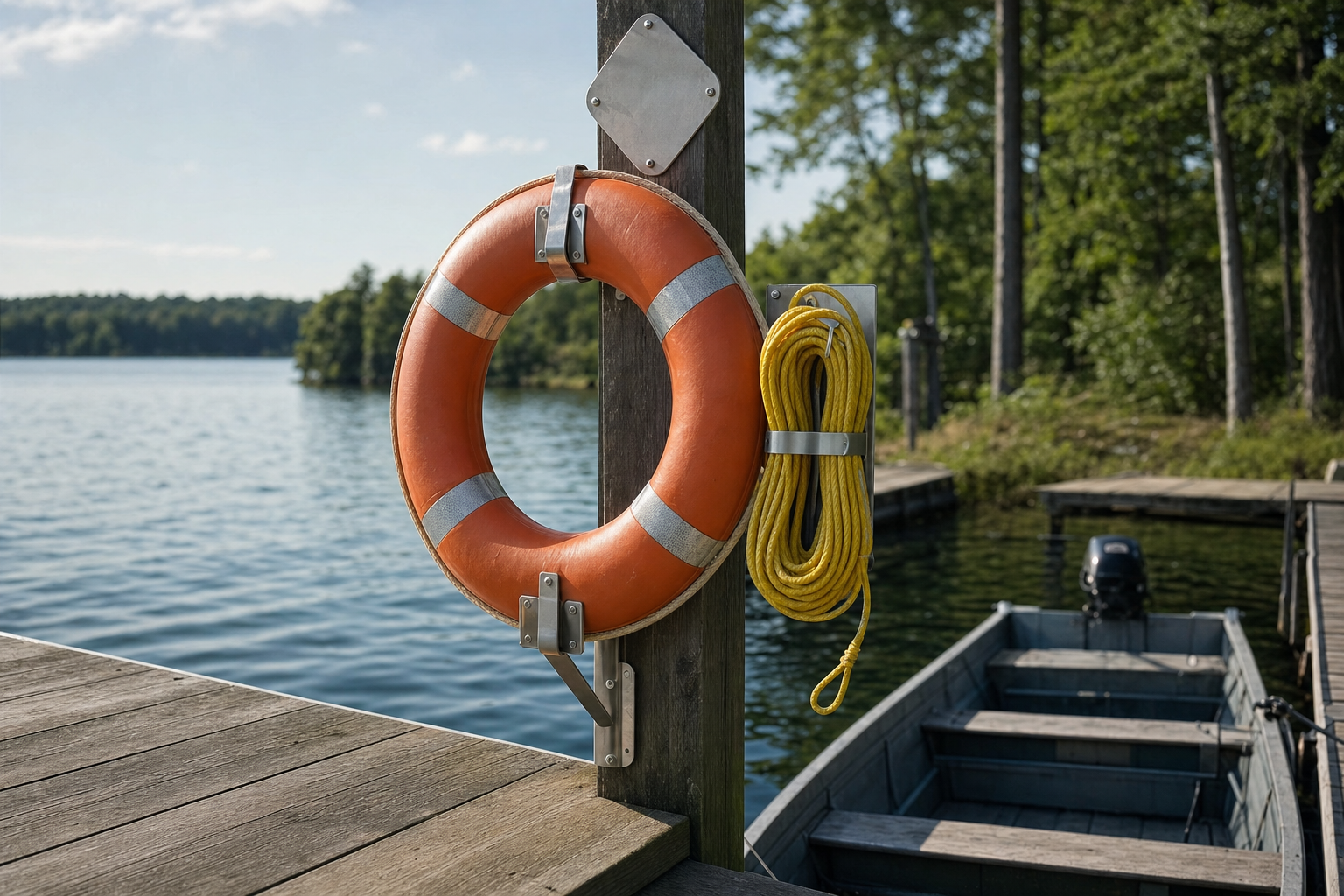
A USCG-approved 24-inch ring buoy with a 90-100-ft floating line hung in a clear spot on your dock can make all the difference. If someone slips in, you want reach or throw, don’t go, not panic or diving in. This setup—simple but powerful—saves time when seconds count. Parents teaching children ages 6–12 to practice “Reach or Throw, Don’t Go” feel more confident, and families stay safer all season.
Why a Ring Buoy for Dock Safety Equipment Matters
The U.S. Coast Guard requires ring life buoys (also called life rings or throwable flotation devices) to meet specific standards. On vessels 26 to 65 feet long (about 8 to 20 meters), you must have one orange ring buoy that is at least 24-inch in diameter with USCG approval under parts 160.009 or 160.050. (codes.findlaw.com) If your dock has a boat or you treat dock rules like vessel rules, using a buoy of this size ensures visibility and flotation power. At least one buoy must be fitted with a buoyant line of 60 feet (18.3 m) length when the vessel or structure is under 65 feet. (govinfo.gov) If greater than 65 feet, you need three buoys, and at least one with 90 feet (27.4 m) of line. (dco.uscg.mil)
The line should be strong (breaking strength of around 1,100 lbs), non-kinking, and buoyant, to avoid sinking once thrown. It should resist UV deterioration, especially in bright sun. Many standard USCG ring buoys come with retro-reflective material spaced evenly around the ring—for visibility in low light. (homeport.uscg.mil)
When & Where to Install It: Timing & Placement Tips
Set up your rescue kit in early spring, before the lake season begins. That way the equipment is ready, the mounting is solid, and everyone remembers where the ring buoy lives. Choose a location on the dock or lakeshore that is easily visible, easily reachable, and never locked away. Make sure no gear is stuck behind furniture or fenced off—that defeats the purpose.
Use a durable bracket or wall plate to mount the ring buoy at chest height for an adult—so it can be grabbed quickly. The floating line should be coiled but not tangled, and ideally secured so it won’t catch on posts or snag on cleats.
If you want a structured way to help your child progress at home, the 10-Week Plan guides you step by step.
How to Teach Kids Ages 6-12: Practice “Reach or Throw, Don’t Go”
Kids in the 6-12 age range are old enough to start practising safe rescue techniques. It’s vital to run drills that feel real but remain safe. Begin on land: show where the ring buoy is, how the line is coiled, how to grab it, throw it, or anchor yourself and reach with a pole, board, towel, or paddle rather than entering the water. The American Red Cross water safety guidelines stress “Reach or Throw, Don’t Go” for anyone who is not a trained lifeguard. (redcross.org)
[[ctakid]]
Make it into a family routine: pick a weekend as your dock setup day. Practice retrieving the buoy, throwing while standing securely on the dock, watching your form. Encourage kids to yell for help, keep one eye on the person in trouble, and never go in after someone unless properly trained and equipped.
Where formal instruction is needed, the Red Cross offers swim and rescue orientation classes. One helpful structured program is the 10-Week Plan by swimy.org, which builds swimming and safety skills progressively and includes safe rescue techniques. This plan is ideal for children who swim regularly and want to feel prepared around open water. Practice within that structure cements good habits.
Avoid common mistakes: never attach the buoy by rope so that retrieving it takes time. Don’t lock your rescue gear away; in an emergency, seconds wasted cost lives. Teach kids to aim for the person, not past them—throwing too far means line slack, danger of missing, and waste of precious time. A too-short throw is less helpful, but aiming past often means miss.
Common Pitfalls & How to Avoid Them
One very frequent pitfall is having no line attached to the ring buoy. Without a line, the buoy can’t be pulled back to shore or dock. It becomes a floating toy instead of rescue equipment. Always choose a device with a permanently attached floating line of the appropriate length and strong enough material. If the line is frayed, replace it—visibility and strength count.
Another mistake is locking the gear up or storing it in a closed toolbox. If it’s not within reach, its rescue potential vanishes. Make it visible, accessible to adults and older children who know what to do.
Throwing past the swimmer is also a risk. It’s tempting to over-estimate how far a buoy will go. Teach children to throw at or just short, so the person in the water can grab the line without danger of overshooting. Encourage calm and precise throws rather than wild hucking.
Putting It All Together: Sample Rescue Kit Checklist
To sum up, a strong dock rescue kit includes a USCG-approved ring buoy, 24-inch diameter, an attached floating rope 90-100 feet if your dock or boat is long enough (or at least 60 feet for smaller setups), retro-reflective markings, and a fixed visible mounting spot. Pair it with regular practice sessions with children aged 6-12, reinforcing the rule “Reach or Throw, Don’t Go”, and do your setup in spring before lake‐season begins.
When everything is in place—equipment, teaching, placement—you’re not just ticking off safety boxes. You’re building confidence in your child, reducing risk around water, and giving your family the chance to enjoy lakes without constant fear. Dock safety equipment isn’t optional. With a ring buoy for dock, a throw line rescue kit, and practiced skills, you pause less, act faster, and protect better.
Stay ready. Teach well. Make safety automatic.
120+ swimming exercises sorted by age — with video and instructions. Developed by swim instructors, completely free.

120+ swimming exercises sorted by age — with video and instructions. Developed by swim instructors, completely free.