Double-Arm Backstroke: Timing and Posture for Kids Ages 6–9
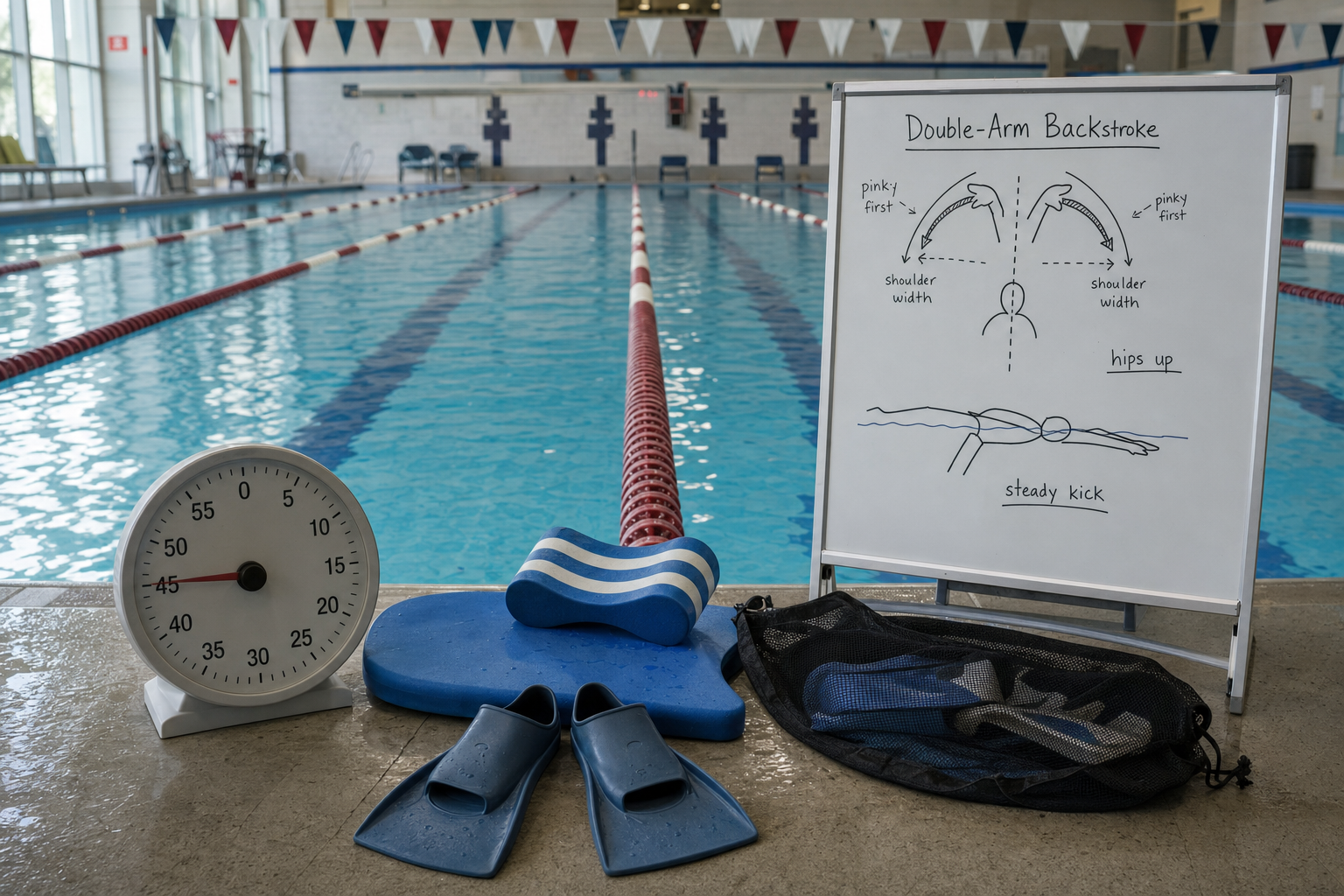
A simple double-arm backstroke drill is one of the fastest ways for kids aged 6-9 to learn what straight entries, steady kicks, shoulder depth, and hip lift really feel like. It strips away confusing rotation so parents can spot key mistakes: hands crossing the midline, bent knees, lifting the head. Below, you’ll find exactly how to use timing and posture to make progress fast. Read on to see how you can coach your young swimmer effectively today.
The Power of Timing & Posture
Why Double-Arm Backstroke Helps Beginners
Double-arm backstroke means both arms recover over the water together and enter simultaneously behind the ears. Without the alternation, kids are forced to balance the body and rely less on torso twist. This helps them feel where their hips should be, how high the shoulders sit, and how a proper hand entry feels right behind the head—not across the midline. The drill emphasizes core engagement and straight legs, reducing bent knees and sinking lower body. Sources like SwimRight Global teach this drill to improve both core strength and timing with both hands together. (my.swimrightglobal.com)
Key Posture Elements to Watch
When your child uses this drill, these posture cues are the most important. Make sure the head stays still, looking up—not jerking backward or lifting high. The chin should be near the water surface, ears submerged, shoulders flat, and back in a long, boat-like line. Hips should be just under the water; if the head lifts, hips drop. Bent knees are a giveaway of weak hip and core engagement. U.S. Masters Swimming warns that high head position causes legs to ride lower and arms to suffer in power. (lanemate.usms.org)
💡 As a parent or coach, place your hand just in front of their face so they can’t see you—this forces them to keep eyes up, encouraging correct head posture without constant verbal reminders.
Timing: Arms, Kick, Bodyline
One big advantage of this pattern is that it simplifies rhythm. The movement should follow a “hands recover-together → strong kick → hands enter behind ears together → glide/propulsion underwater → repeat.” There is no alternating arm movement, so kids can focus on clean entry and exit, and consistent steady kick that keeps the bodyline solid. Swim Wales recommends this sequence of hips, shoulders, hands during the double-arm backstroke drill. (swimwales.org)
A drill-session of this sort can be woven into bigger planning too. You might follow guidelines similar to the 10-Week Plan from swimy.org (https://www.swimy.org/10-week-plan) to progressively build posture, entry, timing, and full backstroke skills over several weeks, adding complexity only when earlier stages are consistent.
How to Teach It: Step-by-Step
Start in a clear lane with full supervision. Coach from the deck where you can see the entrances and check alignment.
First, do streamline kick drills—arms by side, look up—to find a flat, straight line. Then move into the double-arm backstroke pattern. Encourage both arms to leave the water together and enter little-finger first just outside shoulder width. Don’t allow the hands to swing across or behind the head (midline crossing); instead, they should drop into the water clean and controlled. Between each stroke, allow a short glide supported by strong, steady kicks from the hips—minimal bending at knees.
[[ctakid]]
As your child improves, practice swimming from the backstroke flags to the wall while counting strokes so they learn when a turn is coming and avoid collisions. Safety includes supervising turns carefully. Always use a clear lane, count strokes, and ensure kids understand space in the pool.
Common Pitfalls & How to Spot Them
Head Lifting
When a child lifts their head, the torso sinks, hips drop, and drag increases. If they’re choppy or shoulders rise, ask them to pretend their head is resting on a flat board—keep eyes up and ears near water. Coaches often stress aligning the head with spine to avoid this common mistake. (usms.org)
Bent Knees
Bent-knee kicks break the streamline. Watch legs from the side: are they straight and kicking from the hips? If knees pull up high or feet drop, pause the drill and isolate the kick. Legs should feel like slim paddles slicing water, not bouncing or churning. Steady flutter-kick combined with double-arm recovery helps reinforce straight legs. (swimwales.org)
Hands Crossing the Midline
A hand entry that crosses over toward the other shoulder ruins the arm path and reduces power. In double-arm, both hands should enter just outside each shoulder. Use drills like the OK-hand drill (forming an “OK” symbol) or focus verbally on “pinky first” entry. These drills appear in the U.S. Masters guides and Swim Wales frameworks. (usms.org)
Tips & Progressions for Ages 6-9
Make learning fun. For example, challenge kids to imagine swimming above a tightrope: any wobble in shoulders means they lose balance. When timing is good with double arms, introduce alternating one arm at a time while keeping the same clean entry and hip position. Later, add full backstroke with rotation, always reminding them what they felt during double-arm: straight entry, steady kicks, low head.
Sessions should be short but consistent—15-20 minutes of focused drills inside a class or weekly lesson do more than long, infrequent sessions. Offer feedback in real time: call out when hands cross, when the head lifts, or knees bend. Use mirroring or video to help them see what good posture looks like.
Safety & Supervision
Always teach double-arm backstroke in a visible, supervised environment. Use a clear lane to avoid collisions. During turns or swims from flags, count strokes so kids don’t run into walls. Coaches or parents at the pool edge should watch turn zones so entries and wall touches are safe and controlled. No matter how confident a child becomes, keep supervision tight—technique drills are no excuse for leaving safety behind.
Putting It Together
When you see good timing (hands enter together, strong hip-driven kick, minimal rotation), posture with hips high, head still, arms clean, you're building a strong foundation. That foundation makes full backstroke smoother, more efficient, and safer. Parents, your eyes and encouragement help more than you know. Encourage practice, reward the right feeling—and enjoy watching your beginner transform into a graceful backstroker.
120+ swimming exercises sorted by age — with video and instructions. Developed by swim instructors, completely free.

120+ swimming exercises sorted by age — with video and instructions. Developed by swim instructors, completely free.