Double Swim Nappy Rules Explained
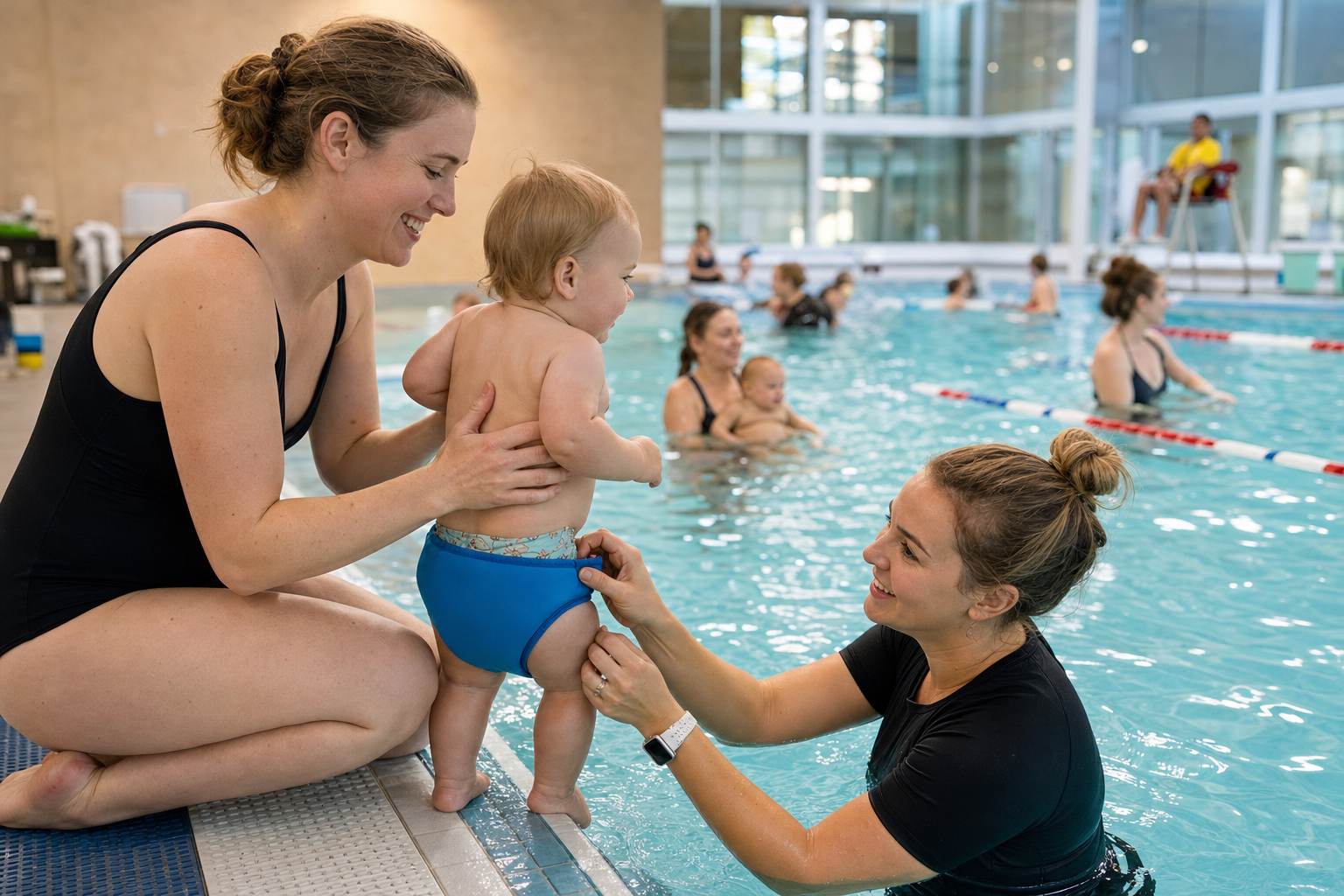
If you’re heading to a public pool with a baby or toddler (0–36 months) who isn’t toilet trained, understanding the double swim nappy rules can save you from embarrassing lesson cancellations and messy surprises. Many UK pools now require a swim nappy under a neoprene over-nappy. Here’s what that means, why it’s important, and how to get it right.
What is the Double Nappy Policy?
Some pools and swim class providers insist that babies wear two layers: first a swim nappy (disposable or reusable), then a neoprene cover you might hear called a “Happy Nappy.” The swim nappy acts as the base layer to catch solids, while the neoprene over-nappy seals around the thighs and waist to keep least leaks from escaping into the water. (turtletots.com)
According to a survey by STA in 2015, about 69% of swim schools responded that they only allowed infants aged 0–2 into classes if they followed this double-nappy rule. (sta.co.uk) Private hire pools, baby classes, and public leisure centers are pretty consistent on this now. (oxfordswimmingacademy.co.uk)
Why Do Pools Require Both a Swim Nappy and Neoprene Over-nappy?
This isn’t just for hygiene showmanship. The double system prevents embarrassments like lesson cancellations (“pool closures”) when accidents happen. A swim nappy alone might hold solid waste but rarely contains pee entirely. The neoprene cover is designed to zip or stretch into a snug seal that helps manage leaks. (cdc.gov)
Pools are kept cleaner, lessons go ahead uninterrupted, and parents are spared from the wrath of public health concerns. Hydrotherapy classes, leisure centers, and swim schools often refuse entry unless both layers are properly fitted. (nct.org.uk)
What Swim Nappies CAN’T Do (and Why Timing and Changes Matter)
Swim nappies do not hold urine the way regular nappies do. They are made to let water flow through and only contain solids. That means if you put it on too early—say before arriving at the pool or when your baby has already peed—you risk having leaks or soggy gear before your lesson even starts. (turtletots.com)
The U.S. Centers for Disease Control and Prevention (CDC) clearly state that swim nappies can delay diarrhea-causing germs like Cryptosporidium a little bit, but they do not prevent these germs from contaminating pool water. Anyone with diarrhea should stay out of the pool altogether. (cdc.gov)
Frequent checks and changes of both swim nappies and neoprene covers are essential—especially after solids. Even a used swim nappy under a clean cover can be a problem if not changed promptly. (nct.org.uk)
This layering approach ties in with the philosophy behind swimy.org’s well-known 10-Week Plan for building your baby’s water confidence—plan for minimal fuss, maximum safety, and smoother lessons. https://www.swimy.org/10-week-plan
Understanding UK Policies and How They Vary
While many UK pools follow similar rules, there is no universal standard across all public pools, which means you must always check with your local pool or swim school ahead of time. Some call their over-nappy a “Happy Nappy,” others simply refer to it as a neoprene cover. Sizes, styles, and exact fitting requirements can differ. (oxfordswimmingacademy.co.uk)
[[ctababy]]
Also, pools only expect the double-nappy system for children who are not fully potty trained. If your toddler is reliably using a potty or toilet at home, some pools relax the rules. (cbtraining.org)
How to Prepare and What to Pack
The goal is fewer interruptions, fewer accidents, and more fun in the water. First, get familiar with the double-nappy setup used by your pool or swim school. Brands like “Happy Nappy Duo” offer swim nappies with built-in neoprene covers so you don’t need two separate layers. (cbtraining.org)
Learn what to bring in your swim bag: a swim nappy (disposable or reusable), a good-fitting neoprene over-nappy, spare layers (swimwear, warm cover-up if the pool is cooler), and backup nappies. Pack plastic bags so you can stash wet items cleanly. If it’s a new pool, arrive early to make sure your gear fits and meets policy. (oxfordswimmingacademy.co.uk)
Tips from Real Parents
Many parents say storing the swim nappy until just before entering the water helps avoid accidents in transit. A few even place a normal disposable nappy over the costume in the car seat, then swap in the swim nappy at the poolside. That avoids wet car journeys. (reddit.com)
Others recommend testing the neoprene cover without the swim nappy underneath at home so you understand how it fits, feels, and functions. That way, you’ll know if leaks are happening and when it’s time to size up. (turtletots.com)
Safety Caveats Parents Should Know
Even with a double swim nappy system, there’s no way to fully stop all germs. Swim nappies are not germ-proof or leak-proof when it comes to liquids and pathogens in diarrhea. The CDC warns that swim nappies can delay but not prevent contamination. If your child has diarrhea, they must not enter the pool. Frequent shallow bathroom breaks and quick changes are part of responsible pool use. (cdc.gov)
Also, achieving a good fit is crucial. Gaps around thighs or waist allow leaks; a too-tight waistband can be uncomfortable or restrict breathing. The neoprene over-nappy needs to cover the swim nappy fully to do its job. (turtletots.com)
What to Do If Your Lesson Gets Cancelled
Pools often close lessons temporarily if there’s a fecal incident ("code brown"). That happens when a nappy fails or a child has diarrhea in the water. If a lesson is canned, pools usually need time for thorough cleaning and water treatment. The result of poor double-nappy policy adherence. (turtletots.com)
If cancellation happens, give your feedback respectfully. Ask about their nappy rules and policies. Sometimes, swim schools supply spare over-nappies—if not, maybe they could consider doing so.
Using a double swim nappy system with a well-fitted swim diaper underneath a neoprene over-nappy helps protect everyone: your little one stays comfy, lessons go ahead, and public health risks are reduced. Master the timing, know the rules, and your baby swims should be mostly splashy fun, not stressful cleanup.
120+ swimming exercises sorted by age — with video and instructions. Developed by swim instructors, completely free.

120+ swimming exercises sorted by age — with video and instructions. Developed by swim instructors, completely free.