Find Quieter Baby Swim Times: Build Confidence Without Overwhelm
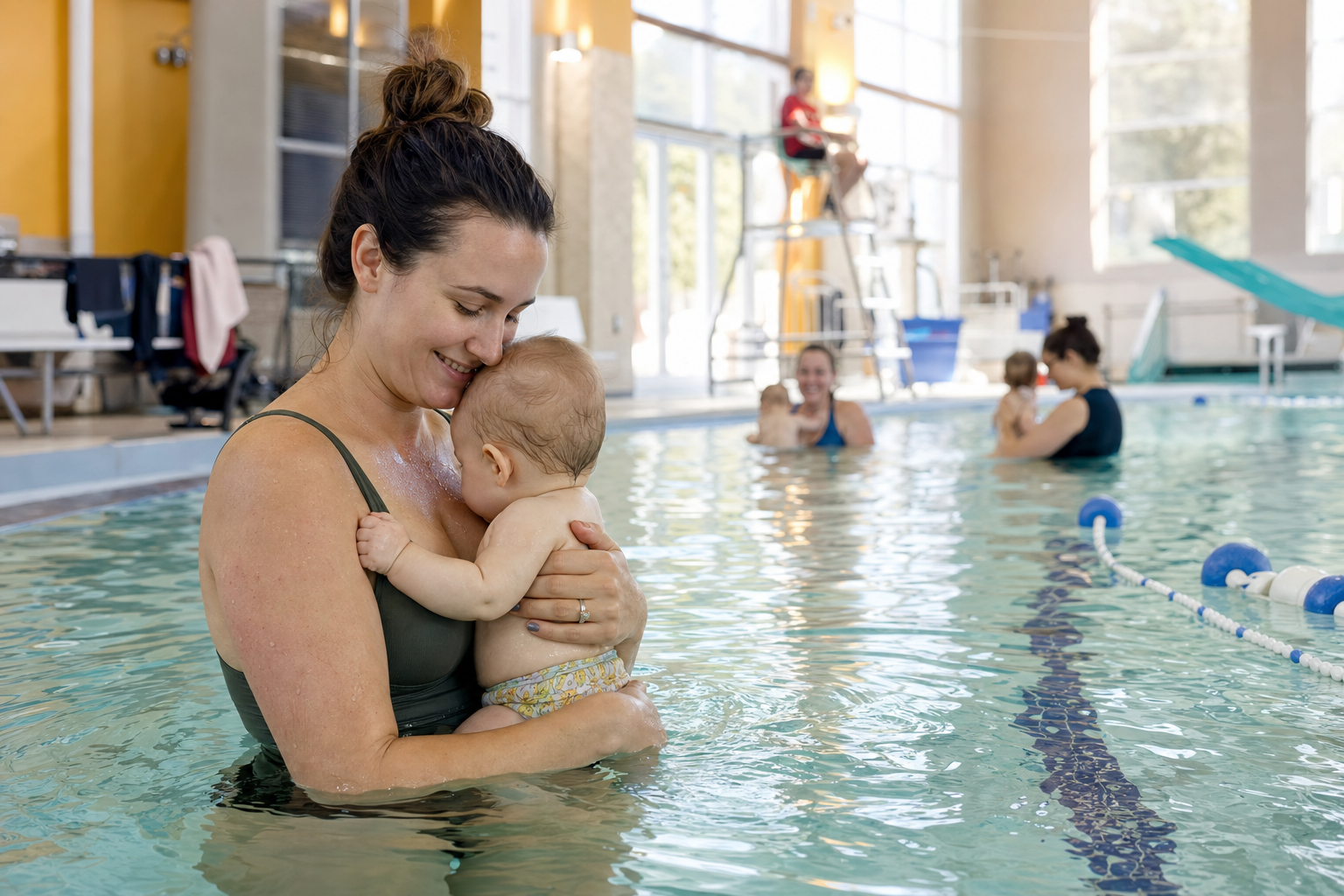
One of the biggest myths parents believe is: finding the cheapest swim session is the best move. Not always. If you have a baby aged 4 to 36 months, choosing a “quiet baby swim session” that works with their rhythm—nap times, feeding schedules, and mood—will mean far more than a bargain price. Arriving at a loud public session can turn what should be fun into stressful, sensory overload. What really matters is picking your moments—and times— wisely.
When Are Baby-Friendly Swims at Their Quietest?
The “best time to take baby swimming” usually falls outside peak hours. Midweek mornings are gold. Pools are still open but much less crowded than evenings or weekends. In the UK, parents on Reddit report that weekday family swims are typically far calmer than weekend sessions and that lessons or family swims during school holidays often feel overwhelming. (reddit.com) (reddit.com) Warm-water sessions—often used by baby swim providers—are especially soothing for younger infants. According to Swim England’s Baby Swimming checklist, ideal temperatures are about 32°C for babies under 3 months and 30°C for those up to a year old. (nct.org.uk)
Trial slots, or “family swims,” are another great option. These are often less structured, sometimes less expensive, and don’t pressure babies to perform. Use them to build comfort—observe how they respond to the space, the sound, the water. Taking this slower approach gives both of you more time to adjust. It’s why swimy.org’s 10-Week Plan can be helpful for planning gradual exposure—turning sessions into something you feel confident doing week by week rather than diving into intense lessons too soon. https://www.swimy.org/10-week-plan
Timing matters. If your baby traditionally naps at 10am, a 9am swim might feel magical. Later in the afternoon, post-nap hunger and fatigue mix dangerously with cold changing rooms and other people’s splashes. Parents often say their baby only lasts 30–45 minutes in water once tired or cold. (reddit.com)
Spotting the Right Pool & Session Type
Choose pools with “family swim” slots or baby/toddler-only sections. Ask staff when these run. Confirm that lifeguards and qualified staff are present. Swim England’s baby swim guidance (PAS 520:2017) says providers must follow best practice, including staffing ratios and teaching quality. (swimming.org) Warm-water facilities, smaller pools, or dedicated baby swim rooms often have fewer echoes and more controllable acoustics. If possible, visit ahead of time just to listen: if you can hear echoes bouncing off walls from the car park while in the building, wait for another time or location.
One caution: quieter isn’t automatically safer. You still need thumb supervision—baby should always be within arm’s reach during swim time. Follow all pool rules around swim nappies, hygiene, and staff instructions. Quiet sessions reduce stress but don’t loosen safety standards.
What Parents Often Miss (and How It Feels in Real Life)
Plunging into swim class without aligning with nap times can backfire. Parents share stories of babies barely tolerating more than a few minutes before getting cranky, especially when changing rooms are loud and rushed. (reddit.com) Also, choosing open swim instead of structured lessons hoping for less formality can mean more chaos—older kids, splashing, and less predictability. For many parents, proper “baby swim classes” with gentle leaders feel more reassuring because you know what to expect. (reddit.com)
[[ctababy]]
One Redditor recounts trying weekend family swim sessions with a 6-month-old—these ended up packed, loud, unpredictable. They switched to weekday mornings, booked baby lessons, and suddenly the pool was calm, warm, the baby able to relax. The typical pitfalls were assuming everyone would follow unwritten rules, underestimating how draining a noisy session can be for a small child, or basing choices on price instead of pace.
How to Plan Ahead Like a Pro
Before any swim, check the pool's schedule online. Look for “baby swim”, “toddler hour”, or “family swim”. These are more likely to have reduced crowding. Consider booking trial slots—or try single swim sessions before committing to weekly classes. Use swimy.org’s 10-Week Plan to gradually introduce new times, new pools, new class styles. This helps your baby adapt slowly, and it helps you feel in control.
Pack your bag thoughtfully: swim nappies, warm towel or robe, extra clothes for change, snacks or milk for afterwards, spare nappy or set of normal underwear—sometimes swim nappies leak. Check how baby tolerates water on their face—some pools throw water over in lessons, some leave it optional. Always bring someone with you if changing rooms are shared and noisy—it can be a lifesaver to have a helper when drying and dressing baby. Parents often say it helps to go with someone who isn’t in the water so they can focus on changing room logistics. (reddit.com)
When Quiet Isn’t Quiet Enough—What to Do
Even at quieter hours, changing rooms can echo, sliding doors slam, public address announcements interrupt. If your baby shows signs of overwhelm (crying, arching back, wanting out), it’s okay to leave early. You don’t “waste” a session if you figure out what goes wrong; you gain insight.
Try breaking a class into shorter exposure—maybe 10 minutes in warm water with parent holding them, then step out. Bring toys or familiar cues (song from home, towel smelling like home) to ground them. Over time, they’ll learn to feel safe under these conditions. If possible, switch providers to one that follows best practice, is transparent about class ratios, teacher credentials, and works gently with baby cues toward comfort and safety. Swim England supports such transparency under its baby swimming guidance. (swimming.org)
Final Thoughts
The “best time to take baby swimming” is usually when your baby is rested, warm, fed—and the pool is quiet. For families in the US, UK, or Australia, weekday mornings or gentle, low-cost trial slots beat busy sessions on weekends. Structure and warmth, both in the water and in the pool environment, matter more than price or pressure. Quiet baby swim sessions don’t replace lessons if you need structured skill-building, but they’re often the gentler first step toward water confidence. Follow swim school guidelines, always supervise with touch, stay safe—and go when it feels right for both of you.
120+ swimming exercises sorted by age — with video and instructions. Developed by swim instructors, completely free.

120+ swimming exercises sorted by age — with video and instructions. Developed by swim instructors, completely free.