First Swim Meet Sign-Up: A Parent's Click-By-Click Guide
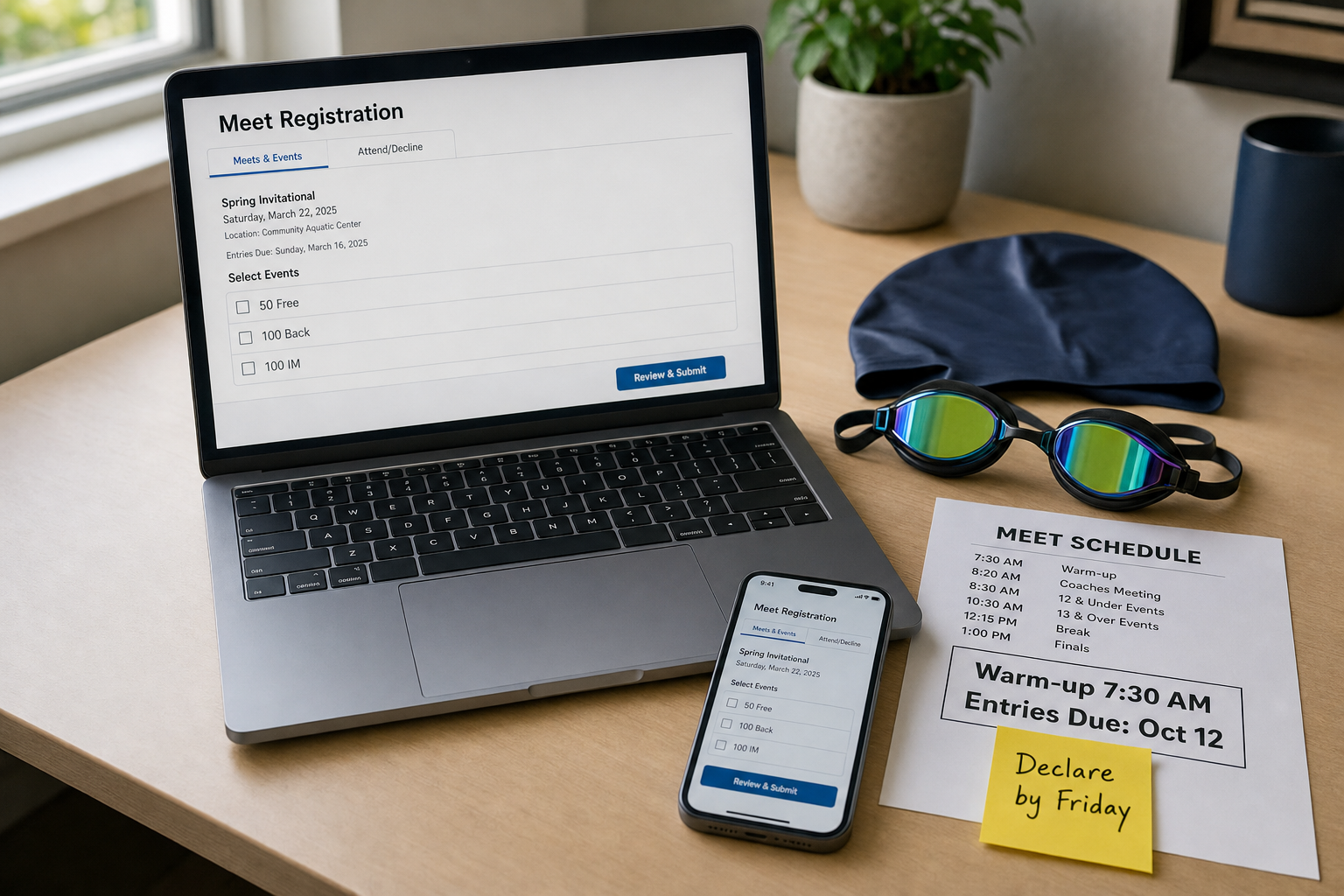
Ready to sign your 8- to 12-year-old up for their first swim meet, but feeling lost in all the forms, deadlines, and event options? Let’s walk through exactly what you do—from meet declaration to payment—using TeamUnify or OnDeck style systems. Do this right and your child shows up calm, ready, with correct entries and no surprises.
Step 1: When & How to Declare Attendance
The first move is declaring whether your swimmer will go to a meet. Your team will usually announce upcoming meets on their website or through email. Look for a Meet Schedule or “Meets & Events” tab in TeamUnify or OnDeck. Meet declaration usually opens 30-40 days ahead of the meet.(elitswimclub.org)
Log in, find the meet, then find “Attend/Decline” or similar. Choose “Yes, please sign [child] up for this event” if attending, or “No, thanks” if not. That tells your coach to include your child when picking events.(gcst.org)
Missed the deadline? Contact the group coach immediately. Sometimes late entries are possible but not always.(edinaswim.com)
Step 2: Choosing Events
Some meets let you pick events yourself; others leave that to the coaching staff. If event selection is enabled in your declaration screen and you trust coach guidance, pick 2-4 events that match your child’s strengths and endurance. Avoid too many back-to-back races.(gcst.org)
Make sure your child has legal strokes for any stroke-specific event (backstroke, breaststroke, butterfly). Undeclared or illegal strokes can lead to disqualification. Also, check warm-up rules. Many meets have strict warm-up lanes and times when swimmers must be on deck.(elitswimclub.org)
Coaches often review your event selections and may adjust entries based on best times or team strategy. If you don’t choose events, the coach will handle it.(gomotionapp.com)
Step 3: Meet Formats and Important Rules
Knowing which type of meet you’re entering matters. There are dual meets (short, simple), invitationals, or championship meets—with different event limits and qualifying times.(elitswimclub.org)
Your swimmer’s age group is usually set by their age on day one of the meet. For example, 9-10 or 11-12 age brackets. And yes, you must be registered with the local governing body (in the US, that means USA Swimming), especially if the meet is sanctioned.(elitswimclub.org)
Also, if your team or league offers a resource like the 10-Week Plan, use it to build up stamina and technique ahead of the meet. That way your child arrives steady and confident. https://www.swimy.org/10-week-plan
Be conscious of how many events your child can safely handle in a session. Too many back-to-backs with little rest equals tired muscles and higher risk of stroke breakdown. Also check when declarations close—often a week before the meet or at a specific time on TeamUnify.(huntingtonestatesswimming.com)
[[ctakid]]
Step 4: Meet Opens, Deadlines & Payment
Once you declare and select events (if that option is open), payment usually happens automatically via the system. Entry fees are calculated as soon as your child is entered into events. You’ll be billed through your TeamUnify/OnDeck account.(gomotionapp.com)
Do not wait till the last minute. Meets often open registration around 30-40 days before the event.(elitswimclub.org) Having your swimmer’s fastest legal times entered into the system (or your team’s times database) helps avoid being entered in races where they don’t qualify.(elitswimclub.org)
Once coaches finalize entries, you’ll usually see lots of red checks or some notice (“approved entries”) in your meet entry list. This confirms that your child is officially in those events.(edinaswim.com)
Step 5: Day-Before & Race Day Prep
You can’t fix stroke legality or event overload on meet day. So the night before, check in with the coach: review your child’s entry list, ensure swim-cap, suit, goggles are ready, and that your child knows warm-up starts x minutes before the session. The meet letter is your go-to resource—it has the pool location, warm-up times, rules, fees, event order, and any special instructions.(gomotionapp.com)
Tips & Common Pitfalls to Avoid
If you don’t manage these carefully, you risk disqualification (DQ), late entries, or over-working your child.
Pick too many back-to-back events and your child might get fatigued or sloppy on technique. Entering a stroke event before a child can swim a legal stroke often leads to DQs or scratching. Missing declaration deadlines means no entry, even if you want to race. And forgetting warm-up protocol can lead to lost warm-ups—or worse, missing your child's heat completely. Always double-check the swim meet schedule, your child’s entries, and system deadlines.
Final: What to Do First if You’re Unsure
If you’ve never done this before, here’s how to get started in order: find the meet in your TeamUnify or OnDeck portal, declare “yes” to attend, look for options to pick events (if open), save any notes for coaches, pay fees once coach approves, then get your gear and mental prep done. With those steps clear, race day becomes fun instead of frantic.
Stick to these steps and your swimmer will step onto the dock calm, properly entered, and ready to swim.
Signing up for that first swim meet doesn’t need to feel overwhelming. With clear deadlines, coach support, and understanding the process—declare, choose events smartly, follow stroke rules, pay on time—you’ll watch your child shine without admin surprises. Go get that splash!
120+ swimming exercises sorted by age — with video and instructions. Developed by swim instructors, completely free.

120+ swimming exercises sorted by age — with video and instructions. Developed by swim instructors, completely free.