Float to Live for Kids: A 10-Minute Practice Plan
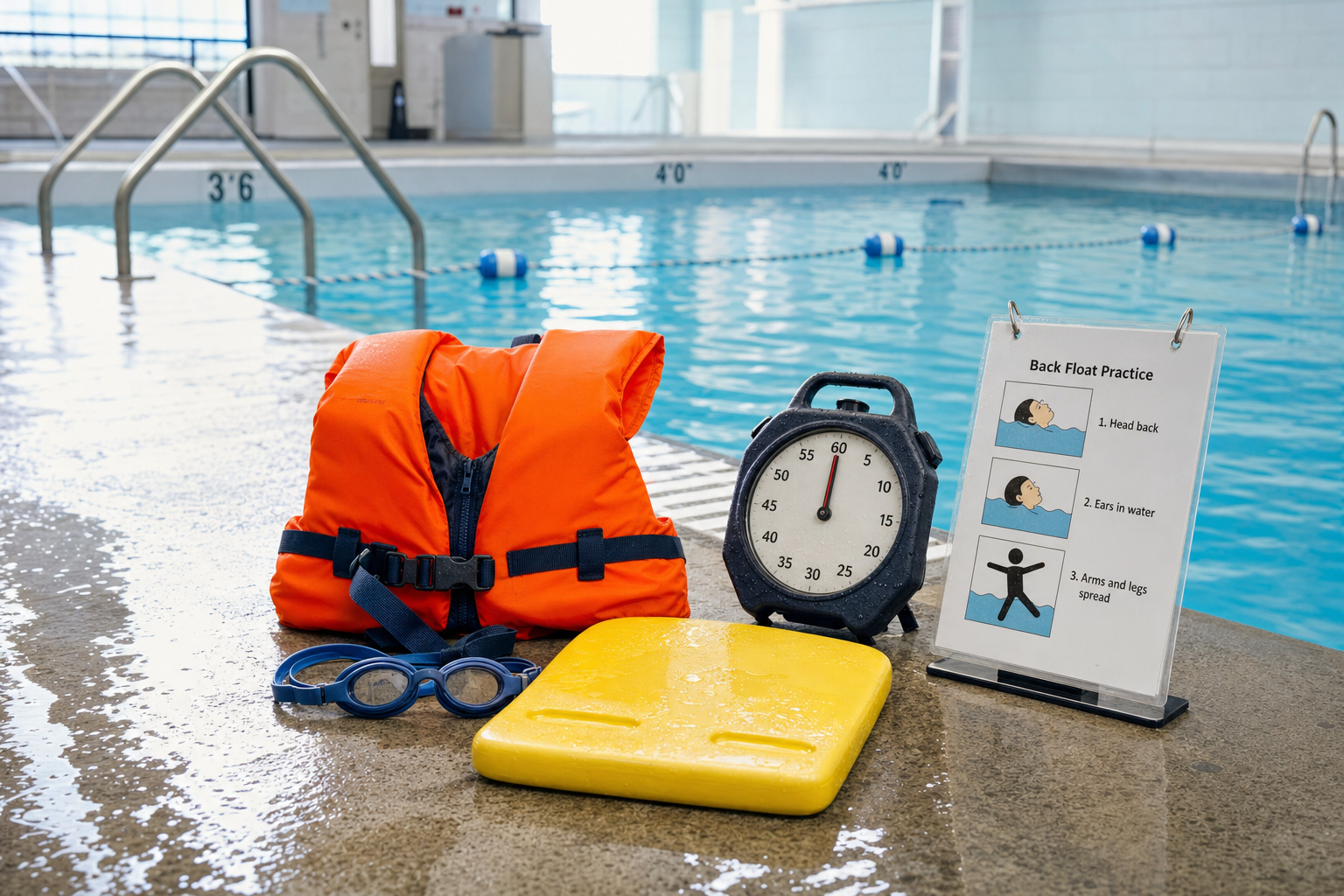
Want your child to have a reliable reset skill for surprises in open water? Here’s a simple 10-minute practice plan to float to live for kids, age 6-12 (with confident 4-5s in shallow water). Parents will learn cues and progressions; kids will practice the calm, wide-star float and controlled recovery. This builds a survival float that works when they need it most.
Why the Float to Live Message Matters
If a child gets into trouble in water—unexpectedly swept off their feet in a lake or caught in a calm bay—their first reaction might be panic. The RNLI’s Float to Live advice says tilt the head back, ears submerged, relax, control breathing, gently move arms and legs to stay afloat, and call for help once breathing is settled. Legs may sink, and that’s okay. (rnli.org)
Open water safety children need to learn this because drowning often happens quietly. A back float or “wide-star float” lets kids rest, recover, and shout for help without struggling. It’s the difference between flailing and surviving. Parents who model the skill first are far more effective.
10-Minute Practice Plan for Families
Practice should always be in calm, supervised water—pools or very still lakes—never in surf or currents at first. Have spotters (another adult in the water and one outside) who can help immediately. Keep breaths relaxed; avoid breath-holding games.
Minute 1: Warm-Up and Trust Building
Start in shallow water. Kids walk, paddle, splash to feel the water. Parents join as needed. Use a game to make ears get wet—splashing gently—so kids trust it won’t hurt.
Minutes 2-3: Intro to Supported Back Float
Parent supports child under back and head. Cue “Eyes up, tummy up.” Demonstrate star float shape: arms wide, legs relaxed. Hold for 5 seconds. When child’s comfortable, gradually reduce support. This matches assisted back float methods in trusted swim safety programs. (my.swimrightglobal.com)
Minutes 4-5: Independent Wide-Star Float
Once child can float with support, shift to letting them float independently. Cue “wide star”: arms out, legs slightly apart and soft knees. If legs sink, reassure—legs often do sink for many bodies. Breathing steady, head tilted back, ears in water. Spark confidence with short floats, then relax into longer ones.
Minute 6: Controlled Recovery to Upright
From star float, practice recovery: bend knees, sweep arms down, tuck chin, come up to stand. Teach this calmly—not rushing. Controlled recovery gives child a way back to safety when floating.
If you want a structured way to help your child progress at home, the 10-Week Plan guides you step by step.
Minutes 7-8: Surprise Reset
Parent gently tips child forward (front float) or drops a hand support so the child must roll back into wide-star float. Helps train reset when response must be instant. Always maintain close support until confident.
Minutes 9-10: Repeat and Mix It Up
Mix floats, recoveries, and resets. Try standing start, start from steps, or mid-pool with parent close. End with praise and affirmation: “You found your float!” Reinforce calm breathing.
Parents remember: avoid teaching rigid legs or arms that sink. Avoid breath-holding games—they teach the wrong response in panic. Let kids breathe naturally throughout.
[[ctakid]]
Scaling Up Before Open Water
Around 30-60% into swim season prep, add slight challenges: cooler water, small rippled surface or waves, maybe in calm rivers. Practice spotting currents visually. Use a reliable curriculum like the 10-Week Plan from swimy.org to build progressive swim and survival skills including floating, breath control, and open water readiness. When real beach or lake visits start, ensure child has found their float shape, and can recover from it.
Intro for Confident 4-5s in Shallow Water
If you have a confident 4- or 5-year-old, do the same plan but in water shallow enough for them to stand at all times. Keep the norms: head tilted, ears submerged, arms wide. Move more slowly and repeat short floats. Use splash games, animal names (“starfish”, “butterfly”) to help them imagine body shapes. Recovery to standing is easier here and builds trust.
Safety Caveats & Expert Tips
Always practice with spotters, never alone. Choose supervised locations. Don’t go into surf or flowing currents until skills are solid. Kids should never hold breath long or do breath-holding games—that trains panic, not float. According to CDC guidelines, constant supervision trumps any skill; weak swimmers should wear properly fitted life jackets especially in open water. (cdc.gov)
Teach kids that their float shape may be unique—legs might sink or one arm may drift differently—and that’s okay. What matters is breathing calm, head back, chest open. Lessons from RNLI’s recent guidance show that people’s floating shapes differ widely, and recognising what works for them builds confidence. (rnli.org)
What You’ll Have After 10 Minutes (Each Session)
By the end of each practice session, kids should be able to:
· Tilt head back with ears submerged and stay calm.
· Float in wide-star shape with arms and legs relaxed.
· Recover from a float into standing or swimming position.
· Reset into float from small surprises (front/belly drop or loss of support).
After a few sessions you’ll see increasing confidence, longer floats, and quicker recoveries.
When Beach Season Arrives
If you’ve practiced early (pre-beach season or during holidays), you’ll be ready. On the beach or lake, let children test their float under supervision first: wading in, head back, star float, recover. Discuss what they’ll do if swept off feet—a calm float, control breathing, call out or swim parallel to shore if needed. Use bright hats, supervision, and life jackets where needed.
Closing Thoughts
Float to Live for kids isn’t just a swim lesson—it’s a safety drill. Teaching back float and wide-star float gives children a reliable reset when water becomes unpredictable. With just 10 minutes of focused practice, parents can help children build a survival habit far more useful than flailing or panic. Keep it relaxed, consistent, and safe—your child will learn not just floating, but calm, control, and confidence.
120+ swimming exercises sorted by age — with video and instructions. Developed by swim instructors, completely free.

120+ swimming exercises sorted by age — with video and instructions. Developed by swim instructors, completely free.