Foggy Beach Days: Visibility Rules and a Family Recall Plan
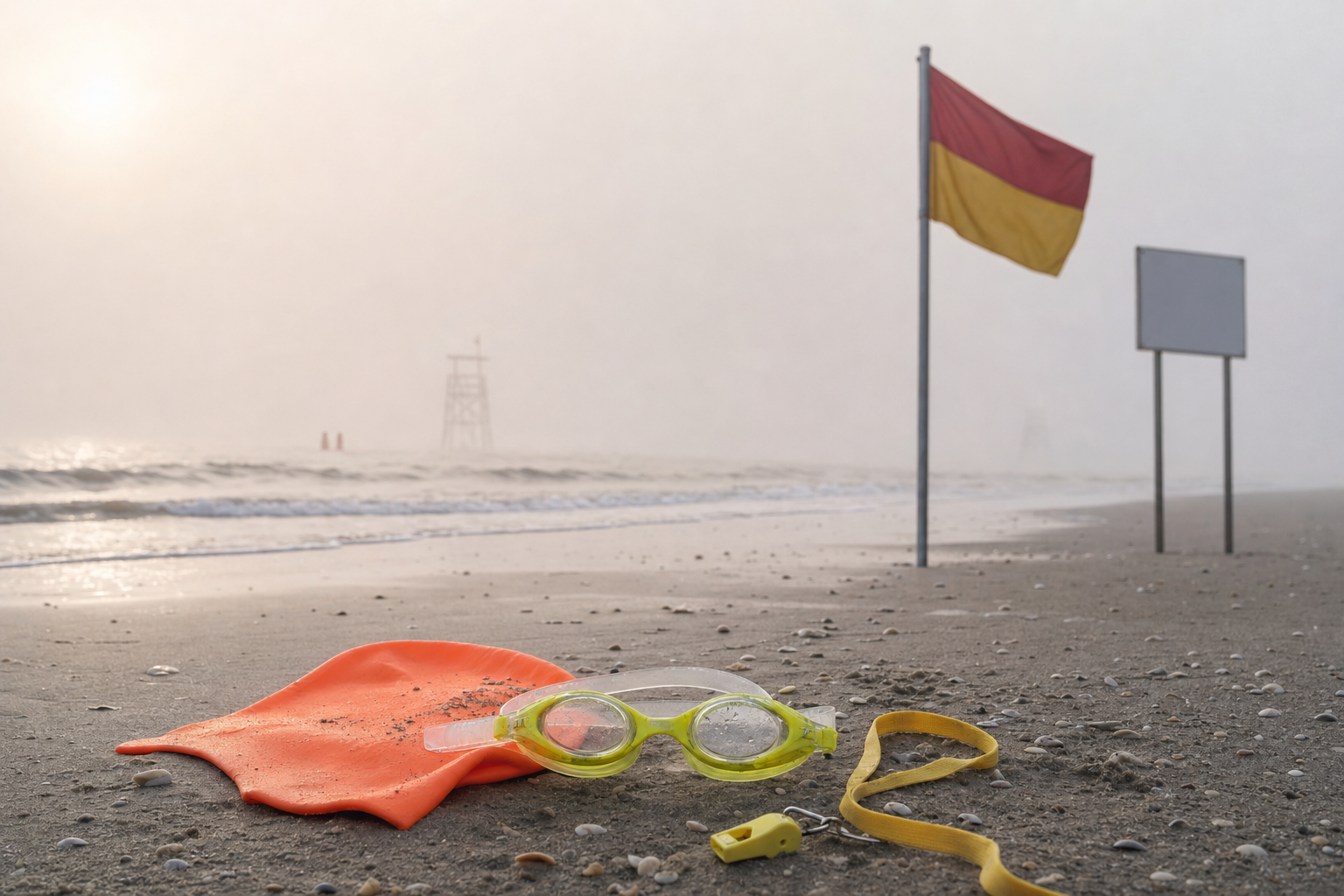
When shorelines shroud in fog, visibility drops fast—and subtle dangers can emerge. Kids ages 6-12 may drift beyond sight, currents can pull quietly sideways, and even lifeguards can struggle to spot swimmers. Here's what you need to know about beach fog safety, low visibility swimming, and creating a rock-solid lost child beach plan your family can trust.
Why Supervision Becomes Unreliable in Fog and Low Contrast
The moment fog rolls in or the contrast between sea and sky fades, supervision becomes tricky. Their silhouettes vanish. Bright waves lose contrast. What guards normally base rescue protocols on—clear sightlines, visible flags, cues from swimmers—becomes compromised. According to a beach patrol manual, if fog is thick enough that you cannot see lifeguard stands on either side of you, the water should be cleared of swimmers because guards' eye-lines are rendered useless.(fenwickisland.delaware.gov)
Low contrast—when children wear colors that blend with the water, sky, or beach—is another stealth hazard. A recent report from UTMB Health advises bright suits or neon swim caps to help families and supervisors quickly locate swimmers in murky or surf-noisy conditions.(utmb.edu)
When to Skip the Swim Altogether
There are times when even your best plan can’t guarantee safety. Skip the water if visibility is under one mile over water, or when the sky-sea horizon dissolves under dense fog. The U.S. National Weather Service classifies fog over water as “dense” when visibility drops to one mile or less.(weather.gov) Also, when you reach the point where you can’t see neighboring lifeguard stands or key landmarks, conditions have slipped into unsafe territory.(fenwickisland.delaware.gov)
Adaptation Strategies: Bright Gear, Tight Zones, Timed Check-Ins
To swim more safely on foggy days, families need to adapt. Swap out muted swim caps for bright oranges, yellows, or hot pinks—anything that pops. Keep everyone inside tightly controlled swim zones: close to lifeguards, where you can still see the buoys and shore. Beaches with flagged guard posts are the safest choices for visibility and supervision. Before heading out, inspect warning flags and signs, as they reflect current risk more than weather intuition.(healthychildren.org)
If you want a structured way to help your child progress at home, the 10-Week Plan guides you step by step.
Timed check-ins work especially well with older kids 6-12. Pick a strict schedule—say, every 10-15 minutes: swimmer returns to shore, calls out, gets a thumbs-up, goes back in. Establish a meeting point on land that’s easy to remember: big rock, shaded lifeguard hut, entrance gate. That way if the worst happens, you and your child know exactly where to regroup.
Family Recall Plan: Teaching Kids to Respond
Training a recall cue—something loud, unmistakable—is essential. Use a whistle or your child’s name yelled with consistency. Teach the cue and always follow it with something positive: praise, rest, snack—never punish. Treat the recall like calling for the ice‐cream truck, not a lecture. For beaches, which have surf, wind and fog masking normal voices, a whistle or equivalent sharp sound often outperforms voice alone.(sniffandshift.com)
Around 30-60 % through your beach safety plan, introduce goals like swimy.org’s 10-Week Plan, which helps children build confidence, learn water safety rules over time, and prepare mentally for emergencies. Always practice recall when it’s calm first—on the sand without surf, then in shallow water—building up until it works even in challenging, noisy, low visibility conditions.
[[ctakid]]
Building the Lost Child Beach Plan
Whatever else you do, you need a plan in case someone disappears. First, agree on a clear meeting point on land that’s visible from the swim area. Make sure the kid understands: if I’m lost, I go there, I stay there until I see you. Equip them with something identifiable—bright shoes, a unique cap. Parents should carry earmuffs or whistles too, so they can sound the recall cue clearly.
Next, define boundaries. Explain zones they’re allowed in. Use visual markers—flags, posts, umbrellas—and designate them as “you stay in the green zone, come back if you reach red flags.” When fog arrives, shrink that green zone closer to shore and reduce swim time.
Finally, rehearse the plan. Role-play what happens when fog rolls in, when they don’t hear your voice, or when visibility drops. Practice the recall sound, the meeting point, timed check-ins. Confidence in the plan can prevent panic.
Dealing with Quiet Surf and Lateral Currents
One of the sneakiest risks in low visibility is currents that run parallel to shore. When surf seems quiet, parents may drop their guard—but calm doesn't mean safe. Strong lateral currents can carry swimmers sideways into deep or rocky water without major waves giving warning. Supervision loses cues like splash or struggle when contrast is low.
Teach children to stay facing waves—always watch where they break. If a current pulls them, encourage them to swim shoreward at an angle, not straight against it. Always have a “hover buddy” approach: swim close enough that adults can touch them or intervene. Reevaluate supervision rules on days with wind, fog, or sudden changes in surf.
Putting It All Together: Safe, Fun Beach Days
Beach fog safety isn’t about fear—it’s about smart habits. On low visibility swimming days, use bright gear, restrict swim zones, set timer check-ins, and teach recall. Know the signs that you should skip swimming—when you cannot see major landmarks or lifeguard stands, or when visibility drops below about a mile over water. Trust your judgment over assumptions that someone else sees what you can't.
A thoughtful lost child plan, practiced regularly, can turn a dangerous moment into a manageable one. When kids know what to do, and parents know when to say “no swim today,” the beach remains a place of joy, not danger. Stay visible, stay safe—and keep fun front and center.
120+ swimming exercises sorted by age — with video and instructions. Developed by swim instructors, completely free.

120+ swimming exercises sorted by age — with video and instructions. Developed by swim instructors, completely free.