Freestyle Finish: Thumb-to-Thigh for a Stronger Push in Kids
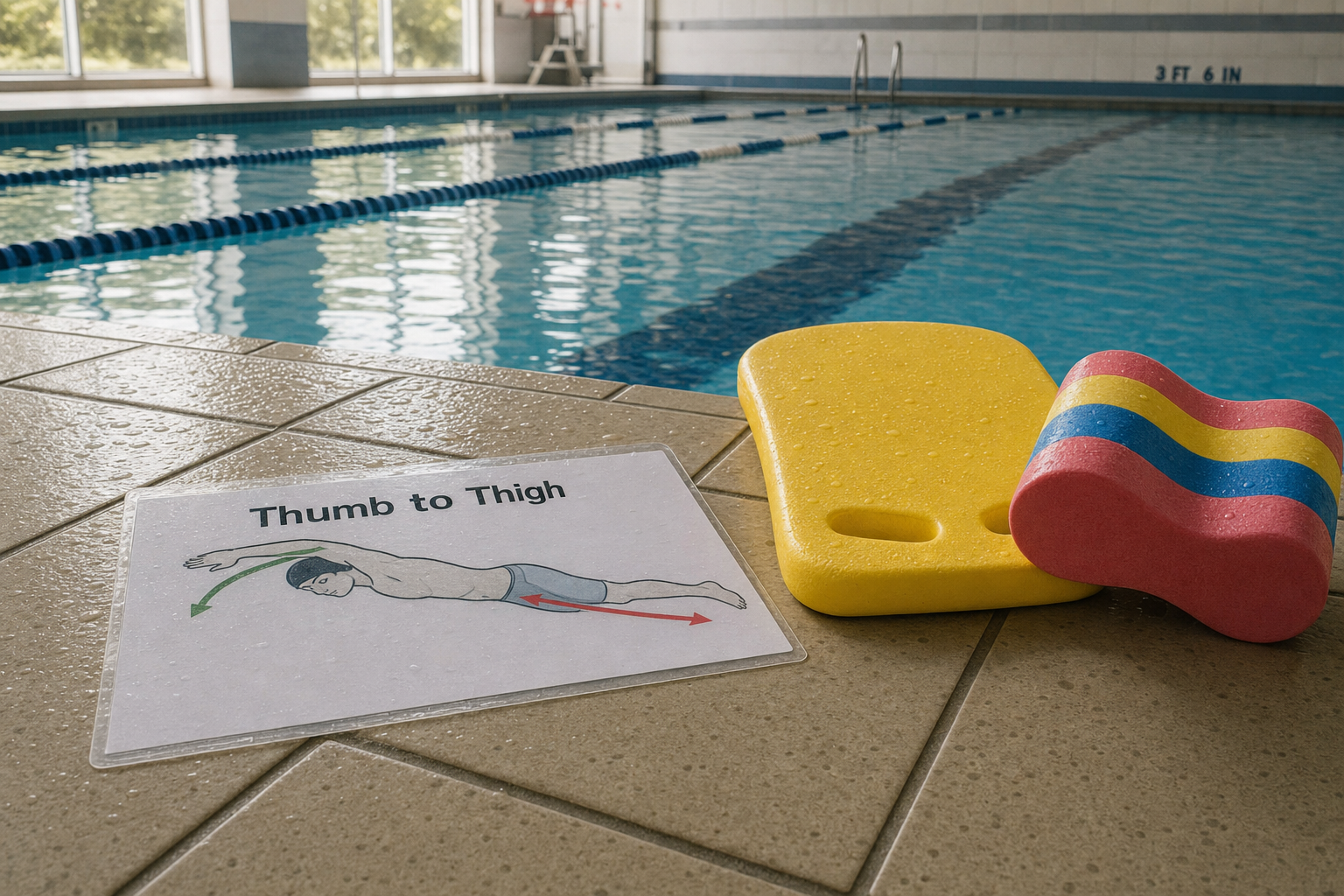
If you’re watching your 6- to 12-year-old swim freestyle, chances are they slip the water at the end of their pull. The arm pulls under the body and then the hand exits early, losing propulsion, breaking bodyline, and making recovery choppy. The thumb-to-thigh freestyle cue fixes that. When your child finishes each stroke by letting their thumb touch the front of the thigh, they push water fully, keep a clean bodyline, and set up a smoother recovery.
Parents often wonder: how to teach this without over-coaching or confusing kids? Keep reading—we’ll dig into how this simple cue works, why it matters, how to practice it year-round, and what to watch out for.
What’s Happening When Freestyle Pull Ends Too Early
Many young swimmers let their hand drift up toward the surface instead of pushing straight back. This “short pull” wastes energy. Their elbow rises, the finish is weak, and they miss the final bit of propulsion. A strong push—the part that comes after the catch and pull—is when the hand drives water backward toward the feet. When that part is cut short, the stroke is less efficient. Sources like Swimming Technology teach that ending the push with the thumb scraping the front of the thigh keeps the elbow down and maintains propulsion all the way through. (swimmingtechnology.com)
How Thumb-to-Thigh Cue Helps Kids Fix Freestyle Short Pull
By simply cueing “thumb to thigh”, kids get a clear target. They understand where their hand should finish, feel the full finish, and naturally slow down enough to do it. According to Alameda Aquatic Masters, the thumb-drag drill where children drag their thumb along the side of their leg before lifting the arm makes it obvious when the finish happens too early. (alamedaaquaticmasters.com) Similarly, Swimming Technology defines SwimCue 4: feel your thumb touch the front of your thigh at the end of each stroke as a key to finishing the push solidly. (swimmingtechnology.com)
How to Practice the Cue Together (Parent + Child)
You don’t need paddles or fancy gear. Middle of any drip-drills at home or pool, use these steps:
If you want a structured way to help your child progress at home, the 10-Week Plan guides you step by step.
- Practice dry-land first: have your child stand straight, lean forward slightly, extend their arms, then push one arm down so the thumb touches their thigh. This helps them feel the motion. 2. In the pool, swim short distances using the thumb-drag or thumb-to-thigh drill. Tell them: “Push water all the way to your thigh before recovering.” 3. Always focus on slow, clean strokes first. Rushing will make the hand exit early again. Sometimes repeat 15- to 25-meter sets keeping thumb-to-thigh as the only cue. Over time, add in breathing or leg kick.
[[ctakid]]
If you want a structured plan over a couple of months that builds technique steadily, check out swimy.org’s 10-Week Plan. It works through drills, bodyline, pulling technique, and cues like thumb-to-thigh in manageable steps that kids can master one at a time without overwhelming them. (birminghambluedolphins.com)
Common Pitfalls: What to Watch For
While practicing, these mistakes often crop up. Watching out helps keep progress steady:
- Over-reaching past the thigh. Some kids think more distance means stretching farther; they let the arm sweep too far behind, causing arm fatigue and throwing off rhythm. The hand should finish below the thigh front—not wrap far behind.
- Bending the wrist instead of keeping the forearm straight. If the wrist flops, it breaks the feeling of a firm push. The whole push phase, especially through the thigh, should use a stiff forearm so the hand can press backward.
- Losing rhythm or pulling too slowly. If you emphasize thumb to thigh without keeping rhythm, the stroke can become jerky or chopped. Make sure the finish becomes a natural part of each stroke, not just a slow motion.
How Parents Can Reinforce Without Over-Coaching
Keep cues simple and positive. Instead of saying "don’t let your pull end early", say "finish harder with your thumb on your thigh". Use just one cue per swim session. Praise when they do it well: “Great job pushing all the way to your thigh!” Let them ask questions. If you disagree with what you see, ask them: “Could you feel your hand reach your thigh just before recovering?” This builds body awareness.
Parents should watch from the deck and avoid shouting technical corrections every other stroke; short reminders during rest or turns work best. Reinforce bodyline also: if hips drop, it’s harder to finish correctly.
Safety, Effort & Seasonal Practice
This cue and drill work year-round. No paddles needed, so risk is low. Encourage moderate effort: the goal is good strokes, not fast times. Always warm up, and don’t push until fatigue undermines form. In cooler seasons, it may help to begin each pool session with thumb-to-thigh drills, then move on to full freestyle.
Putting It All Together
Thumb-to-thigh isn’t just another fancy technical phrase. It’s a tangible cue that fixes common freestyle faults in children aged roughly 6 through 12. When they learn to finish the push phase properly—with thumb touching the front of the thigh—they build better bodyline, more propulsion, and smoother recovery. As a parent, you can guide this through simple dry-land practice, short drills in the pool, and consistent, gentle reminders. Stay aware of wrist bending, over-reaching, and rhythm loss. Keep sessions fun, sessions focused, and let each small success build confidence. With patience, the thumb-to-thigh cue will transform short, sloppy pulls into strong, clean freestyle strokes—all year long.
120+ swimming exercises sorted by age — with video and instructions. Developed by swim instructors, completely free.

120+ swimming exercises sorted by age — with video and instructions. Developed by swim instructors, completely free.