Gentle Breath-Control Games for Toddlers Who Keep Their Mouth Open Underwater (Ages 18–36 Months)
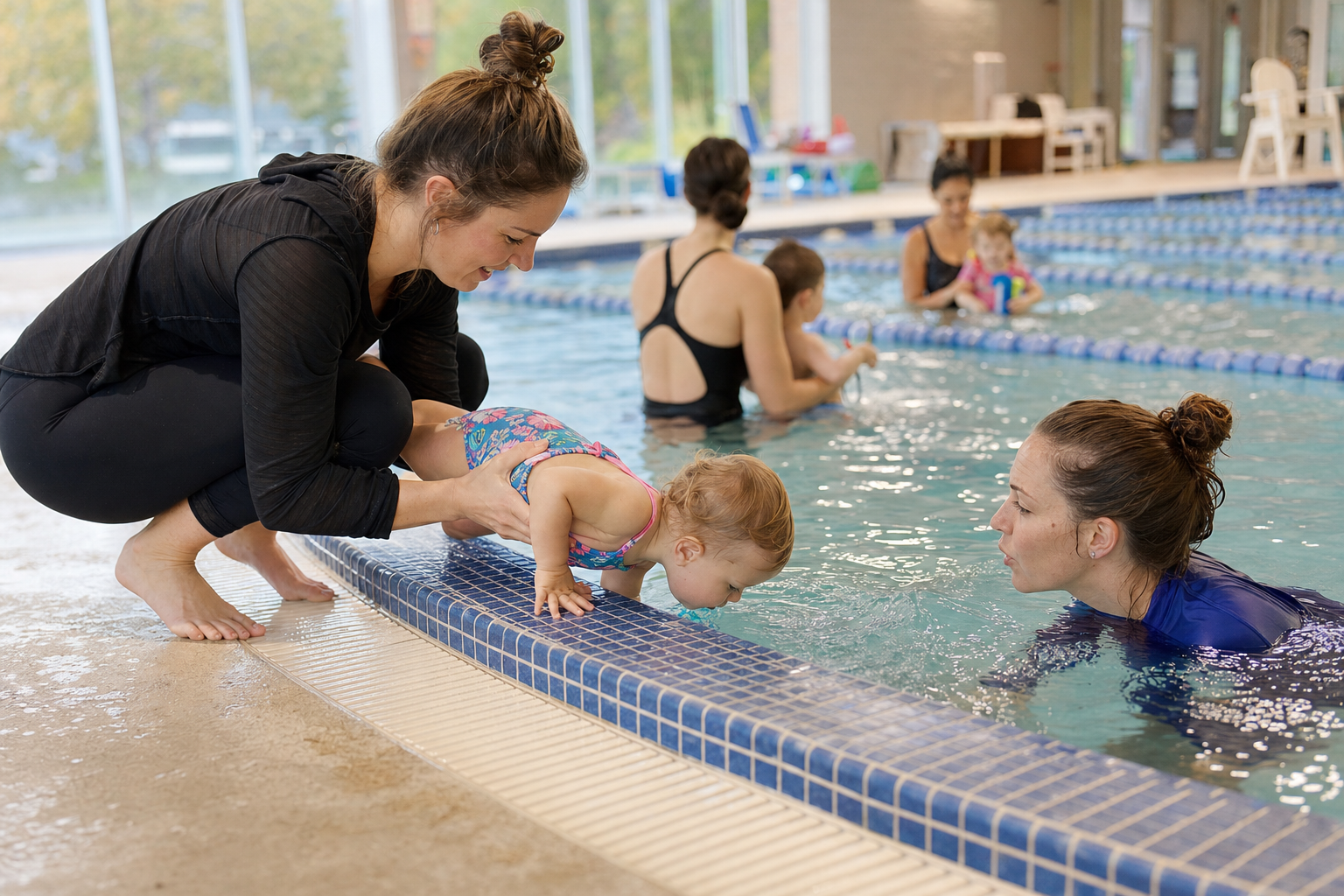
Is it harder to teach face-in-water after infancy? Not always. What matters most is a slow, playful progression that builds your late-starting toddler’s breath control—especially for children aged 18–36 months who love splashing but keep their mouth open underwater. This approach helps avoid reliance on infant reflexes or forcing dips that lead to sputtering and coughing.
Why a toddler won’t close mouth underwater is common—and what it tells you
When toddlers submerge their face and leave their mouth open, water gets in and causes coughing or discomfort. At their age, they’re developing conscious breath control skills rather than depending on milk-to-air infant reflexes. According to the Illinois Early Learning Project, lessons for two-year-olds should introduce readiness skills rather than forcing underwater time. Expect sputtering when going too fast, and use that as a cue to slow down.(illinoisearlylearning.org)
The American Academy of Pediatrics (AAP) updated its recommendations in 2026: swim lessons can begin as early as 12 months, but toddlers remain at higher risk of drowning. Close adult supervision and voluntary, tiny steps into breath control matter far more than full immersion too soon.(healthychildren.org)
Short, playful progressions: from chin wetting to nose bubbles
You don’t need full dips to help your toddler feel safe and learn breathing control. Progress slowly using stages that build confidence and mouth-nose coordination.
First, focus on mouth-only water contact. Let your child lean over the edge of a pool, submerge just their lips, then pull up. Play splash games that pour water from foam cups over their chin or cheeks. Let them see you do it first. Move to blowing bubbles with the mouth only—on the surface and then with lips submerged. Ignore noise or splash so long as water doesn’t go deep.
Next stage is involving the nose. Teach your toddler to blow bubbles out the nose, or hum underwater. You might close their lips above water (don’t force it underwater). A trick frequently used in parent forums is teaching them to hum or blow their nose into a tissue first so they learn exhaling through the nose is different from swallowing or inhaling water.(reddit.com)
Once nose bubbles become more reliable, slowly combine mouth and nose submersion. Game-like repetition of bobbing at the wall, counting to one or two under water, then emerging to breathe, helps calibrate the breath control rhythm. The American Red Cross calls this “bobbing—independently,” where each bob includes mouth, nose, and eyes going under and blowing bubbles.(redcross.ai)
If you want a structured way to build water confidence at home, the 10-Week Plan guides you step by step.
Parents often ask whether my work with toddlers includes a plan. For those who want more structure, the 10-Week Plan from swimy.org offers a clear, weekly rhythm to build these skills—but always adapted to your child’s comfort. (You can check that plan here: visit the 10-Week Plan.)
[[ctababy]]
When your toddler sputters or coughs after glides
Sputtering or coughing isn’t a setback—it’s feedback. It usually happens when breath control breaks down: either they inhale too quickly with their mouth open, or water hits their nose without preparedness. If sputtering happens regularly during glides, pause and return to simpler steps—mouth-only dips, bubbles, bobbing.
If coughs are loud or persistent, it’s a warning sign not a failure. It may mean force is being used—for example, for glides too early, or encouraging full submersion before nose bubbles are comfortable. Avoid repeated underwater pushes. Keep attempts voluntary and always supervised with someone able to help immediately.
Tips for parents: safe, short, playful practice
Keep every water-session gentle. Always stay within arm’s reach, supervision must be full; never leave breath control games unsupervised. Sessions should be brief—many experts suggest just a few minutes of face-in-water practice in a pool, or during bath time, before switching to other fun swimming or water play.(allinahealth.org)
Use bath time or shallow play to model water on the face. Let water trickle over forehead, then cheeks, chin. Say “blink, blink, blink” instead of encouraging rubbing eyes. Pour water from a cup, not by tipping the whole head back. Cultivate “mouth closed, exhale bubbles” via games—blow surface bubbles, then slowly lower the face while exhaling.(kingswim.com.au)
Celebrate each little win. When your toddler closes their mouth under water even for a second, or blows a nose bubble, praise that! Keep mood upbeat. If fear or distress shows, stop and try again later. Reset with a game or splash to make sure it ends positive.
When to pause, slow down, or seek help
If toddler consistently opens mouth underwater despite prompts, or coughs persistently after every glide, it’s time to step back. Regress to earlier stages—mouth-only dips, blow-bubbles exercises. If resistance or fear remains constant, consider a swim teacher with training in toddler development or even a familiar-environment therapist for sensory issues.
Never force full face submersion; resist comparing your toddler to “infant reflexes” kids if your child didn’t start early. Conscious breath control works differently and takes time. The goal is not how soon they go underwater but that they learn to close their mouth, control exhalation, and feel safe.
Face-in-water after infancy may feel like a steeper climb, especially when they love water but don’t like it in their mouth. But with gentle, staged progressions—from chin dips to nose bubbles—and having fun, your toddler will build healthier breath control without relying on reflexes. Keep attempts short, always supervised, stop at signals of stress.:-------------</assistant unless something unclear
120+ swimming exercises sorted by age — with video and instructions. Developed by swim instructors, completely free.

120+ swimming exercises sorted by age — with video and instructions. Developed by swim instructors, completely free.