Gentle Face-Wet Recovery Games: Helping Babies Grow Comfortable with Water on the Face
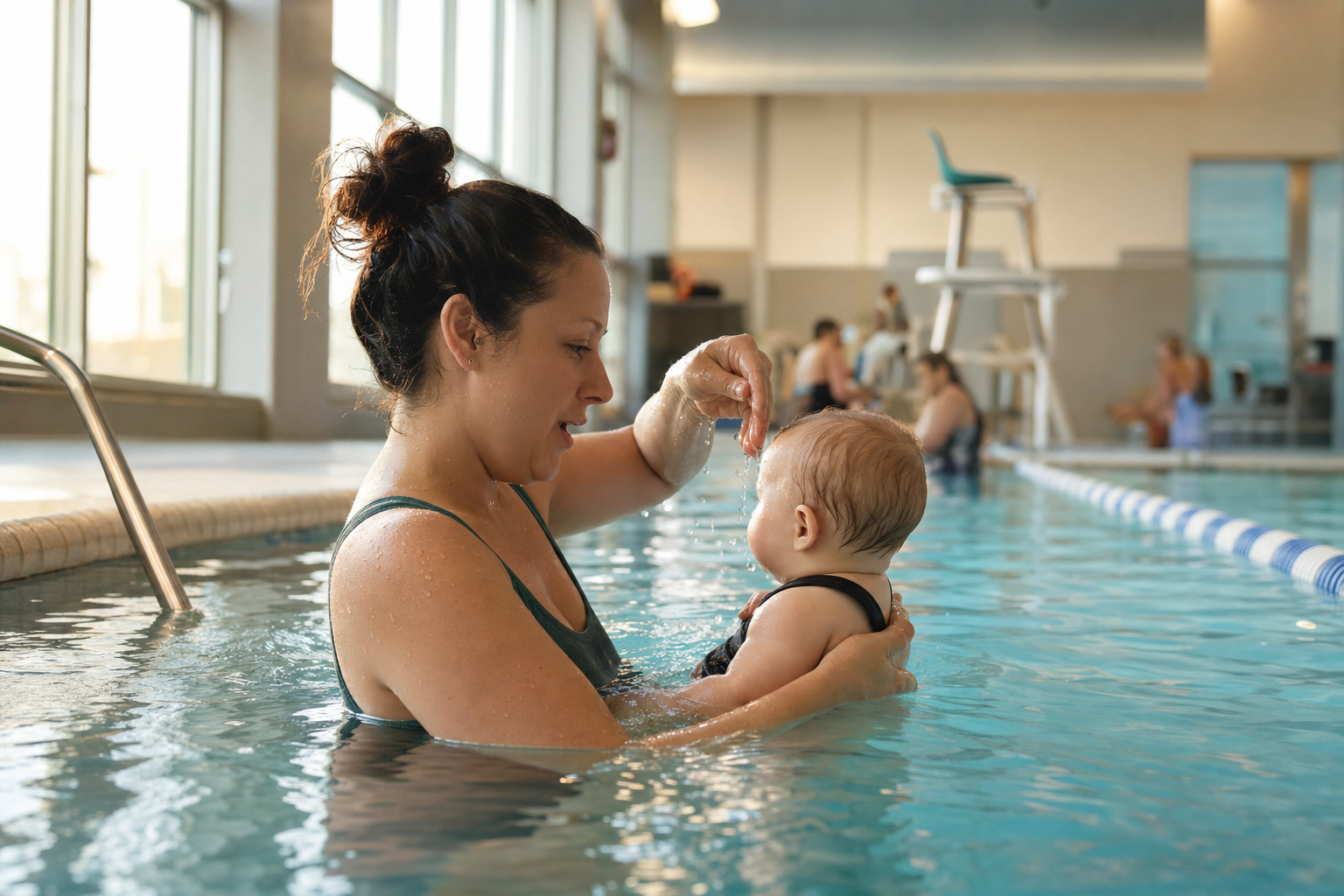
What do you do when your baby flinches, blinks, coughs lightly, or looks startled the moment water touches their face? These moments matter. Teaching your baby that water on the face is manageable—and that you, the calm adult, will help—is foundational for building infant swim water confidence. Focus not on dunking, but on recovery: ensuring safety, responsiveness, and trust so your child learns the water isn’t scary.
Why water on the face feels intense for babies
From about 4 months to 30 months of age, babies are developing head control, motor awareness, and emotional resilience. When water splashes unexpectedly, it can trigger reflexes—blink, gasp, pull away—that feel like fear. If parents respond by laughing it off or forcing repeated splashes, fear may build instead of confidence. According to pediatric experts, formal swim lessons are not strongly supported for infants under 1 year when it comes to preventing drowning; these early experiences matter more for emotional safety and comfort than survival skills. (publications.aap.org)
Understanding this, gentle recovery games are designed to respond the right way when baby experiences discomfort. Pause the activity, comfort your baby, and reset before the fear escalates. This approach helps prevent distress, supports trust, and advances baby swim face wet readiness.
Gentle recovery games: What they are and how to use them
Recovery games are simple, playful activities that gradually introduce water on the face. They are about helping babies learn that splashes or coughs are OK, because you’re there to support them. These games happen at home—during bath time or free water play—and are safe alternatives to aggressive online swim drills or forced submersion.
How to run a recovery game
First, check in: is your baby calm? If they’ve just cried, been startled, or coughed a lot, give them time to reset. Use soothing voice, close contact, a warm towel. Then start small: drip or pour warm water gently over a shoulder, then onto their cheek. Use facial cues like “Here comes a little rain” to help them anticipate the sensation. If they blink or turn away, that’s normal. Acknowledge their reaction, pause, then try again slightly later. Over time, let water touch forehead, nose, around the eyes—but never force it.
Second, comfort and reset: if baby cries more than a few seconds, coughs persistently, seems unusually sleepy, or struggles to breathe, end the activity. Cuddle, dry, warm. Positive recovery means ending before fear builds.
Third, repeat with variety over time. Add different textures: sponge, washcloth; different patterns: drip, trickle; different supports: sitting, leaning back in your arms. Following your baby’s lead helps build baby hates water on face into baby swim face wet as growth, not trauma.
If you want a structured way to build water confidence at home, the 10-Week Plan guides you step by step.
A sample plan for home bathtime
Many parents find having a structure useful. The 10-Week Plan of swimy.org offers a way to schedule and vary bath-games so each week adds something new, light, and evocative without pushing skills that belong in swim class. (swimy.org)
Here’s how you might map this out between 4–30 months:
- Weeks 1–2: Warm water play, gentle drips over arms and tummy. Avoid face contact. Short sessions (5-10 minutes).
- Weeks 3–4: Introduce small dribble of water over forehead or cheek. Use washcloths. Cue with voice.
- Weeks 5-6: Add splashes over shoulders, ears, back of head. Introduce floating sensations while securely held.
- Weeks 7-8: Encourage blowing bubbles with lips or mouth just at water’s surface; touch chin, nose briefly.
- Weeks 9-10: Gentle dips toward water with support. Offer predictability: say “1-2-3 breathe, dip,” do brief face in water where baby can tip easily backward into your chest.
[[ctababy]]
Throughout: always watch baby closely for distress; end early if needed.
Typical pitfalls to avoid
There are some common mistakes parents often make that can backfire:
Laughing off distress: It might seem funny when a baby coughs or blinks badly, but laughing can signal that you don’t see their fear. That erodes trust.
Repeated splashing to “get them used to it”: Forcing frequent exposure without comfort or reset can push a baby past what they can handle, creating lasting water anxiety.
Copying aggressive online swim drills or breath-holding exercises: These often promise fast gains, but with infants they risk inhaling water, choke reflexes, or overwhelming the child. Pediatric guidelines warn against forced submersion and breath-holding in very young babies. (publications.aap.org)
Safety caveats: When to stop, how to protect
No forced submersion. At no point should you push baby underwater against comfort. If a baby is distressed, coughing persistently, unusually sleepy, or struggling to breathe, stop immediately. Ensure water temperature is comfortably warm (about 98-100°F or 37-38°C), the water level shallow, and supervision constant. Always have support under baby’s head and never prop bath toys or float seats as replacements for your hand. (boystownhospital.org)
Results to expect if parents use recovery work
Over weeks and months, many parents report that the baby who once screamed at even a drop now tolerates splashes, leans toward water, opens eyes partway, sometimes laughs. These small wins build water confidence. Importantly, when swim class comes, baby is less startled, more likely to respond well to what instructors ask. And parents feel in control, able to pause, comfort and reset rather than follow stressful drills. You’ll likely see less avoidance of face contacts like hair washing or splash play outside the pool too.
Putting it all together: Calm, positive encouragement
When your baby gets splashed or coughs lightly, don’t rush in to wipe or flinch away. Hold them, say a soft phrase like “All good,” stroke their back, let them blink or let the water roll off. Management of these moments—pausing, comfort, resetting—is as much a lesson as the games themselves. Over time these responses help reduce the fear and build a foundation of trust.
Babies learning to swim need recovery games as much as forward movement. When you teach your child that water on the face is manageable, that a calm adult is there to catch them, you help lay the groundwork for lasting infant swim water confidence. Every time you pause before panic, comfort before forcing, reset before rushing, you’re helping your baby move from hating water on face toward embracing it—safe, strong, and confident.
120+ swimming exercises sorted by age — with video and instructions. Developed by swim instructors, completely free.

120+ swimming exercises sorted by age — with video and instructions. Developed by swim instructors, completely free.