Scoliosis & Swim Kids: Smart Strokes, Safe Choices
What parents need to know first
Swimming isn’t a cure for scoliosis, but most kids ages 8–12 who have scoliosis can stay active in the pool—with the right clinician-guided tweaks. Keeping your child swimming protects fitness, builds confidence, and supports recovery (if braced or post-op). Before your child dives in, talk with their orthopaedist or physical therapist. If they wear a brace, you’ll need clear guidance on when it can be removed and how swimming fits their overall plan. If they’ve had surgery, swimming will often come later, once healing allows bending, twisting, and breathing deeply without pain.
Stroke choices: which are helpful and which to avoid
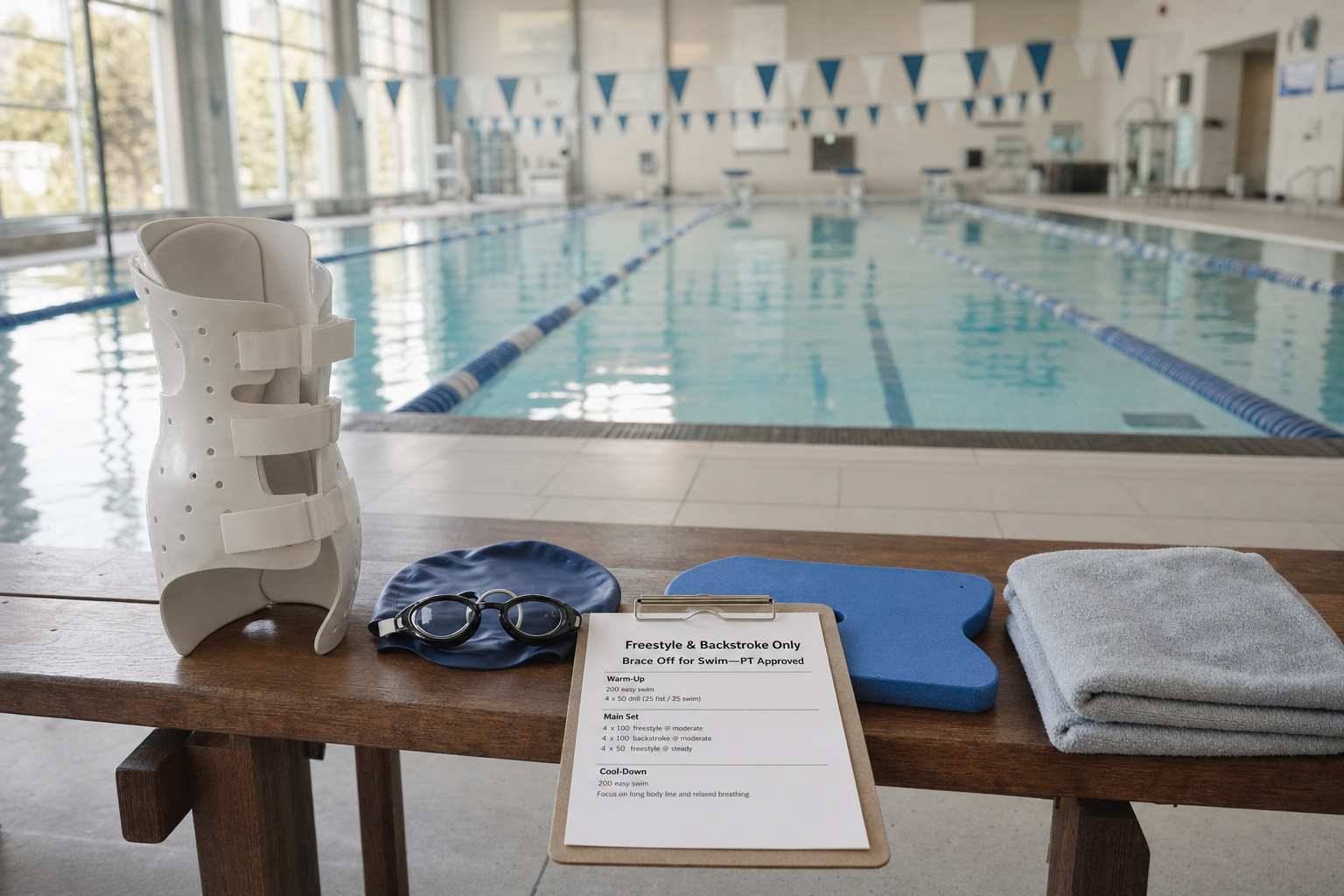
For “scoliosis swimming children”, the safest strokes are freestyle (front crawl) and backstroke. These long-axis strokes keep the spine in line, work both sides symmetrically, and avoid extreme arching. Breaststroke and butterfly involve dolphin kicks or wave-motions that force the spine into repeated extension and flexion (arching and bending). These short-axis strokes can aggravate curves or pain. According to biomechanics reviews, the repetitive undulation required by butterfly tends to stress the lumbar spine in kids with scoliosis more than other strokes. Freestyle or backstroke with proper mechanics—flat body, neutral spine, no excessive arch in the low back—are best. If breaststroke is chosen, make sure your child avoids lifting the chest too high and emphasizes glide rather than whip-kick strength.
What role does swimming play in treatment plans?
Swimming is often part of a larger treatment plan—not a stand-alone therapy. Back braces, physical therapy (including Schroth-style exercises), and regular monitoring remain central. Clinical sources affirm that swimming helps maintain mobility, muscle symmetry, and cardiovascular fitness—but it does not stop scoliosis from progressing or reverse curves by itself. It supports treatments but doesn’t replace them. Regular physical therapy under a clinician supervises strengthening of core, back extensors, hip stabilizers, and also draws in posture-training so your child uses good alignment both in and out of water.
Around the midpoint of a treatment plan, you may find something like the 10-Week Plan useful for swim progression—it frames weekly progressions in swim time, stroke choice, flexibility, and core work so that your child improves steadily without overload. Before beginning any plan, always coordinate with the clinician overseeing your child’s scoliosis care.
If you want a structured way to help your child progress at home, the 10-Week Plan guides you step by step.
[[ctakid]]
Bracing issues: when can the brace come off, and how often
Most braces are worn full-time (16-23 hours per day) when growth is still happening, especially for moderate curves (20-40 degrees). Most clinicians allow removal of the brace for swimming, bathing, PE or other organized physical activities. But this “off” time should be planned and accounted for so your child still gets enough wear time to make a difference. If your child is post-op, swimming may be delayed until wounds heal and the surgeon confirms safe movement.
Also, the more consistent the brace wear, the more likely curve progression is slowed―studies show limited benefit with less than 12 hours daily wear. When allowing breaks (for the pool, sports), prioritize removing the brace during low-risk, supervised activities, not high-risk or painful ones.
Pain, red flags, and therapy input
If your child reports pain during or after swimming—especially in the mid-back or low back—that’s a signal to pause and check with the therapist. Discomfort is normal at first if technique is new, but sharp pain, numbness, or worsening symptoms should never be ignored. Physical therapists can assess what’s triggering the pain: poor body roll, stroke mechanics that push the back into arching, timing of dolphin kicks, head position in strokes, or even the way the brace fits or moves in water.
Physical therapy plans (like Schroth or customized core/posture programs) teach precise ways to move rather than just “swim more”. Your clinician may recommend swim drills and land exercises to strengthen the weak side, improve breathing mechanics, stretch tight muscles, and support your child’s spine especially as they grow.
Practical guidelines: what to look for
Good technique: pelvis stable, neutral spine, minimal arch in lower back. Choose freestyle or backstroke first. Limit or avoid butterfly and strong breaststroke kicks if they cause arching or discomfort. Swim a couple times a week rather than intense training daily, unless advised otherwise. Use frequent rest, listen to pain cues.
Brace timing: remove brace only as allowed—often during swim sessions. Make sure the fit is right and brace is maintained so it doesn’t chafe or trap water. If post-op, get approval before swimming and start gently.
Team support: work closely with your child’s orthopaedist, physical therapist, and swim coach. Let the therapist review stroke technique. Share the brace schedule so swim practice fits safely. Attend therapy follow-ups.
Why staying active matters
Swimming keeps muscles working, lungs stronger, heart healthy, and mood lifted. Kids with scoliosis often benefit emotionally from staying in sport and feeling part of the team. Confidence builds when a child learns safe strokes, masters turns without pain, and chooses motion that supports their changing growing body. Staying fit may also help brace wear feel lighter and recovery after any surgery go more smoothly.
Swimming with scoliosis during ages 8-12 can be empowering, healthy, and safe when parents, kids, swim coaches, and clinicians pull together. It’s not about finding a magic cure—it's about smart strokes, well-timed breaks, avoiding strain, and listening to the body. With those in place, your child can enjoy the water year-round, grow stronger, stay confident, and keep swimming toward all the joys of childhood.
120+ swimming exercises sorted by age — with video and instructions. Developed by swim instructors, completely free.

120+ swimming exercises sorted by age — with video and instructions. Developed by swim instructors, completely free.