Why Crawlers Don’t Belong on Pool Decks (Especially Ages 6–18 Months)
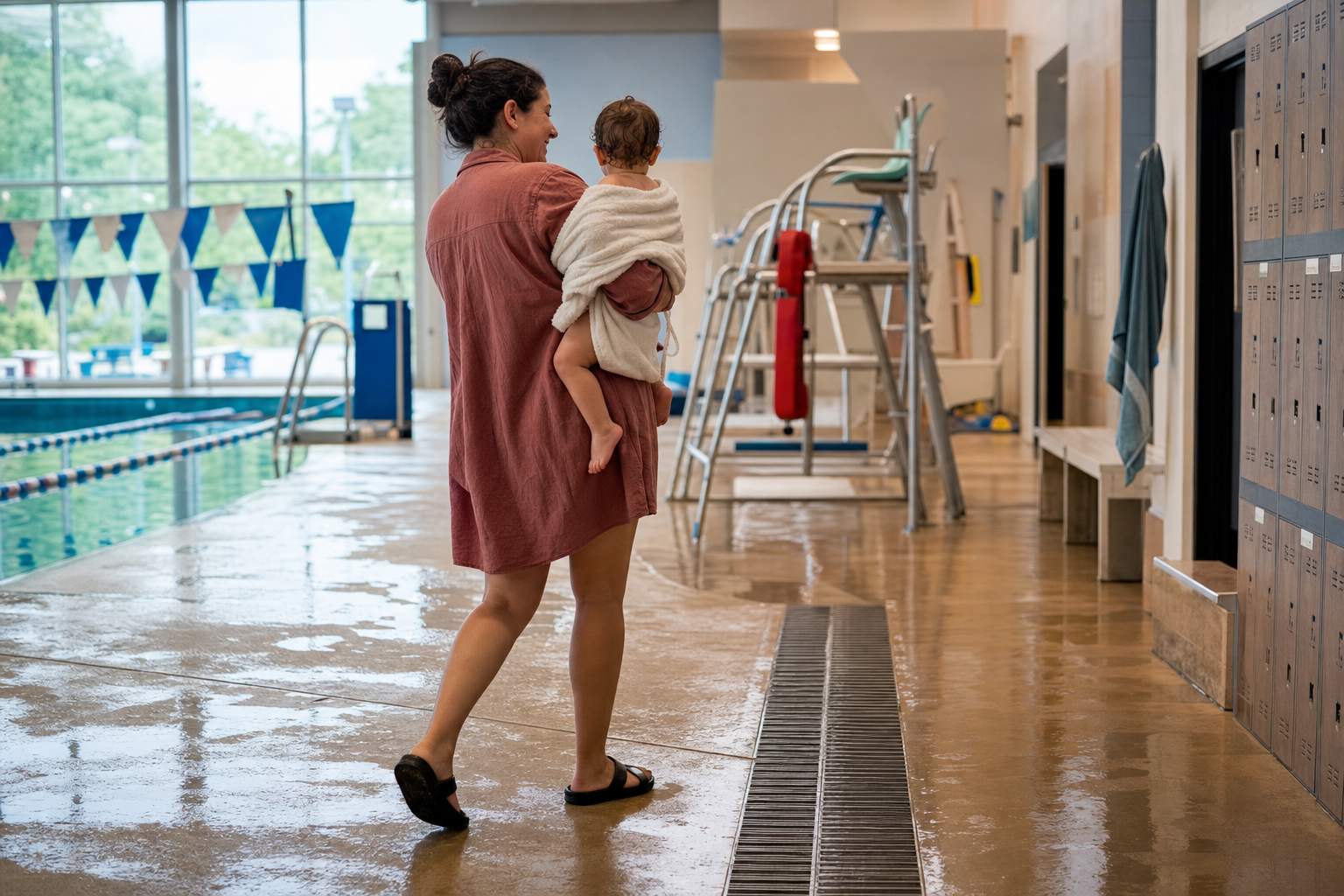
When you’ve got a baby who’s mobile but not walking reliably—bottom-shufflers or fast crawlers—the pool deck and changing rooms become hazardous before swim lessons even begin. Let’s dive right into how these areas pose serious risks, and what parents can do to keep things safe and clean. If you want, I can also include ideas on safe staging habits at swim lessons.
The Hidden Dangers on Wet Decks and Locker Room Floors
Crawling babies easily slip on wet surfaces. Pool decks often have a “film” of water mixed with sunscreen, body oils, and debris that’s nearly invisible but extremely slippery. Teams that install raised drainage tiles note that water films, low spots, and shaded corners are especially slippery and prone to mildew buildup.(dri-dek.com)
Beyond slips and falls, there are real germ risks. Dermatophyte fungi—think athlete’s foot, ringworm—thrive in warm, moist areas. Public-health surveys show that pool floors, especially in busy indoor pools, often carry high levels of these fungi.(pubmed.ncbi.nlm.nih.gov) The American Academy of Dermatology warns that “warm, humid environments such as communal showers and pool surfaces” are prime spots for spreading skin infections.(medlineplus.gov)
When babies crawl on wet, shared surfaces, they touch their hands to things that bare feet in common spaces already contacted, then put hands in their mouths. That’s a fast track to pinworms, molluscum contagiosum, MRSA, or fungal infections.(cdc.gov)
Why Changing Rooms and Decks Are Riskier Before the Lesson
Before swim time officially starts, there’s often chaos: wet babies, damp swim gear, parents changing, towels everywhere. That setup treats the pool deck or “dry” changing area like a soft‐play floor, which it isn’t. Splash zones, puddles, drains—all make unexpected slide hazards.
Even quick diaper changes or squirmy bottom-shuffles across a wet bench can mean contact with germs or sharp/slippery surfaces. Some facilities meet the need by offering family changing rooms with benches or tables, but these may still be exposed to damp air, wet floors, and shared mats. Always carry your baby or hold hands in these areas. Use approved changing tables when available. Stay off wet flooring. These simple actions make a big difference.
If you want a structured way to build water confidence at home, the 10-Week Plan guides you step by step.
What Safer Parent Habits Look Like
You might already follow some good habits without even realising it. Here are habits that reduce risk:
Hold your baby near water—never let a crawler roam freely near the pool deck or around drains.
Change nappies and swim nappies in designated changing areas—don’t use benches or bench tops next to drains in changing rooms or outdoors. Always use a waterproof pad or towel if you must.
Bring your own clean change mat from home. Wipe down mats in family change rooms before using. Facilities like London Baby Swim suggest doing just that.(londonbabyswim.co.uk)
[[ctababy]]
Ensure your baby is dry before dressing them—wrap in a towel before moving across the deck.
Use slip-resistant footwear for yourself, and avoid walking barefoot or letting your child crawl on wet footing. Prior to any swim program, many providers recommend that babies arrive ready to go, dressed or with minimal dressing needed. Many follow plans like the Swimy “10-Week Plan” for gradual introductions and routines that support this kind of safe staging.
Check the facility’s policies if unsure about your safety routine.
Expert Insights: What Science & Guidelines Show
Dermatology shows that fungus thrives in constant moisture and poor cleaning. Shared wet floors are a breeding ground for Trichophyton species (causing athlete’s foot or ringworm), and flooring in burst swim-paradise areas showed dramatically higher levels of fungal contamination.(pubmed.ncbi.nlm.nih.gov)
Public-health authorities—including the CDC—stress the importance of hygiene in aquatic and associated areas. They recommend disinfecting shared surfaces, enforcing proper chlorine/pH in the pool, frequent bathroom breaks, changing diapers away from poolside, and educating swimmers and parents on illness spread.(cdc.gov)
The Academy of Dermatology adds that eczema or open skin wounds worsen the risks. If your child has any skin condition, cover it well, or avoid crawling on surfaces that may contact germs and irritants.(aad.org)
Practical Safety Checklist Before Your Baby’s Next Swim
To help keep swim lessons a safe, fun time:
• Move slowly through changing rooms: change nappies first, then dress baby before heading to the deck.
• Keep a sanitised towel ready at all times. Lay it down before any crawling, even short stretches.
• Wash/dry your baby’s feet and hands immediately after swimming or using the public shower.
• Inspect drains, puddles, heavily trafficked corners in changing rooms. Avoid letting little ones reach for toys or surfaces near those.
• Carry your baby near water edges and monitor them constantly. Near lanes, full pools, or deep water walkways, there should be hands on or very close proximity.
Final Thoughts: Stage Your Baby, Not the Deck
Pool decks and changing rooms are not playgrounds, and they can harbor slippery surfaces and unseen germs. For babies aged 6–18 months—who are adventurous but not fully steady—changing habits protect them. When you carry your baby near water, use approved change areas, avoid letting them crawl on wet deck or locker floors, and consistently use your own clean mats. Implementing these safer staging habits keeps your baby further from slips, infections, and discomfort.
With thoughtful preparation and small behavior shifts, changing rooms and poolside routines can be made far safer. Every parent wants swim lesson time to be fun—not risky. nanny-proofing changing routines, dressing right, and keeping your baby off unsafe surfaces mean fewer scares and more smiles.
120+ swimming exercises sorted by age — with video and instructions. Developed by swim instructors, completely free.

120+ swimming exercises sorted by age — with video and instructions. Developed by swim instructors, completely free.