Parent Voice That Calms Baby Swim
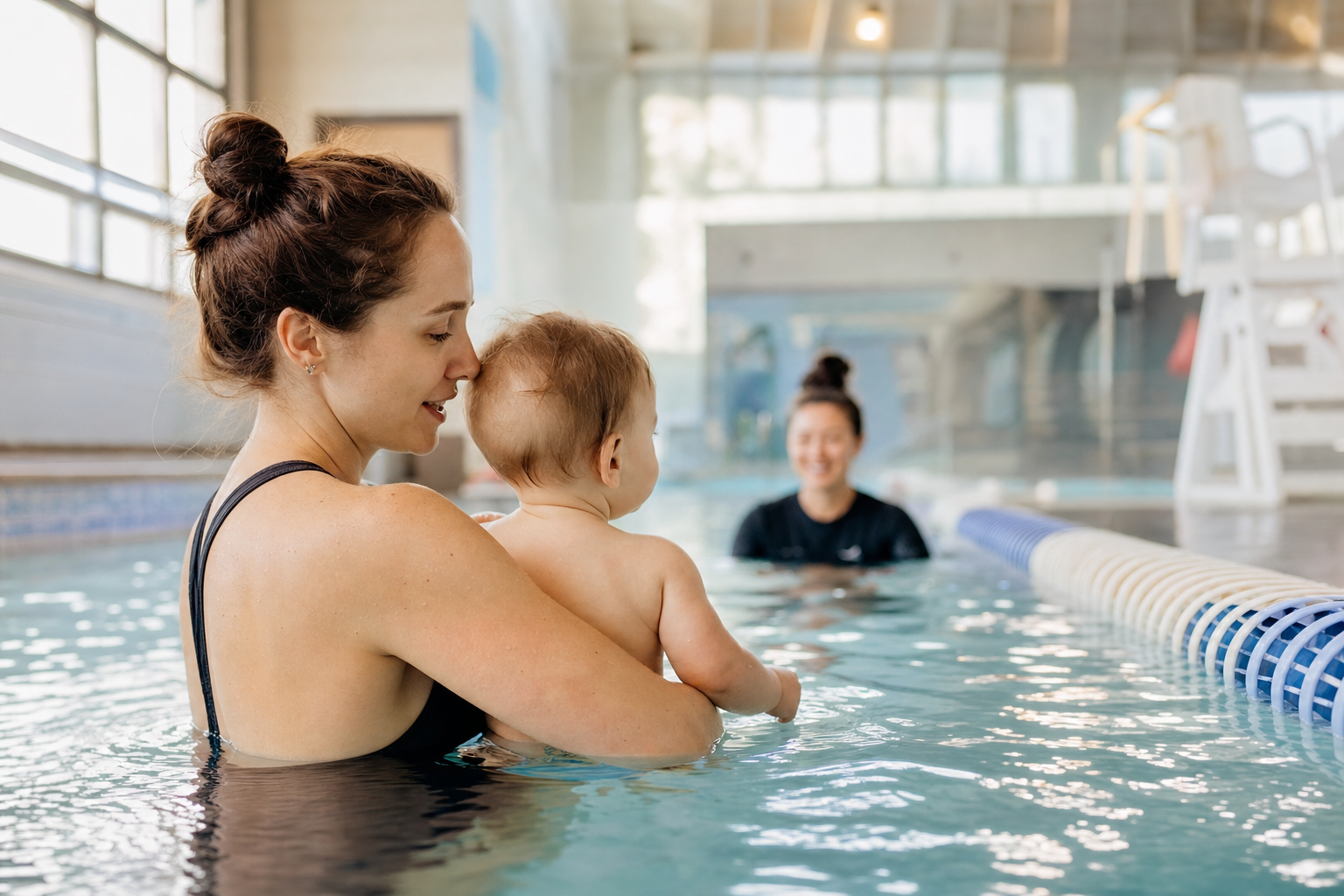
When your baby (ages 3-36 months) is getting in the pool, the tone you use matters as much as the skills you teach. The right voice helps your baby feel safe, builds baby water confidence, and prevents throwing your little one off balance before they even kick off. If you feel worried or shouty, it may register as danger—triggering tension, stiff arms, or tears. Let’s zero in on how parents can speak, breathe, and cue in ways that soothe rather than spook pool practice.
What Really Makes Babies Say “Safe vs Scared”
When you enter the water, your baby is scanning your body language, tone, breathing rhythm, and even how you cue transitions. Babies can pick up tension in your voice—pitch rising too high or rushed phrases will feel unpredictable. On the other hand, a slow voice, warm tone, regular rhythm sets up clear expectations. That helps baby water confidence grow when they know what comes next: warm water, a gentle phrase, guided movement, lull into floating or kicking. Consistent baby swim cues—short words like “float,” “glide,” or “kick”—help baby map what you expect, in the same order every time.
Breathing rhythm plays a big role too. If you’re taking fast, sharp breaths before lowering into the water, baby might gasp or cry, reading those as cues to brace. Instead, try inhaling through your nose and exhaling gently through your mouth, pausing just long enough for baby’s face to settle. That slows your heart rate, slows theirs, helps you stay calm. Babies mirror parents’ emotions more than we often expect.
Phrases That Help, Not Hurt
Before the pool, skip heavy instructions or cautions like “Don’t be scared,” “Hold on tight,” or “Don’t go under”—these prime fear rather than trust. Instead use short, gentle phrases like “Here we go,” “Soft touch,” or “Float time.” Say them in the same spots every swim session. For example you might say “Warm in” as you settle baby into the shallower end, “Float float” as you lean back, then “Safe touch” when holding them close. Repetition builds familiarity—those become the baby swim cues your child listens for and understands.
To fill the gap many parents share on forums—wondering if swim classes are just song time or real skill-building—these kinds of phrases plus relaxed breathing make class more than fun. They build predictable routines so your child knows what to expect before anything starts. Coupled with a consistent cue timing, you’re coaching baby’s emotional state, not just motor skills.
Putting It Into Practice: A 10-Week Plan
Over about half a term of swim classes, most parents see shifts in baby water confidence if they focus on voice, breathing, and timing. The 10-Week Plan by Swimy.org is designed exactly for this: week by week you integrate short cue phrases, match your breathing to calm down pre-pool nerves, ensure every cue is given in the same order. By week six or seven, babies often pause less, splash less anxiously, and lean into transitions like getting in, letting water touch the face, or going into floating.
Week 1 might be learning your cue phrases and practicing them dryside. Week 2-3, bring them into water routines: settling in, warm water splashes, using one phrase per action. Buildup in weeks 4-5 introduces gentle submersion cues only if baby seems ready—no pushing through any resistance. The plan gives space to pause when baby coughs, arches back, or cries hard. That pause isn’t failure—it’s essential feedback.
[[ctababy]]
When To Pause, Not Push
Calm wording does not mean ignoring distress. If baby coughs, arches away, turns their face, or cries hard, stop. Let them recover, hold them close, warm tone, maybe exit to shallow water or the edge. The theme is safety, not forced progress. For ages under one year, the American Academy of Pediatrics (AAP) says infants are not developmentally ready to swim independently or survive an accidental fall; lessons for babies this age should focus on comfort, bonding, and safety—not pushing through “skills.” (publications.aap.org)
For toddlers aged 1-3 years, swim lessons after their first birthday are recommended—but only as part of broader layers of protection: close supervision, life jackets when needed, barriers like pool fences. Swim lessons help, but do not drown-proof a child. (healthychildren.org)
How Parents’ Perceptions Change Over Time
Studies show parents’ perceptions shift as lessons progress. One research over multiple swim sessions found that as children learned more swim skills, parents began to believe they needed less supervision—even when safety experts urge arm’s-length care until competence is well established. (pubmed.ncbi.nlm.nih.gov) Other studies reveal that some parents enrolling toddlers in swim school overestimate what lessons can do for safety, assuming swimmingability alone reduces drowning risk. That’s not true. Consistent cues, calm tone, and being ready to stop when signs of stress appear are what build real confidence. (pubmed.ncbi.nlm.nih.gov)
Expert Tips for Everyday Sessions
Before you step into water, take a moment to breathe, notice your own tension. Remind yourself: short phrases, labelled in the same order, relaxed tone. As you hold baby at the edge, whisper “warm water,” then lower gently while saying “soft float,” next “easy kick,” etc. If baby’s breathing changes, pause, slow down. If baby shows signs of distress, try lighter touch, more hugging, maybe leave for the next planned routine. Over time, baby anticipates these predictable steps. They start to read your voice and feel safe knowing what comes next.
Wrap up with praise—“Great float,” “Safe!,” “Love it.” Soft claps, smiles, eye contact matter more than perfect technique. Confidence is often built in the memories baby gathers: not that they glided like a little fish, but that their parent’s voice was calm, predictable, loving.
When you use short, consistent cues, relaxed breathing, and a tone that says “safe,” not “hurry,” you guide your child toward baby water confidence. It’s not about forcing skills, but about creating predictable routines that replace fear with trust. Let your voice be your tool—soft, matched to the water rhythm—and watch pool time become calmer, happier, and more meaningful for you and your baby.
120+ swimming exercises sorted by age — with video and instructions. Developed by swim instructors, completely free.

120+ swimming exercises sorted by age — with video and instructions. Developed by swim instructors, completely free.