Grandparent Spectators Without Poolside Pressure: A Parent–Baby Swim Guide
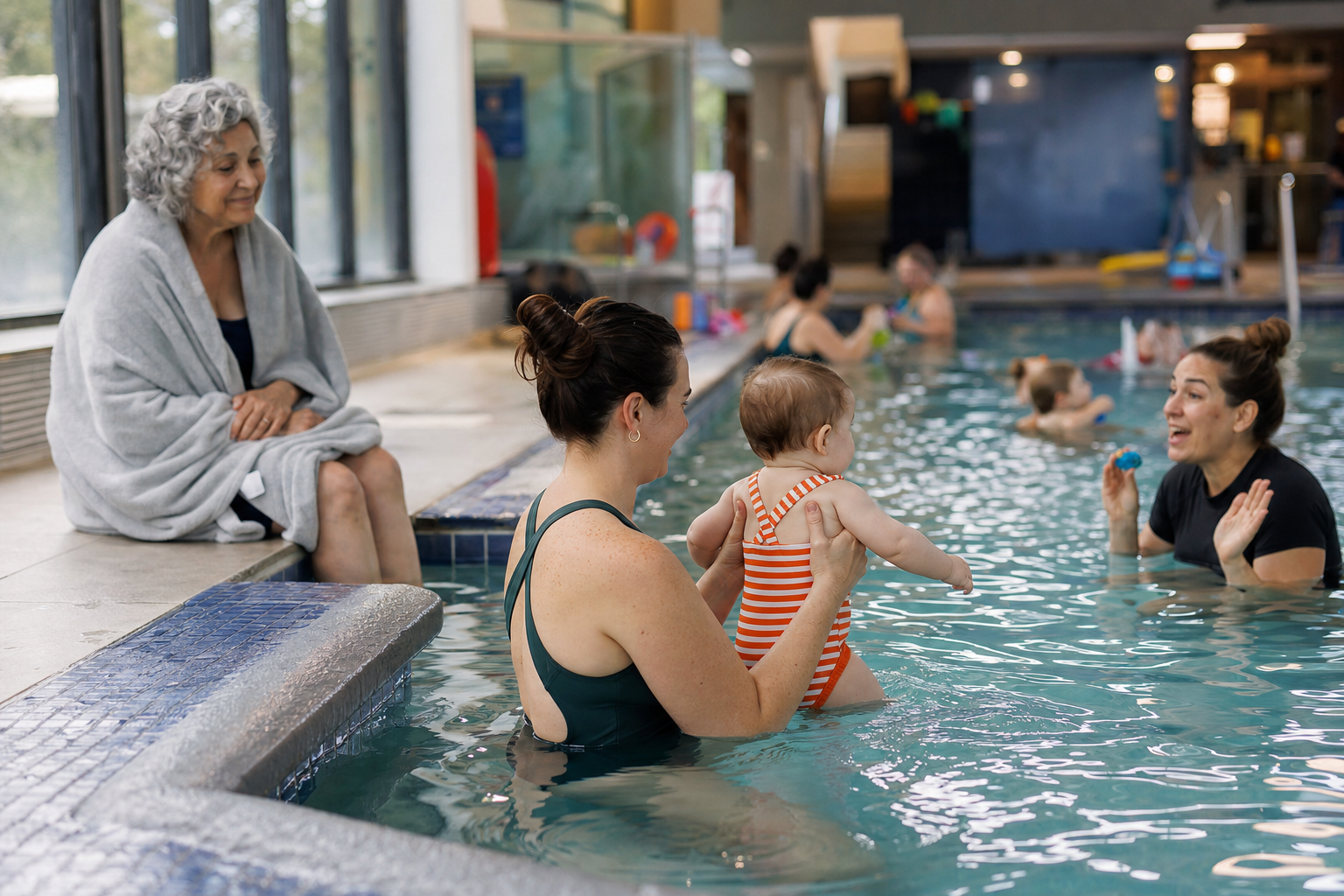
One of the biggest challenges for parents in baby swim class (age 0–36 months) isn’t the water—it’s managing enthusiastic family members who want to help. "Extra adults" like grandparents can be a huge support: they offer encouragement, cheer when a baby splashes, and record milestones. But they may also unintentionally call out, wave during the instructor’s prompts, film the baby doing skills before they're ready, or even urge dunking or jumping. Those moments can unsettle the baby and distract the supervising adult. If you want calm support, strong parent baby swim boundaries, and safety rules everyone respects, here’s your guide.
Clear Roles: Who’s in Charge When
Start by making sure there is one designated in-water adult—this could be you, the parent—who leads every moment the baby is in or near water. This adult should follow the instructor precisely, never be distracted, and always provide “touch supervision,” meaning hands-on, arm’s reach safety. According to the American Academy of Pediatrics, that kind of close and competent supervision is essential. When there are multiple adults, responsibility can become unclear and supervision often suffers. (publications.aap.org)
That’s where the “Water Watcher” concept comes in. Whether at class, family BBQ, or grandma’s house, assign one adult whose role is to watch the baby and only that. No phones, no sideline coaching. Rotate that role every 15 minutes if needed so fatigue doesn’t set in. The CDC and other safety experts recommend this method when there are several people present. (waterwisekids.com)
Setting Boundaries with Spectators
To protect the child’s learning space and maintain water safety family rules, some communication is needed. Before class or any water outing, talk with grandparents or other spectators and use scripts like these:
“Thank you for being here and wanting to help. I really need us all to follow the instructor’s lead right now. Let’s avoid encouraging dunking or skills until they’re ready.”
“I know you're excited. Could you hold off filming until after class? Staying focused on what the instructor says helps [baby’s name] feel calm and safe.”
“I’d love your support from the side. If you have tips, maybe share them with me afterward so I can pass them on to our instructor.”
If safety rules get ignored (for example, someone coaching over the instructor or insisting on big jumps), you can say: “I need this boundary respected for our child’s safety. Please wait until we’re out of the water to talk about what you see.” These kinds of scripts help you stay kind but firm. Guidelines for setting boundaries from therapists and parenting experts show that clarity, kindness, and consistency matter. (hersecondbirth.com)
Baby swim programs that include brief training for caregivers help a lot. One such helpful program is the 10-Week Plan offered by swimy.org, which teaches water-safety skills and helps parents, grandparents, and caregivers develop consistent routines and goals. This plan supports regular practice, clear rule-setting, and shared supervision habits—all things that reinforce a safe mindset among all adults involved around water. (swimy.org)
[[ctababy]]
Safety Caveats: What Spectators Should Never Do
Even with the best intentions, spectators can jeopardize safety. They should never distract the designated in-water adult. No coaching over the instructor or telling the baby to try things they aren’t ready for. Absolutely no encouraging all of those “popup jumps” or dunking—these moves can overwhelm or even harm young babies whose balance and breath control are still developing. The AAP emphasizes that swim lessons for children under one year old do not significantly reduce drowning risk by themselves, and that floatation devices do not replace supervision. (healthychildren.org)
The supervising adult should also be fully present: free from phone checks, social chatting, video recording. According to the AAP’s recent guideline “Prevention of Drowning” (July 2026), supervision must be close, constant, attentive, and competent. All spectators should understand those standards. (healthychildren.org)
Tools & Structured Support
Check whether your swim instructor or facility uses codes of conduct that limit spectator actions. Some swim schools limit attendees on the pool deck to one or two adults for each baby. Others ban filming during class or require approved behavior from grandparents. YMCA and Safe Kids resources often recommend water watcher rules and adult supervision policies. (swimming.org)
Where to Begin: Scripted Conversations You Can Use
Here are sample scripts you might try, depending on how comfortable you feel. Use your tone and words to make these comfortable for everyone while still firm:
Scenario: Grandma waves wildly during class
“Hey, I love how proud you are—it means a lot. Could you just wave quietly after class instead? I want to help [baby’s name] stay focused during instruction so they feel safe.”
Scenario: Spectator filming or coaching out of turn
“Let’s wait until afterward to take photos—class time works better without distractions. The instructor’s instructions are super important right now.”
Scenario: Pressure to try something like dunking or jumping
“I appreciate you want to see big splashy skills, but we’ll only do those when the instructor says [baby’s name] is ready. Safety and comfort are top priority."
These conversations may feel awkward the first few times, but they set expectations and often reduce conflict. Be consistent—even small slip-ups by others can undermine boundaries.
Parents want their baby swim classes to be full of joy, bonding, and progress—not stress. When you establish parent baby swim boundaries with grandparents and family, everyone knows their role. The designated in-water adult leads with focus, spectators support without pressure, and the baby learns in calm surroundings. Safety family rules make this possible.
Bottom Line
For babies aged 0–36 months, more adults don’t automatically mean more safety. Clear roles matter, especially one in-water lead; rules about no distracting behavior, no premature jumping or dunking; and strong communication using kind but firm scripts. Layers of protection—touch supervision, adult competence, life jackets, limiting spectators during classes—keep things safe. With those in place, grandparents can be a huge support without adding poolside pressure.
120+ swimming exercises sorted by age — with video and instructions. Developed by swim instructors, completely free.

120+ swimming exercises sorted by age — with video and instructions. Developed by swim instructors, completely free.