Level Up or Hold? Asking for a Class Promotion in Swim Lessons
So your child seems to be doing great in their swim class, and you’re starting to wonder: "Is my child ready for their next level swim?" Let’s dive into what you need, when to ask, and how to do it so relationships stay positive, challenges stay honest, and safety isn’t ever compromised.
What Evidence Matters When Asking for a Swim Class Level Promotion
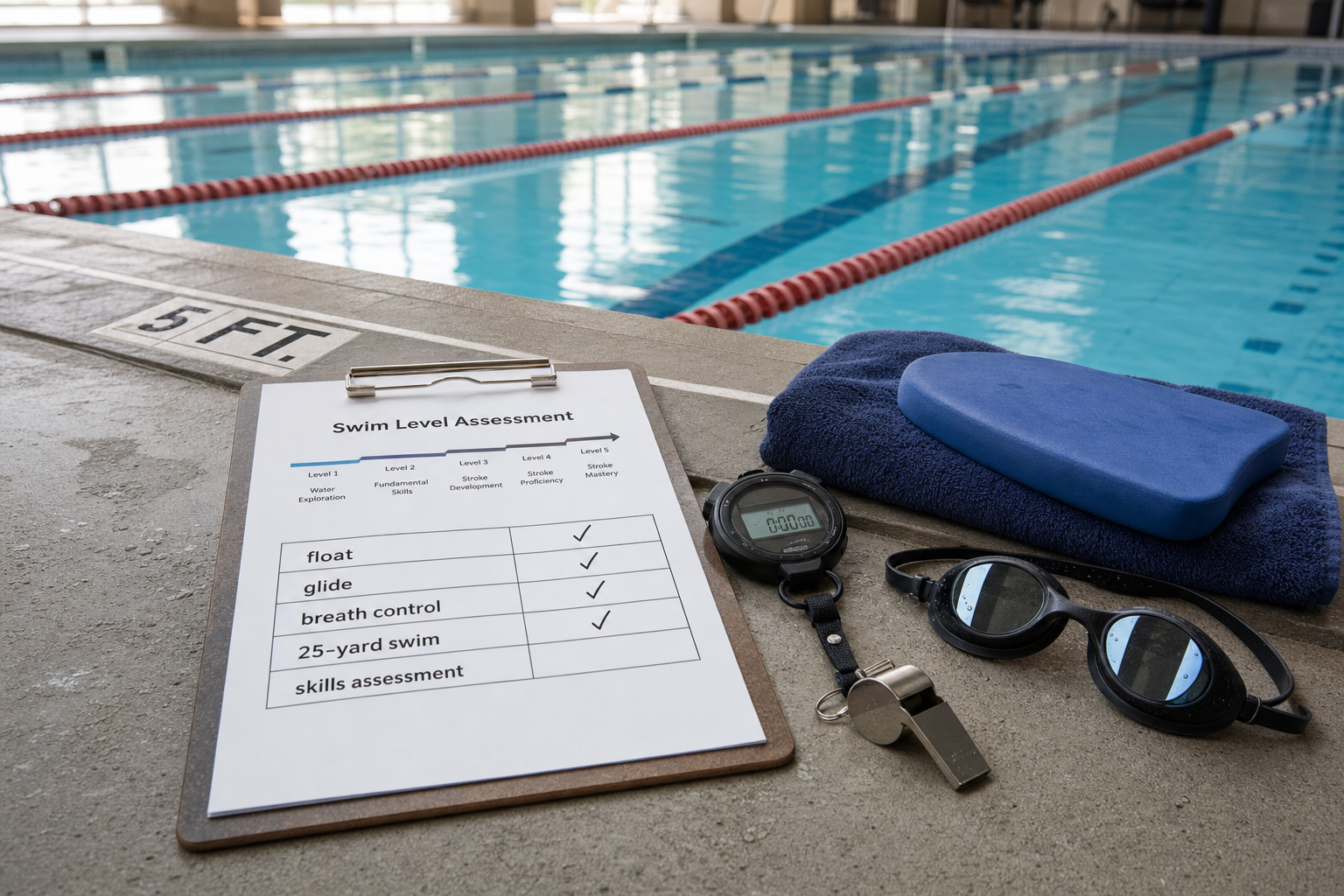
Firstly, bring concrete evidence—not comparisons or vague hopes. Start with a skill rubric or syllabus from your swim school (many clubs list required skills per level clearly, like floats, glides, breath control, and stroke basics) so you know what the next level demands. For instance, in programs like those from the American Red Cross, Level III requires longer swims and independent float skills.(exeternh.gov)
Next, gather coach notes. Ask whether the coach can document things your child does consistently during class—maybe floating independently for five seconds, swimming a few body-lengths without stopping, or handling breath control drills. These observations have much more weight than occasional good days.
Also extremely useful: record or request checklist videos of your child showing required skills. Videotaping your child gliding, submerging, doing breaths, changing directions all helps. When you can show a video of what is required for the next level and what your child already does, you’re speaking coach-speak. Schools like Palm Beach Gardens use level assessment charts for ages 3–12 precisely this way.(pbgfl.gov)
Finally, use the timing when classes are evaluated—mid-term reviews or right before swim lesson contracts or re-enrollment open. These are natural moments for discussing placement. Programs often encourage this kind of check-in in their re-enrollment policies and decision checklists.(waterwisekids.com)
Pro Tip: Remember the “10-Week Plan” for swim improvement from swimy.org https://www.swimy.org/10-week-plan. Share what parts of that plan your child has mastered—it shows initiative and clear progress.
How to Time and Phrase the Ask Respectfully
Choose a moment outside of teaching time—after class or by email, so the coach isn’t in ‘instructor mode.’ Express appreciation first (“My child learns a lot from your feedback”) then lay out the evidence: skills done, how often, in what settings. Ask for their guidance about whether moving up would help or cause undue stress.
Good timing tends to be mid-session when the coach has seen a pattern of consistency, or right before re-enrollment (popular times fill fast). Also, never wait till deep into summer when all spots are locked; prompt conversations help both you and the instructor plan.(waterwisekids.com)
Ask open-ended questions like “Here are what I’ve seen across multiple lessons—is my child consistently showing the depth, breath, stroke, and confidence expected for the next swim class level?” Showing you want to understand, not argue, keeps things constructive.
What Safety and Readiness Rules Must Match a Promotion
No rushing, no skipping safety. Promotion must match safe water depth readiness (can the child handle deep water without help?), distance endurance (can they swim a required number of yards without pause?), and breath control (can they do drills like floating, bobbing, underwater practice, gliding, and recoveries reliably)?(denverymca.org)
[[ctakid]]
If a child has only done skills in shallow water, or always with float aids or goggles, pushing them into deep or unguided water too soon puts them at risk. Schools require safety checks before letting kids swim unsupervised deep ends or jump in.(columbusjcc.org)
Breathing control must be voluntary. The child should be comfortable going underwater, blowing bubbles, opening eyes, and recovering to floats. Crying, coughing, needing constant support—all signs to hold.(bhjsl.org)
Also, emotional maturity counts. The swimmer should stay focused, follow instructions, even when next-level skills are more complex (turns, dives, new strokes). If your child balks at change or gets frustrated, staying where they are—while building confidence—is often better.
Avoiding Pitfalls That Sour the Request
Comparing siblings? Don’t. Every child learns at a different rate. One child might master stroke coordination early, another takes longer on floating or turns. Comparing can feel unfair and puts pressure.
Lobbying during class? Not helpful. Coaches are teaching, watching many students—interruptions or watching children only in your case won’t give an accurate view. Instead, observe class or ask to sit and note skills across several lessons.
Skipping coach demo time? Big mistake. If your child isn’t there when the instructor demonstrates new skills, they’ll fall behind each time. Make sure they stay engaged during demos, not just when they get to swim or use equipment.
What a Healthy Promotion Look Like—and When Holding Is the Right Move
A healthy promotion happens when skills are stable, not just occasional flashes. Your child glides without help; breathes timing-wise; swims without stopping; comfortable in deeper water; and wants to learn and keeps up across multiple sessions.
Holding a level isn’t a failure—it’s often smart. Staying gives more practice on water safety, stroke basics, breath control. It builds confidence so that when you do move up, they feel solid, not overwhelmed.
If your child is repeating a level, ask for specifics what needs work and practice those at home. One or two targeted hours between lessons often makes a big difference.(waterwisekids.com)
Wrapping Up: Making the Ask That Works
When you approach the coach, bring the rubric or syllabus for the next level, your child’s consistent achievements (coach notes, videos), and ask during sensible times. Focus on evidence rather than emotions. Make sure safety benchmarks of depth, distance, and breath control are met. Avoid comparing siblings or pushing during class. Kids thrive when promoted for right reasons—not just because someone says they should.
If you follow this framework, the answer might be “Yes, let’s try the next level,” or “Not yet—here’s what to build more.” Either way, you’ll preserve respect, protect safety, and help your child land in their right challenge zone—not too easy, not too hard, but just right.
120+ swimming exercises sorted by age — with video and instructions. Developed by swim instructors, completely free.

120+ swimming exercises sorted by age — with video and instructions. Developed by swim instructors, completely free.