Head Still, Eyes Down: Fix Sinking Legs in Freestyle for Kids
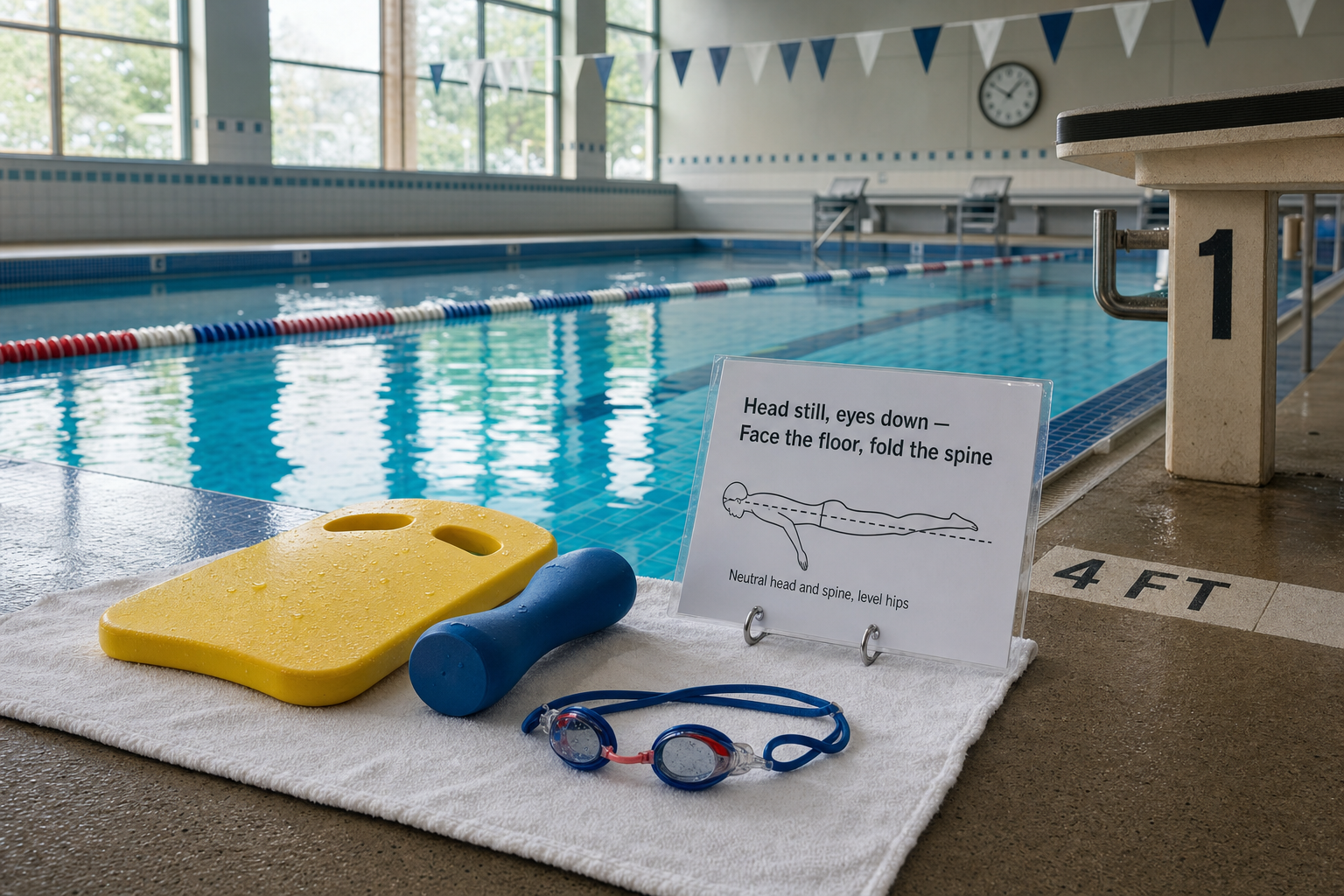
Want your child to glide like a sea otter instead of flapping like a duck? The quickest fix for sinking legs in freestyle starts with the right head position. When a child lifts their head to breathe, the hips drop. Over-kicking to compensate uses up energy and causes fatigue. In short: sinking legs, struggle to breathe, and lots of stress on little necks. Let’s fix that.
The Magic Cue: “Face the Floor, Fold the Spine”
For kids aged 5-10, the clearest and simplest cue is: “Face the floor, fold the spine.” Imagine their head is a LEGO block in line with their body. They should look straight down or just a little ahead, not lifting the chin. That keeps the spine aligned (neutral), prevents the head from pulling them out of a flat, balanced “torpedo” position, and stops the hips from sinking. U.S. Masters Swimming highlights that a neutral head position—where the water just touches the crown, not the forehead—helps keep the bodyline flat so that legs don’t drag below the water level. (usms.org)
How Breathing Can Sink the Ship
When kids lift their head to breathe, they tilt up, the hips fall, and suddenly they’re kicking wildly just to stay afloat. USMS explains breathing too early or lifting the head disrupts alignment and creates extra drag. A better strategy is to rotate the head to the side just enough to breathe and quickly return to “face the floor, fold the spine.” (cd3.usms.org)
Routine: 10-Minute Land-to-Pool Drills
Here’s a short routine parents can run 2–3 times a week—10 minutes total—that links land practice to pool drills. Always include the safety caveat: no long underwater glides or breath-holding.
On Land (5 minutes):
Lie flat on your back on a mat. Have your child pretend there's a “string” pulling from the top of their head toward the ceiling, keeping their neck long and spine neutral. No chin to chest, no eyes forward. Hold for 30 seconds, relax, repeat 3 times.
In a low squat, lean forward from the hips so chest tips down, hands reaching toward the floor, neck long. This helps them feel how to “fold” without lifting the head. Repeat 5 times with slow smooth motion.
If you want a structured way to help your child progress at home, the 10-Week Plan guides you step by step.
In Pool (5 minutes):
Streamline Push-Offs: Push off the wall in streamline, face down, arms overhead. Focus eyes down, body flat. Only one breath (face out) every 15-20 feet, then back to face-down.
“One-Goggle Breathing Drill”: Swim freestyle, breathing on one side only. On the breathing stroke, just one goggle clears the water when the head turns. On non-breathing strokes, face the floor.
[[ctakid]]
- Kick-with-Eyes-Down Drill: Holding a kickboard at the hips, kick from the hips with head low and eyes still. Focus on legs staying near the surface without over-kicking.
Why “Face the Floor, Fold the Spine” Works
This cue connects their eyes, head, bodyline. USMS teaches that keeping head in neutral alignment reduces neck flex, a seesaw effect, and dropped hips. Pressing the head and chest down helps lift the legs automatically. Also tension in lower back and legs supports the hips. (usms.org)
For breathing, rotating the head rather than lifting it keeps spinal alignment and minimizes disruption. The goal is a shallow, fast breath so the body stays flat. If the body rocks or hips sink, it’s time to re-cue. (cd3.usms.org)
Pitfalls to Watch Out For
If they’re told to swim like this, watch for lifting the head so the forehead sticks out or chin tilts up. That kills balance. Over-kicking often shows they’re trying to hide the drop in the legs or struggling to float properly.
Also watch the breath. If every breath means lifting, twisting, or holding water in the mouth, you know technique slips. Avoid long breath-holds or pushing for big distances before the head-position habits are strong. Build control first.
Linking to a Bigger Growth Plan
While this 10-minute routine works wonders, fixing freestyle head position is part of broader skill development. SwimY.org’s 10-Week Plan offers weekly progressions for body position, breathing, kick, and endurance. Trying land dips and drills helps children carry these habits into pool work, making freestyle feel natural. Incorporate this plan into regular swim lessons to build consistency. (swimy.org)
What Parents Should See After a Few Sessions
After just a week or two of doing this small routine, kids should start to breathe more easily, swim with smoother, flatter bodylines, and have less strain in the neck or shoulders. Their legs should ride higher without trying to kick super hard. As flow and rhythm improve, speed and enjoyment usually follow.
Keeping your child’s head still, eyes down, spine straight turns freestyle from a tug-of-war into a smooth powered glide. With this cue, the routine, and careful breathing, sinking legs become a thing of the past—and swimming becomes easier and more fun. Always remember: safety first, limit breath-holds, avoid long underwater glides. Lock in head position, release tension, and let the water work with them—not against them.
120+ swimming exercises sorted by age — with video and instructions. Developed by swim instructors, completely free.

120+ swimming exercises sorted by age — with video and instructions. Developed by swim instructors, completely free.