Home Pool Chemicals: Lock, Label, and Store Them Safely
Why safe pool chemical storage matters right now
More than one-third of swimming-pool chemical injuries happen to kids under 18, and over half happen at home. Most occur during summer, from Memorial Day through Labor Day. This season is when children aged 3–12 are most likely to swim and explore. Studies show inhaling fumes from chlorine or opening a damaged container leads to many of these accidents. Also, adding chemicals just before swim time or leaving acid and chlorine near each other increases risk significantly. (cdc.gov)
So as pools reopen in spring and get heavy use through summer, parents need safe pool chemical handling—and urgent strategies to protect curious kids.
The No-Jargon Basics: Where and How to Store Pool Chemicals
Pick a solid spot and keep it locked
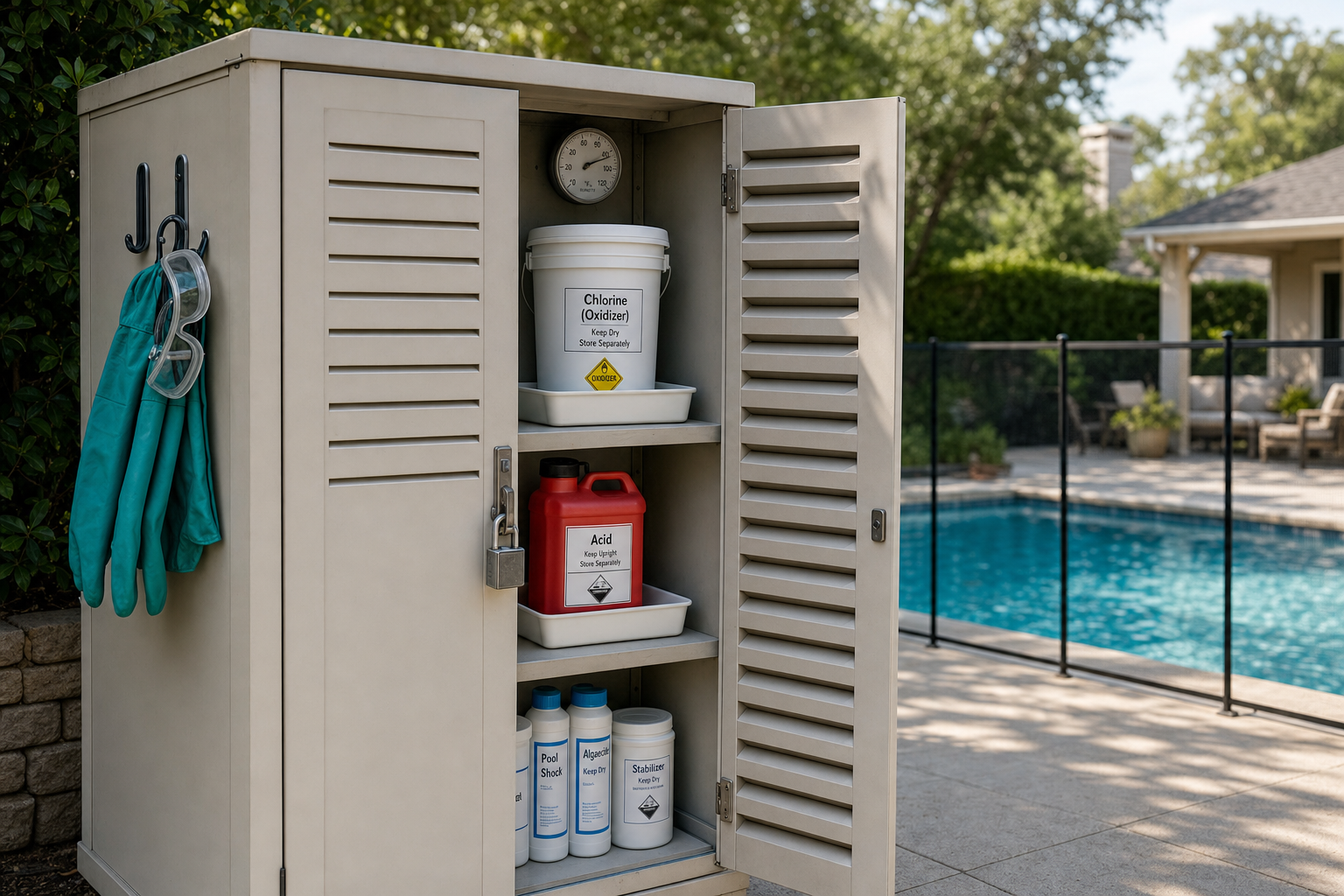
Choose a well-ventilated, dry location away from sunlight or heat sources such as heaters, grills, or tools. Never store chemicals in direct sunlight. Use a cabinet or shed with a lock. If possible, use a lockable equipment room that children can’t enter unsupervised. CDC recommends securing the chemical storage area or pump room to limit access especially to kids and animals. (cdc.gov)
Keep containers labeled and original
Always leave pool chemicals in their original containers with intact labels. Damaged or unmarked containers make it hard to know what you’re dealing with, and mixing up chemicals leads to serious danger. Store acidic products—like muriatic acid—separately from chlorine or oxidizers. Never stack containers, especially with acid above dry chlorine. Spill containment trays help protect floors. (cdc.gov)
Store the wrong combo far apart
Some chemicals don’t mix: acid and chlorine can react violently, producing toxic gas. Dry and liquid forms of chlorine products may shift stability depending on storage. Keep ‘incompatible’ chemicals in separate bins or shelves. Use the manufacturer’s Safety Data Sheets (SDS) to know what shouldn’t touch. (cdc.gov)
Cool, dry, original, sealed
Pool chemicals must stay cool—keep below 95°F (35°C) if possible—and dry. Moisture causes powder to cake, liquids to leak. Keep containers sealed tightly. Store liquids lower to prevent spills, and never mix brands or product types. (cdc.gov)
For a structured plan that includes safe handling, dosing schedules, and pool routines suitable for school-age kids’ households, consider the 10-Week Plan at swimy.org/10-week-plan to build safer habits over time.
Handling Rules: What Every Parent Should Teach Their Household
Always wear safety gear like gloves and goggles when handling chemicals. Keep children and pets well clear—don’t ever dose with kids waiting to swim nearby. After adding or adjusting chemicals, wait until water tests show safe levels (check pH and chlorine according to your pool kit or local guidelines) before letting children back in. Never mix chemicals yourself unless the instructions say so—it’s risky to mix chlorine with acid or other sanitizers. Follow label instructions and Safety Data Sheets (SDS) closely.
[[ctakid]]
Timing: When Should Kids Re-Enter the Pool After Dosing
After adding chemicals to balance water, especially chlorine or acid, wait until the pool’s levels have returned to safe ranges. Test readings should be clear. As a guide, many pool owners wait at least 30 minutes to an hour after dosing, allowing filters to run and chemicals to spread evenly. Some shocks need overnight settling. Consult product instructions: they’ll tell you exactly how long to wait. Adding chemicals immediately before swim time is a common cause of injury. (cdc.gov)
DIY Checklist: Safe Pool Chemical Storage for Families with 3–12 Year-Olds
At the midpoint of summer, or right when youre opening your pool in spring, run through this checklist to lock down chemical safety in your home.
(cdc.gov)
Design a storage area that keeps chemicals in original containers, with clear, intact labels. Choose a locked cabinet or shed that’s cool, dry, shaded and ventilated. Position containers off the floor, sealed tightly, no stacking, especially keeping liquids below dry chemicals. Separate incompatible chemicals—acid away from chlorine or oxidizers—with physical distance or barriers. Wear gloves, goggles during handling. Keep kids out of the area while dosing or mixing. Always wait until test strips or meter confirm safe water levels before swim time.
Common Pitfalls and How to Avoid Them
Avoid mixing acids and chlorine: never combine them, store far apart. Check label warnings. Don’t add chemicals just before swim time—that increases risk of inhalation or skin irritation. Never leave chemical containers unlocked or accessible: unlocked sheds or cabinets make curious children especially vulnerable. Always follow manufacturer directions, SDS guidelines. Don’t let containers get wet or overheated—it can accelerate breakdown or leaks.
Final Thoughts: Safety Is Non-Negotiable
Pool chemical safety isn’t just about cleanliness—it’s about preventing serious injury to the kids you love. A locked shed, sealed and labeled containers, separation of incompatible substances, proper waiting times after dosing—all these actions matter. Using chemical safely means more carefree swims, less risk, more joy. Prioritize smart storage and safe handling so your children aged 3-12 can enjoy the water—not be hurt by what's meant to protect it.
120+ swimming exercises sorted by age — with video and instructions. Developed by swim instructors, completely free.

120+ swimming exercises sorted by age — with video and instructions. Developed by swim instructors, completely free.