How to Vet Parent-Out Infant Swim Lessons Safely for Your 6–30-Month-Old
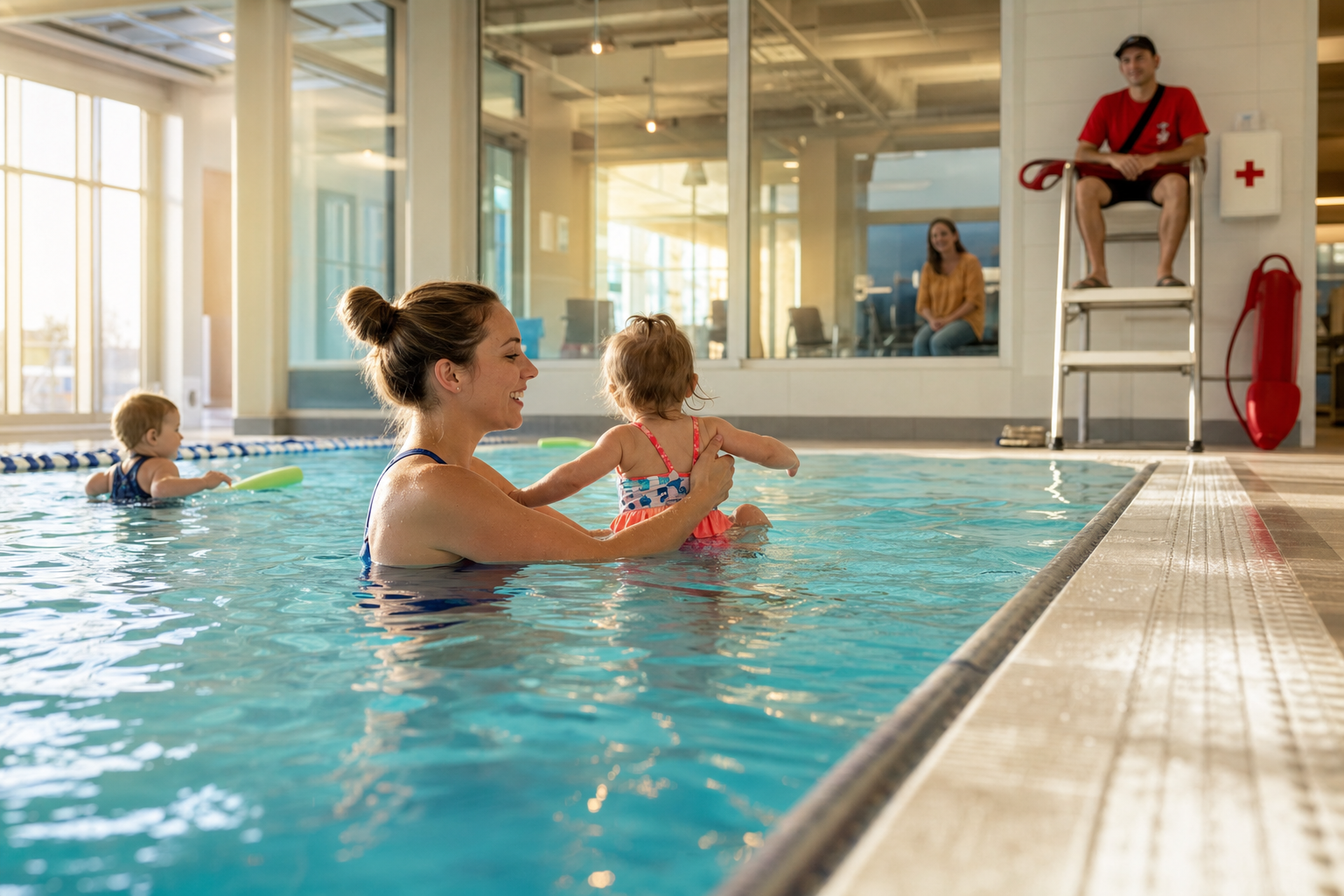
Right away, check whether the swim school offers parent-out infant swim lessons or baby swim lessons without parent participation. That means your little one is in the water with just an instructor. If you expect to be in the water—or at least right by the poolside—this difference matters a lot. Keep reading to find out how to make a safety-smart decision for your baby or toddler, especially between the ages of six and thirty months.
Key Checks Before Letting Your Child Swim without You
Emergency Procedures and First Aid Readiness
Ask the swim center what happens in case of an emergency. Do instructors hold current certifications in infant and child CPR and First Aid? Is there a lifeguard on duty? What about in-water rescue training? Programs following American Academy of Pediatrics guidance require that lesson providers know how to recognize a distressed swimmer and respond fast, including calling emergency services if needed.(publications.aap.org)
Crying Response: Handling Stress in the Pool
Babies under a year can get overwhelmed. Before enrolling in lessons without parent participation, find out how instructors respond if a child cries: do they pause, offer comfort breaks, bring parent in if upset? According to the US Swim School Association (USSSA) infant-toddler guidelines, classes for babies six months and older should start with very few and very short submersions (brief breath holds, no more than six per lesson) and always adapt to each child’s emotional readiness.(usswimschools.org)
Touch Policies: How Hands-On Will the Teacher Be?
When you’re not in the water, is the teacher providing “touch supervision”—that is, hands-on support or keeping the child within arm’s reach? What are their rules about physical contact? Good infant swim lesson programs follow strict policies: instructors must be trained in infant and toddler swim education, child development, and water safety. Teachers should understand different developmental stages between infants (6-12 months) and older toddlers (1–2 years).(usswimschools.org)
Observation Access: Are You Really Out, or Just Out of the Water?
“Parent-out” doesn’t always mean you’re locked out. Can you view the lesson from a glass wall or monitoring area? Can you jump in if absolutely needed? Observation is crucial so you can see how your child interacts, how teacher communicates, and whether safety is always front of mind. HealthyChildren.org advises letting parents watch a class to see whether children are mostly waiting around, whether instructors are attentive, and whether safety habits are modeled.(healthychildren.org)
If you want a structured way to build water confidence at home, the 10-Week Plan guides you step by step.
Age-Appropriate Goals: What Should Be Taught, and When?
Between 6 and 12 months, your child is not developmentally ready to truly swim solo or take survival-swim skills. The goal at that age is water acclimation, comfort, bonding, gentle exposure—not strokes or “swim to safety” promises.(healthychildren.org) From about age 1 year, lessons can include basic floating, submersions (brief and few), and playful skills, gradually building toward skills like turning to the surface and reaching toward the wall.(usswimschools.org)
[[ctababy]]
Tools and Red Flags
A great program will give you their curriculum, instructor credentials, emergency plan, observation policies, and assessment-progress steps. One excellent example is the 10-Week Plan offered by some swimming programs, which lays out weekly water-acclimation and safety goals—so you know exactly what your child should learn week by week.
If a program is unwilling to share instructor certifications, gives vague answers about handling a screaming baby, or pressures you to start “survival swimming” techniques before your child is clearly ready, those are red flags. Also watch out for unattended large class sizes; for infants and toddlers under 3 years, an ideal student-to-instructor ratio is small so the teacher can monitor and respond quickly.(usswimschools.org)
Matching Your Expectations
If you expect parent-out lessons but the program only offers parent participation, read the fine print. Many places start with parent-baby or caregiver-in-water sessions until the child is ready to be alone with an instructor. That’s normal. If you want to move to parent-out, make sure the school offers that option—and that instructors walk you through the transition slowly, listening to your child’s cues.
And especially under age 1, it’s wise to think of swim lessons as a chance to build trust in water—for both your baby and for you—not to build independent swimming. The AAP says there is currently no evidence that infant swim programs (under 1 year old) reduce drowning risk.(healthychildren.org)
Putting It All Together
Your action plan: when you find a swim school that offers parent-out infant swim lessons, ask five questions: who handles emergencies and how; what happens if your child cries or panics; how much physical contact is allowed; how you observe and stay in touch; and what skills your child will be expected to master—especially with their age and development. Watching one full lesson as a trial or "audition" can reveal a lot.
Good infant survival lessons safety is never about rushing. It’s about gradual comfort, clear communication, learning what safety means, and above all, ensuring you feel confident in how your child is being treated. Every baby is different. With the right vetting, you’re making a safer decision for your child’s health, happiness, and future in the water.
120+ swimming exercises sorted by age — with video and instructions. Developed by swim instructors, completely free.

120+ swimming exercises sorted by age — with video and instructions. Developed by swim instructors, completely free.