How to Keep Your Crawling or Cruising Baby Safe in Pool Changing Rooms
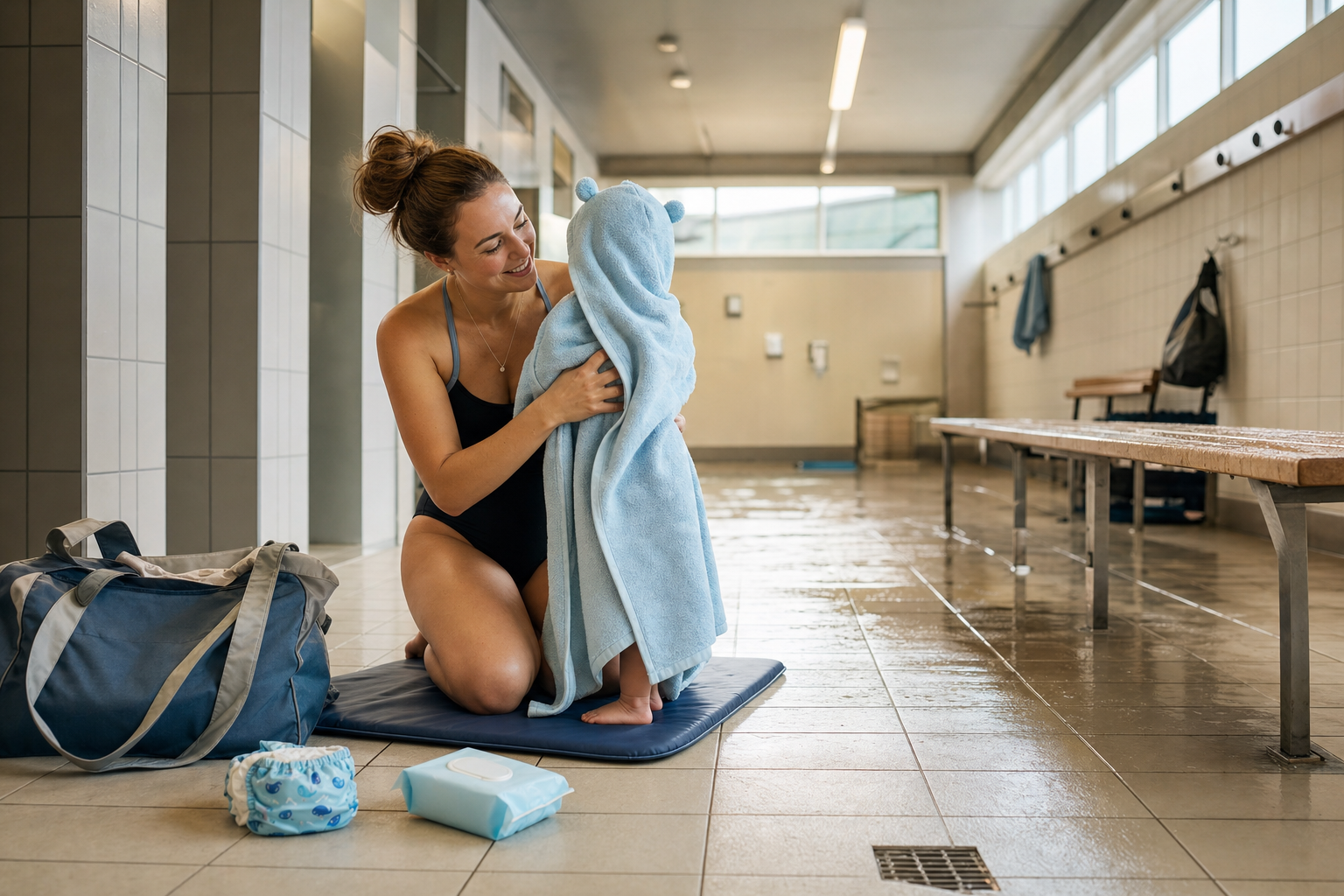
When your 6-to-18-month-old is crawling just as you’re wet, juggling towels, and grabbing gear, keeping them off slippery changing-room floors can feel like an olympic sport. Here are top baby swimming changing room tips, especially for crawling babies, to set up a safer, cleaner exit without slowing you down.
The Dry-Before-Floor Rule: Stop Slips Before They Start
Nothing creates danger faster than damp feet, that slick tile floor, and a baby who sees a new adventure waiting. As soon as you leave the pool, wrap your little one in a towel or a towel poncho. Then dry your own feet and theirs—shaking water off suits, squeezing out hair, using mats or towels at doorways. Wet surfaces not sloped to drains breed slippery chaos and bacterial growth, according to pool design codes in places like Georgia and guidance from the CDC on “bathhouse and bather preparation facilities” where floors must be slip-resistant and properly drained. (rules.sos.ga.gov)
Carry a lightweight washable changing mat in your bag—super helpful when benches are wet or there’s no changing table. Pop it down quickly and keep baby off the bare floor while you change nappies or swimsuits. The NHS and Australian safety bodies both agree: change on a mat on the floor is safer as babies get more mobile. (nhs.uk)
Choosing Your Changing Spot: Mats, Tables, Benches—Know the Risks
Washable changing mats are lifesavers. Pick one that folds or rolls up compactly, is waterproof, easy to wipe, and insulated (so you don’t feel that icy tile through the padding). Use it either on a bench or, better yet, on the floor. If you're using a public changing table, make sure there's a strap, guardrails, and surround. Never ever leave the baby alone up there. Even with a strap, babies roll, wiggle, or scoot suddenly. Parents are advised to always keep one hand on baby, even during “just a sec” moments. (healthychildren.org)
Benches? They seem safe but often sit low and narrow. A crawling baby will pull themselves up or reach for an edge and potentially tip off. If you must use a bench, spread a towel or mat, keep all supplies within arms’ reach, and stay right beside them. Never turn your back to grab anything—your baby won’t wait.
Never Leave Baby Unattended: A Must
There’s no exception here. Safety-experts stress that even if baby is strapped, or if you think they can’t move yet, you should never leave them alone on a changing table or bench. Infants learn to crawl, pull-to-stand, cruise along, all fast and often without warning. The product-safety guidelines from Australia, the U.S., and the U.K., along with various hospital safety education resources, make this very clear. (productsafety.gov.au)
If you want a structured way to build water confidence at home, the 10-Week Plan guides you step by step.
Get everything ready before you set baby down: fresh towel or cloth, clean dry outfit, swim nappy, disposable bag for used items, wipes. Then place baby on a mat or table, keep at least one hand on them, do the job, and wrap up. That way you avoid distractions, running back and forth, or leaving baby unsupervised even for a few seconds.
[[ctababy]]
Cleanliness and What Pools Should Provide
When thinking through “public pool hygiene baby” concerns, look for facilities with clear rules. The CDC recommends public pools and splash pads maintain diaper changing areas, cleaning protocols for spills, and signage about illness prevention. Anything that increases risk—such as non-sloped floors or missing changing stations—is a red flag. (cdc.gov)
Make sure there’s a clean diaper-changing station in both the male and female areas (or well-equipped family changing rooms). Look for changing tables or benches that are cleaned between uses with water-resistant, non-porous surfaces. Also, ensure central drains are clear, so water doesn’t puddle. Sloped, slip-resistant, impervious flooring designs help avoid falls and mold buildup. (stacks.cdc.gov)
Speed and the 10-Week Plan: Making Changing Room Exits Smooth
If you follow a plan like the 10-Week Plan from Swimy (that includes timed swims and revisiting challenges each week), you’ll find routines develop naturally—pack the gear the same way, your bag always in the same spot, baby dash-out outfit ready. Over time, hurrying won’t mean chaos. Babies at 6-18 months are quick learners; they’ll know what comes next, and those dry-before-floor and never-unsupervised rules become second nature. Having a strategy turns trouble moments into manageable transitions. (Note: the 10-Week Plan is offered by swimy.org and helps establish swim time routines.) (nct.org.uk)
Practice at home: put down a towel on the bathroom floor, let baby crawl there, stand, grab a toy. You’ll see where they like to scoot, which surfaces make them slip. That insight makes you better equipped when you’re in public. You work faster when you’ve done it before without panic.
What Parents Can Do Right Away
Pick a soggy changing mat or invest in one now. Test fast-dry towels in your gym bag. Before swim class or pool visit, lay out exactly what you’ll need so you’re not hunting for the baby shampoo while your daughter is wriggling near a bench. When you arrive, scout the changing rooms for baby friendly features: dry benches, functional changing tables, a place you won’t trip or slip while holding a baby.
Teach older siblings or caregivers your rules: no leaving baby alone, always wrap in towel first, change on a mat, bring everything with you. Trusting helpers to follow these guidelines keeps tiny explorers safe, especially when you’re taxed or in a hurry.
Crawling and cruising babies are experts at turning changing rooms into adventure zones. But with dry floors, safe surfaces, and your full attention, you can protect them without slowing your exit route. Prioritize washable mats, enforce dry-before-floor, never leave them up high without hands on, and check hygiene tools are clean and reliable. Just like swim time itself, changing time can go from risk to routine.
120+ swimming exercises sorted by age — with video and instructions. Developed by swim instructors, completely free.

120+ swimming exercises sorted by age — with video and instructions. Developed by swim instructors, completely free.